Food Culture
Moroccan food culture, rituals & heritage
Moroccan food is inseparable from the culture around it — the ritual of pouring tea, the shared dish, the bustle of the souk, the feasts of weddings and Ramadan, and the layered heritage of Amazigh, Arab, Andalusian and other influences. Explore the stories, customs and traditions behind the cuisine.
Page 1 of 3 · 71 pieces
At the table
Rituals & etiquette
The customs of eating in Morocco — the tea ceremony, eating with your hands, the shared dish, bread etiquette and the deep culture of hospitality.
Eating with hands
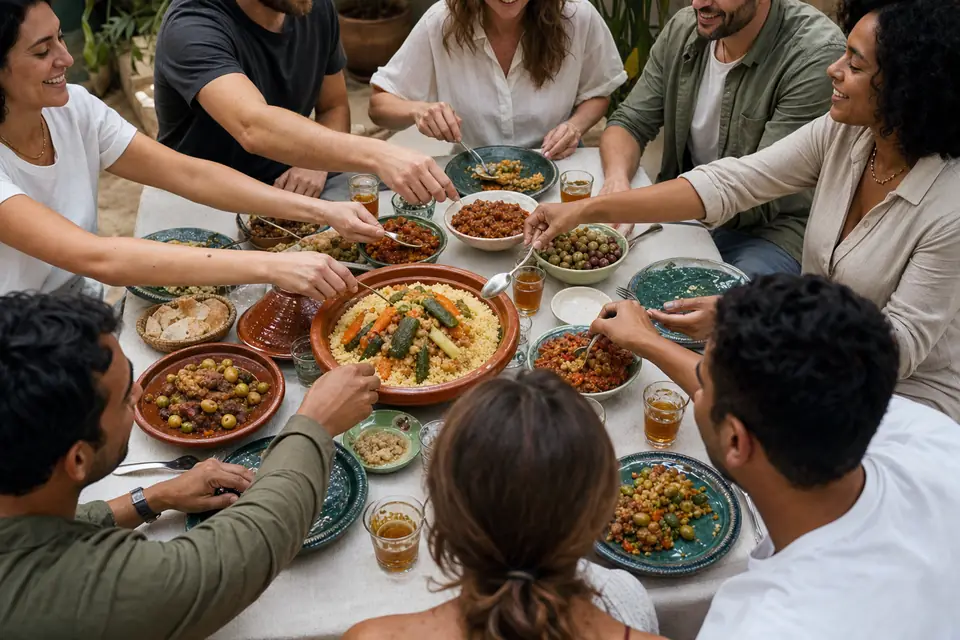
Eating With Your Hands: Moroccan Etiquette
Right hand, bread as a scoop, and eating from your own side of the dish.
Read more Hospitality
Moroccan Hospitality and the Guest
The guest as a gift from God — why Moroccan generosity around food runs so deep.
Read more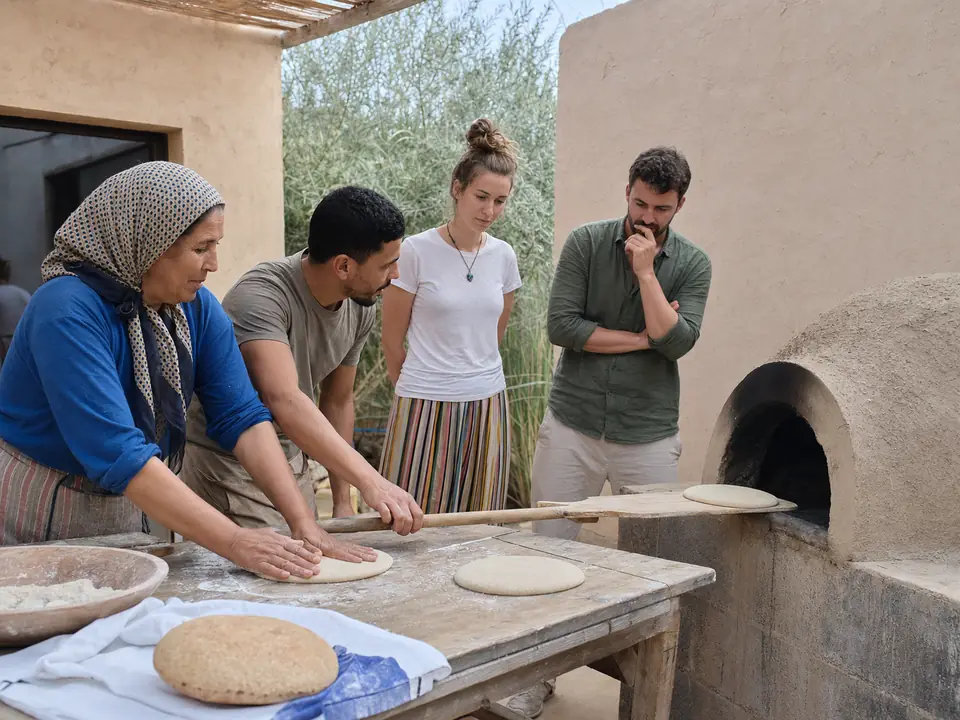
Bread etiquette
Bread Etiquette in Morocco
Khobz is sacred — never waste it, never bin it, and it graces every meal.
Read more Sharing a tagine
The Shared Tagine: How to Eat From One Dish
One pot, many hands — the communal way Moroccans gather around a meal.
Read more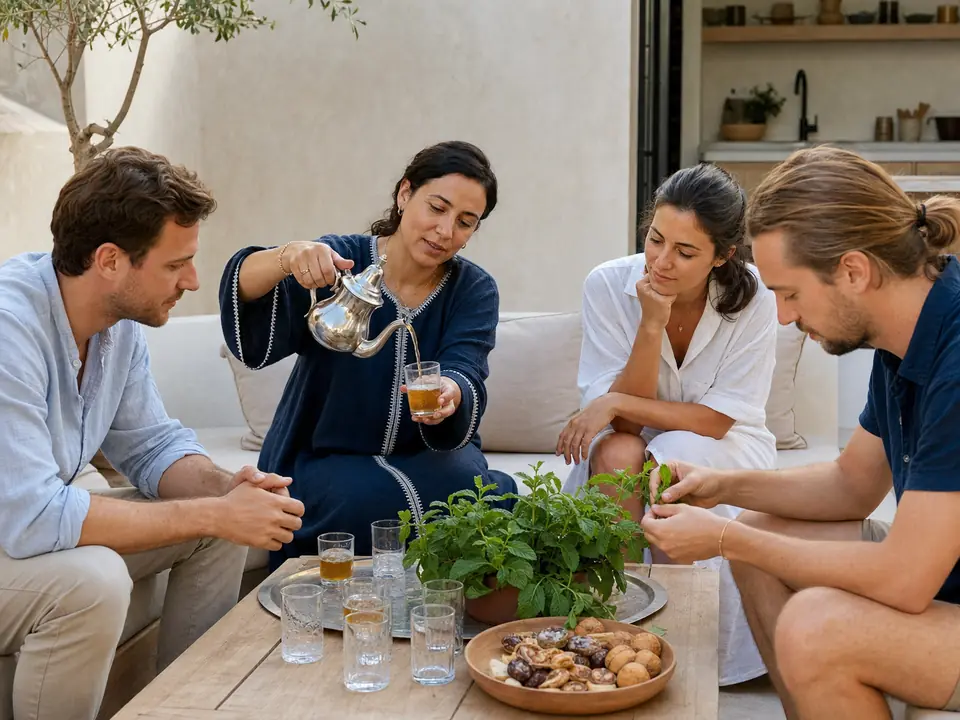
Tea & hospitality
Mint Tea and the Rituals of Hospitality
When tea is offered, how often, and what accepting it really means.
Read more Hand-washing ritual
Hand-Washing Before Meals
The water poured over the hands — a practical and gracious start to eating.
Read more Bismillah & hamdullah
Saying Bismillah and Hamdullah at the Table
Gratitude before and after — the words that frame a Moroccan meal.
Read more Sharing food
How Moroccans Share Food
Communal dishes, generous portions, and food sent to neighbours and the needy.
Read more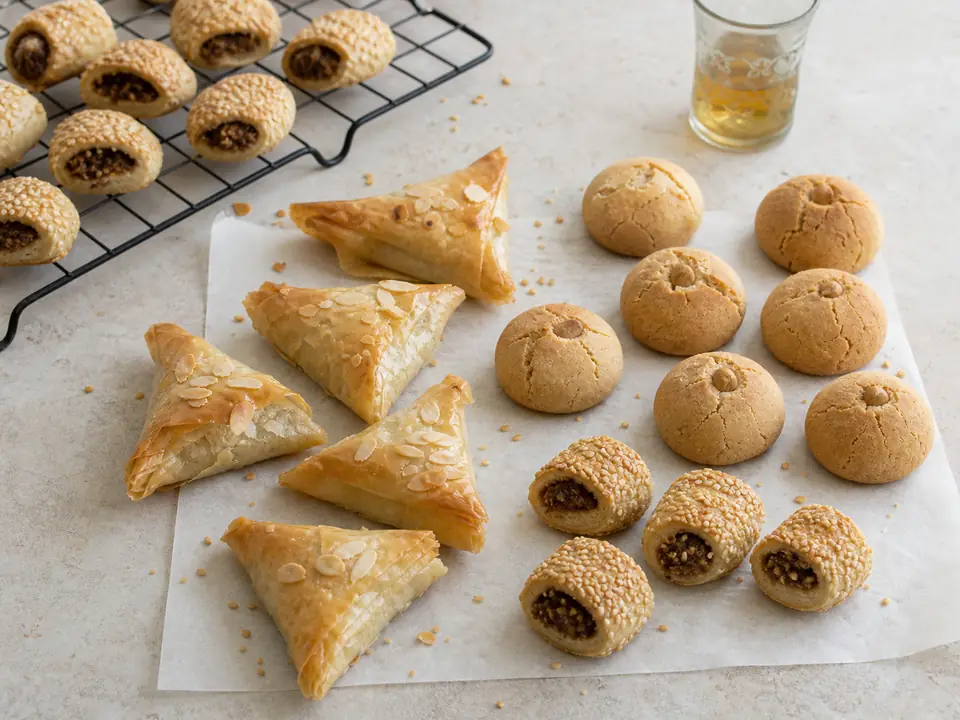
Food as a gift
Gift-Giving and Food in Morocco
Bringing sweets, sugar or fruit — the edible etiquette of visiting a home.
Read more Bread in daily life
The Role of Bread in Moroccan Life
More than food — bread is utensil, symbol and daily ritual in Morocco.
Read more Communal eating
Communal Eating Customs in Morocco
One dish, many hands — the art and rules of eating together from a shared plate.
Read more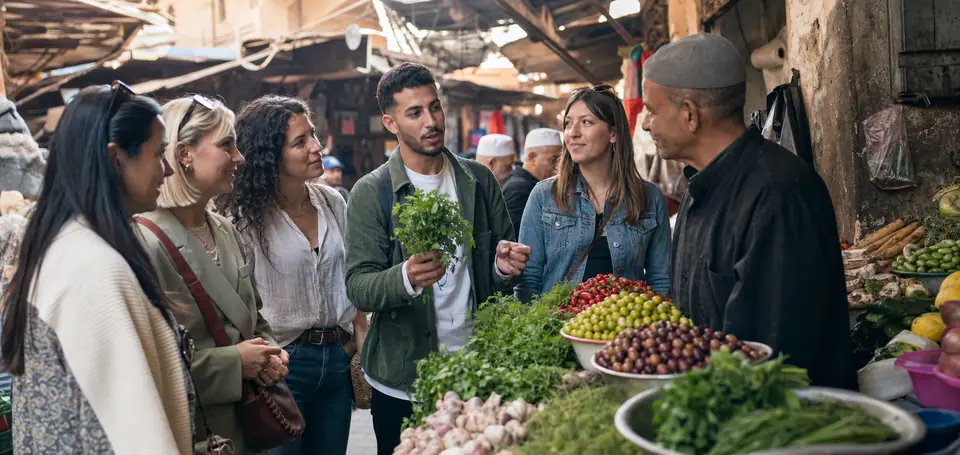
Food & hospitality
Food and Hospitality the Moroccan Way
Feeding the guest is a duty, an honour and the highest expression of Moroccan welcome.
Read more Tea etiquette
The Etiquette of Moroccan Tea: Refusal and Acceptance
Three glasses is the custom — but knowing when to accept, decline and linger matters.
Read more Seating & posture
Dining Posture and Seating in Morocco
Low tables, floor cushions and the seating order that tells you who matters most.
Read more Salt beliefs
The Role of Salt in Moroccan Food Beliefs
More than seasoning — salt as protector, bond-maker and spiritual element in Moroccan tradition.
Read more Food & hammam
Food and the Hammam Ritual
Before the bath, after the bath — the foods that frame the Moroccan hammam experience.
Read more Food superstitions
Moroccan Food Superstitions and Folk Beliefs
Spilling salt, leaving scissors open, counting bread — the quiet beliefs behind everyday cooking.
Read moreHow Morocco eats every day
Markets & daily life
The souks, spice stalls, weekly rural markets, communal bread ovens, street food and the daily rhythms of shopping and cooking.
Souk bargaining
A Guide to Bargaining in the Souk
Haggling is expected and friendly — how to buy spices, food and more with confidence.
Read more Weekly rural souk
The Weekly Souk in Rural Morocco
The travelling market that feeds the countryside — and often names the town.
Read more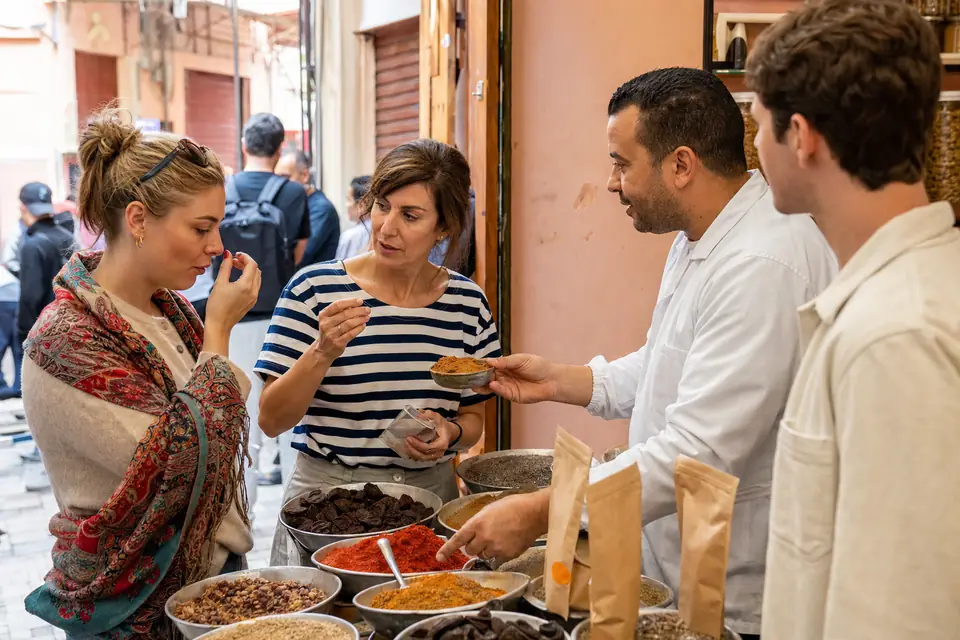
Spice stalls
How Moroccan Spice Stalls Work
Pyramids of colour, blends ground to order, and the herbalist's cure-alls.
Read more The ferran
The Communal Bread Oven (Ferran)
Every neighbourhood's wood-fired oven, baking each family's own marked loaves.
Read more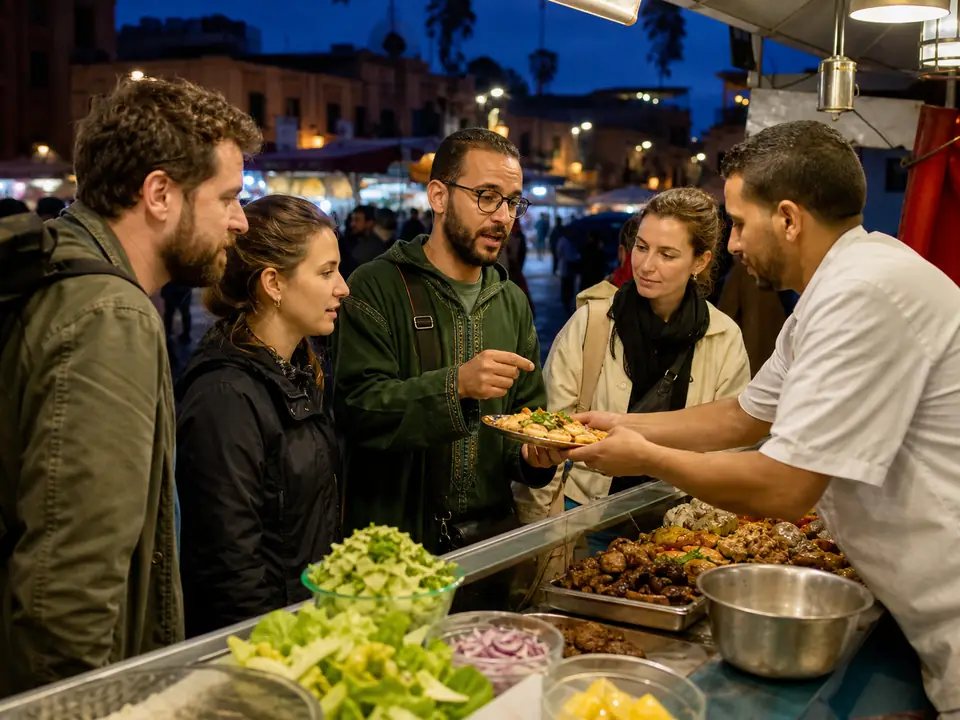
Street food
Buying Street Food in Morocco
Grills, snail soup and sizzling squares — how to eat the street like a local.
Read more The hanout
The Neighbourhood Hanout
The tiny corner shop that sells a little of everything, on credit and by the single item.
Read more
Breakfast culture
Moroccan Breakfast Culture
Fresh bread, olive oil and mint tea — an unhurried, savoury-sweet morning.
Read moreAnswers
Moroccan food culture: common questions
Why is mint tea so important in Moroccan culture?
It's the central gesture of hospitality — offered to every guest as a sign of welcome, respect and friendship. Serving tea honours the guest and accepting it honours the host, so it anchors Moroccan social life far beyond being a drink.
How do you eat a traditional Moroccan meal?
From a shared central dish, eating the section in front of you, scooping with torn bread instead of cutlery, and using your right hand. Wash your hands before the meal and accept mint tea when it's offered.
What is Moroccan cuisine influenced by?
Its foundation is indigenous Amazigh (Berber), layered with Arab spices and Islam, Andalusian refinement from Muslim Spain, Judeo-Moroccan traditions, sub-Saharan influences via trans-Saharan trade, and more recently French café and pastry culture.
Why do Moroccans respect bread so much?
Bread (khobz) is a staple that has long meant sustenance, and it carries a religious sense of blessing. It's present at every meal and used as the utensil, so it's treated with reverence and never wasted — leftover bread is set aside to be reused or given away, not binned.
What food is eaten during Ramadan in Morocco?
The fast is broken at sunset (iftar), traditionally first with dates, then harira soup — the emblematic Ramadan dish — with honeyed chebakia, breads, eggs and sweets. A pre-dawn meal, suhoor, sustains the fast through the day.