Rituals & etiquette
How Moroccans Share Food
Sharing is at the very core of Moroccan food culture — from the communal dish everyone eats from, to the extra portions cooked for whoever might drop by, to the plates of food sent to neighbours and the poor. This ethic of sharing, rooted in both tradition and faith, shapes how Moroccans cook, serve and think about food.
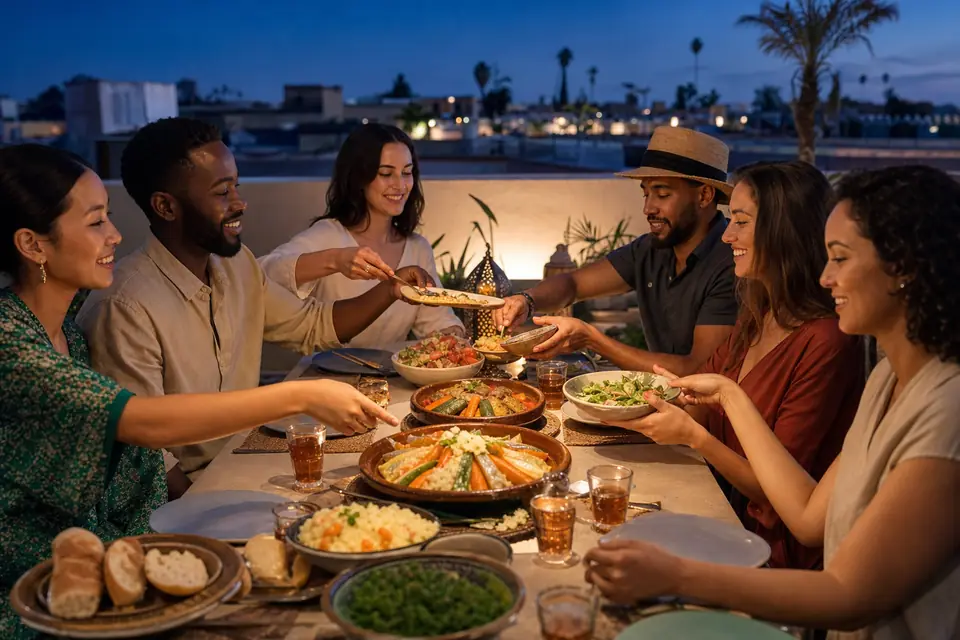
The communal dish
The most visible form of sharing is the shared dish — the tagine or couscous placed in the centre for everyone to eat from together, rather than portioned onto separate plates. This communal eating expresses togetherness and equality, and it is the default at family meals and gatherings. Everyone eats from the same pot, drawing the group close.
Portions are generous by design. Moroccan hosts cook plenty — often more than the household needs — so there is always enough for an unexpected guest, and so that no one leaves hungry. Abundance at the table is a form of hospitality and pride.
Beyond the household
Sharing extends well beyond the table. It is common to send plates of food to neighbours, especially when something special has been cooked or on religious occasions — a dish of couscous, a share of a celebration, sweets at Eid. This exchange knits communities together, and a neighbour's plate is often returned with something of their own.
Giving food to the poor and hungry is a strong value, tied to the Islamic principle of charity. During Ramadan especially, food is shared with those in need, communal iftars are held, and it is common to feed others as an act of blessing. Sharing what you have, particularly food, is seen as bringing baraka — blessing — on the giver.
Sharing as a value
Underlying all of this is a worldview in which food is meant to be shared, not hoarded, and in which generosity with food reflects well on a person and their household. To feed others generously — guests, neighbours, the needy — is honourable; to be stingy with food is looked down upon.
For a visitor, this culture of sharing is felt immediately in the generosity of hosts. Receiving it graciously, and understanding that the shared dish, the heaped plate and the offered sweets all come from this deep-rooted ethic, is part of appreciating Moroccan food culture. Sharing, more than any single dish, is what Moroccan food is about.
Good to know
- Expect generous portions — abundance is a form of hospitality, not excess.
- Sending food to neighbours, especially on special occasions, is a common courtesy.
- Sharing food with the needy is a strong value, especially during Ramadan.
- Receiving a host's generosity graciously honours the ethic behind it.
- A neighbour's plate of food is often returned with something home-cooked in exchange.
Frequently asked questions
How do Moroccans share food?
In many ways — eating from a communal central dish, cooking generous portions so there is always enough for guests, and sending plates of food to neighbours and to those in need, especially on religious occasions and during Ramadan.
Why do Moroccans send food to neighbours?
It knits the community together and reflects the value placed on generosity and sharing. Something special that's been cooked, or a share of a celebration, is sent round, and a neighbour's plate is often returned with a home-cooked dish in exchange.
Is sharing food a religious value in Morocco?
It is tied to the Islamic principle of charity — feeding others, especially the poor, is seen as honourable and as bringing blessing (baraka). This is especially visible during Ramadan, when communal iftars and giving food are widespread.
From the kitchen
Explore the food behind the culture with these recipes: