Rituals & etiquette
The Shared Tagine: How to Eat From One Dish
The Moroccan tagine is not just cooked as one dish — it is eaten as one, placed in the centre of the table for everyone to share directly. This communal eating, gathered around a single pot with bread in hand, is one of the most distinctive and intimate features of Moroccan dining, and it comes with its own gentle etiquette.
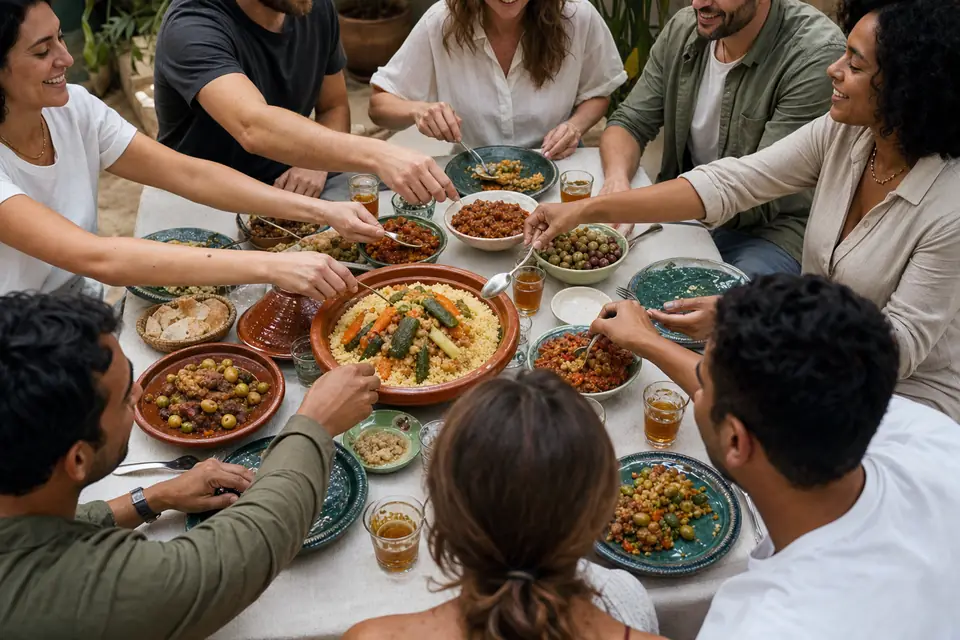
One dish, shared
Rather than portioning food onto individual plates, a Moroccan meal is often served in shared central dishes — the tagine brought to the table in its own pot, the couscous mounded on a communal platter — and everyone eats from the same dish. This shared eating draws the group physically close around the food and is a deliberate expression of togetherness and equality at the table.
The tagine is set in the middle, its lid lifted to release a cloud of fragrant steam, and diners gather around it, each with bread, ready to eat directly from the communal pot.
Eating from your own section
The key etiquette is to eat from the wedge of the dish directly in front of you, working from the edge inward, rather than reaching across to the middle or into someone else's area. The dish is, in effect, divided invisibly into sections, one per person, and you keep to yours.
The centre, where the best pieces of meat usually sit, is a kind of shared space that the host manages — traditionally pushing choice morsels toward guests as a gesture of generosity. It is polite to wait for these to be offered rather than helping yourself to the middle, and to let elders and guests be served the best of it.
Bread, the right hand, and warmth
You eat with bread and the right hand: tear a piece of khobz, pinch up a morsel and sauce from your section, and lift it to your mouth. No cutlery is needed in the traditional style, though spoons are common now for couscous and with guests. Keep to your side, use the right hand, and go at a relaxed, sociable pace.
The whole point is warmth and connection — a shared tagine is as much about the closeness of eating together as about the food. For a visitor, following these customs (own side, right hand, bread, accepting offered pieces graciously) turns the shared dish into a genuinely welcoming experience.
Good to know
- Eat from the section of the tagine directly in front of you, not across the middle.
- Wait for the host to offer the choice central pieces rather than taking them yourself.
- Use bread and your right hand to scoop; keep the left hand off the food.
- Let elders and guests be served the best of the dish first.
- Go at a relaxed pace — the shared meal is about togetherness, not speed.
Frequently asked questions
How do you eat from a shared tagine?
Everyone gathers around the one central pot and eats from the section directly in front of them, using bread and the right hand to scoop. You keep to your own wedge and let the host offer the choice central pieces.
Is it rude to take meat from the middle of a shared tagine?
It is more polite to wait — the best pieces in the centre are usually offered to guests and elders by the host as a gesture of generosity, rather than taken by helping yourself to the middle.
Why do Moroccans eat from one shared dish?
Communal eating draws the group close around the food and expresses togetherness and equality. Sharing one tagine or platter is a deliberate, intimate feature of Moroccan dining, not just a practicality.
From the kitchen
Explore the food behind the culture with these recipes: