Food history
The story of Moroccan food
How a thousand years of Amazigh roots, Andalusian refinement, Arab spice, African trade and Mediterranean exchange built one of the world's great cuisines. 88 deep, factual reads on origins, influences and the dishes that carry them.
Page 1 of 4 · 88 articles
Dishes & their history
Dishes & their history · 8 min
The Origin of the Tagine
Where the cone-lidded pot and the slow-cooked dish that shares its name come from — the Amazigh roots, the desert logic of its design, and how it became Morocco's culinary emblem.
Read article
Dishes & their history · 8 min
The History of Couscous
Steamed semolina is one of North Africa's oldest and most cherished foods. Its Amazigh roots, medieval spread and modern status — including UNESCO recognition — tell a story of a whole region.
Read article Dishes & their history · 8 min
The History of Moroccan Mint Tea
Sweet green tea with mint is Morocco's national drink and its great gesture of welcome. Its history mixes documented trade with well-worn legend — and a ritual poured from a great height.
Read article
Dishes & their history · 8 min
The History of Moroccan Bread
Bread is sacred in Morocco — the edible spoon, the daily staple and a symbol of provision. From khobz to msemen, its history runs through communal ovens and shared dough.
Read article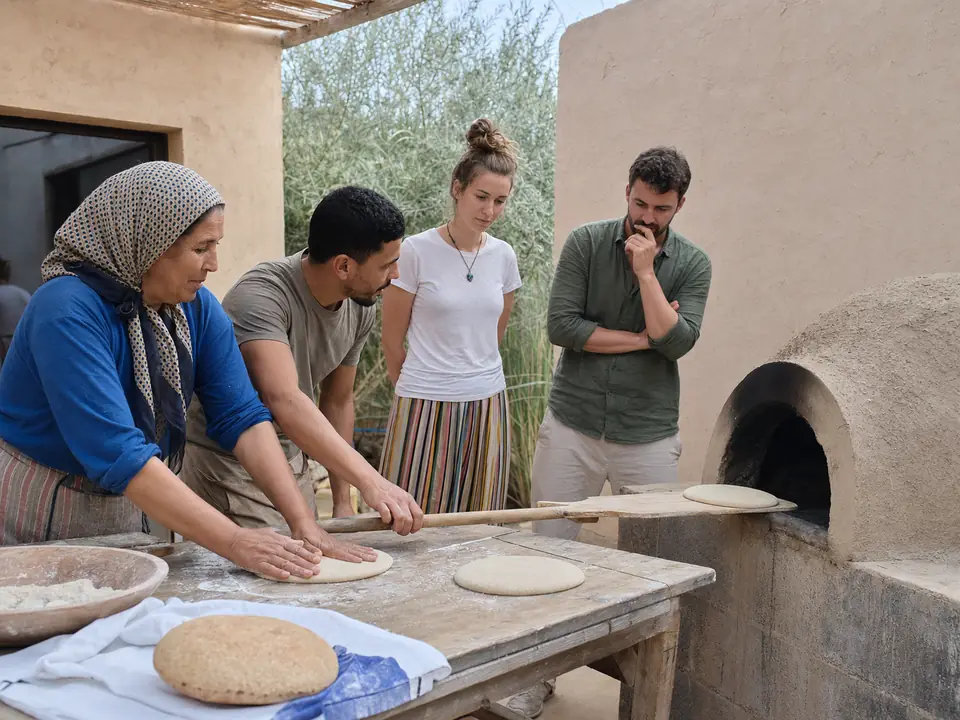
Dishes & their history · 8 min
The Origins of Pastilla (Bastila)
The layered, sugar-dusted pie of Fes is Morocco's grandest festive dish. Its Andalusi character, disputed name and pigeon-to-seafood variations make it a story of refinement and debate.
Read article
Dishes & their history · 7 min
The History of Harira
The tomato, lentil and chickpea soup that breaks the Ramadan fast is comfort, ritual and nutrition in one bowl. Its roots blend Amazigh, Andalusi and Arab threads.
Read article Dishes & their history · 8 min
The History of Moroccan Pastries
Almond, honey, sesame and orange-blossom define Morocco's trays of sweets. Their history runs through Andalusi refinement, festive tradition and the art of the household pastry.
Read article Dishes & their history · 7 min
History of Mechoui and Roasted Lamb
A whole lamb roasted slowly over embers or in a pit is one of Morocco's oldest and grandest dishes — the food of celebration, sacrifice and Amazigh feasting.
Read article Dishes & their history · 7 min
History of Tanjia (Marrakech)
Named after the urn it cooks in, tanjia is Marrakech's bachelor's dish — meat, preserved lemon and spices sealed in a pot and left to cook slowly in the embers of the bathhouse furnace.
Read article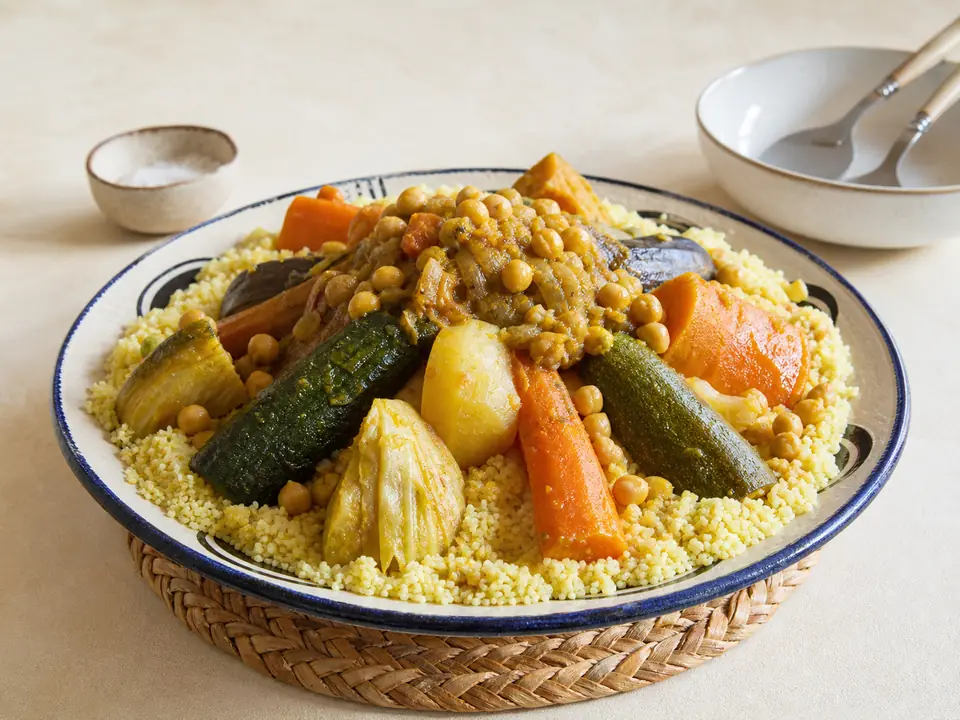
Dishes & their history · 7 min
Seffa and Sweet Couscous History
Not all couscous is savoury. Seffa — steamed couscous or vermicelli mounded with sugar, cinnamon and almonds — is the sweet side of Morocco's grain tradition, served at celebrations.
Read article Dishes & their history · 8 min
History of Fish and Coastal Cuisine in Morocco
With long Atlantic and Mediterranean coasts, Morocco has a rich seafood tradition — charmoula-marinated fish, grilled sardines and seafood pastilla in ports like Essaouira and Safi.
Read article Dishes & their history · 7 min
History of Chebakia and Ramadan Sweets
The sesame-flecked, honey-drenched flower of chebakia is the taste of Ramadan in Morocco — one of a family of festive sweets that break the fast alongside harira.
Read article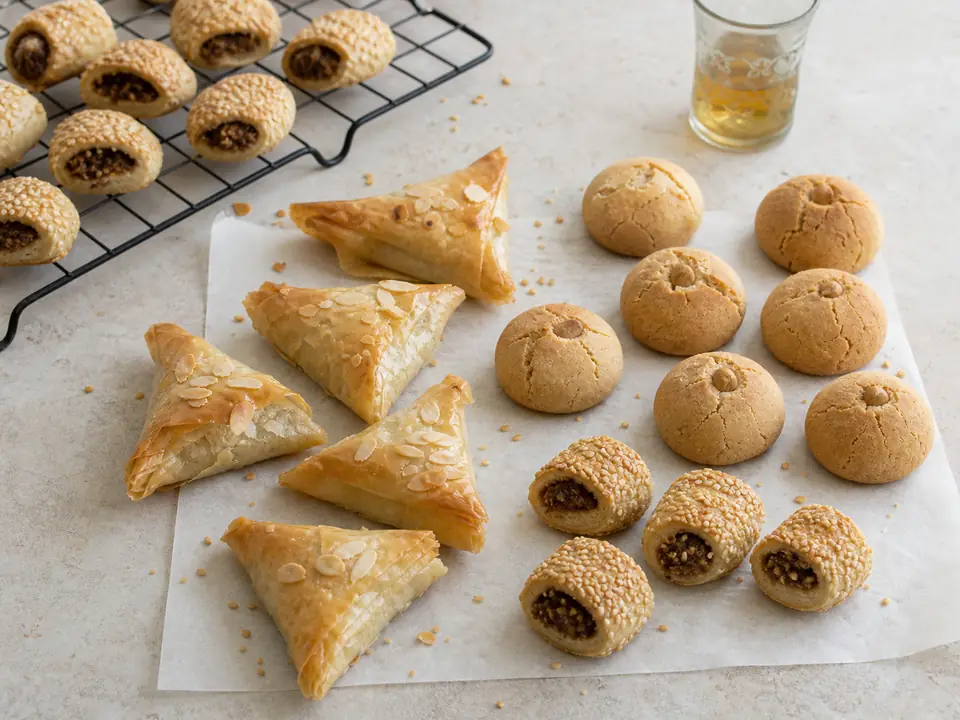
Dishes & their history · 7 min
The History of Rfissa
How rfissa — the layered msemen with lentils and shredded chicken in a fenugreek-spiced broth — became one of Morocco's most symbolically charged dishes, tied to childbirth, healing and celebration.
Read article Dishes & their history · 6 min
The History of Bessara
Morocco's beloved dried fava bean soup — cheap, sustaining and ancient — and how it moved from rural subsistence to a breakfast staple served on every street corner.
Read article Dishes & their history · 6 min
The History of Kefta Tagine
Spiced meatballs simmered in a tomato sauce with eggs cracked on top — how kefta tagine became one of Morocco's most loved and widely eaten one-pot dishes.
Read article Dishes & their history · 6 min
The History of Zaalouk
Morocco's smoky cooked aubergine-and-tomato salad — how a simple side dish of roasted vegetables, garlic and spices became a fixture on every Moroccan table.
Read article Dishes & their history · 6 min
The History of Msemen and Moroccan Flatbreads
How the square, laminated, pan-fried msemen and its griddle-bread cousins — baghrir, harcha and meloui — built a parallel bread tradition alongside Morocco's oven-baked khobz.
Read article Dishes & their history · 6 min
The History of Sellou
The dense, unbaked confection of toasted flour, almonds and sesame that fuels Ramadan nights and restores new mothers — how sellou became Morocco's most concentrated energy food.
Read article Dishes & their history · 6 min
The History of Loubia
Morocco's humble white bean stew — a New World bean simmered in tomato, garlic and cumin — and how it became a cheap, sustaining fixture of the everyday table and the street.
Read article Dishes & their history · 6 min
The History of Amlou
The Amazigh paste of roasted almonds, argan oil and honey — sometimes called Berber Nutella — and how it rose from a Souss-region breakfast staple to a celebrated speciality.
Read articleOrigins & influences
Origins & influences · 9 min
The Andalusian Influence on Moroccan Food
When Muslims and Jews left Al-Andalus for Morocco, they brought a refined cuisine of sweet-savoury pairings, pastry and preserves that reshaped the Moroccan table forever.
Read article Origins & influences · 9 min
Berber (Amazigh) Cooking Traditions
The indigenous foundation of Moroccan food — barley, one-pot braises, communal bread and preserved larders — laid down by the Amazigh long before Arab, Andalusi or French cooking arrived.
Read article Origins & influences · 8 min
The Arab Conquest and Moroccan Cuisine
The arrival of Islam and Arab culture from the 7th century reshaped North African food — bringing new dietary laws, eastern spices, dishes and refinements that fused with the Amazigh base.
Read article Origins & influences · 8 min
French Colonial Influence on Moroccan Food
The 1912–56 protectorate left its mark on the Moroccan table — café culture, baguettes and pastries, expanded vineyards and new produce — layered onto a much older cuisine.
Read articleAnswers
About these history articles
What do these Moroccan food history articles cover?
They trace where Moroccan cuisine comes from — the Amazigh (Berber) foundations, the Arab and Andalusian layers, sub-Saharan and Mediterranean trade, Jewish Moroccan traditions and French colonial touches — plus the histories of individual dishes, ingredients and the great food cities. Each is a self-contained, factual read.
Are these historical articles accurate?
They summarise widely accepted culinary and cultural history in plain English, focusing on the influences and traditions scholars broadly agree on. Where a dish's exact origin is disputed or legendary, we say so rather than inventing a single tidy answer.
How does history help me eat better in Morocco today?
Understanding why couscous is eaten on Fridays, why preserved lemon defines a tagine, or how the spice routes shaped ras el hanout makes every meal richer and helps you order with intent. The history links directly to our recipes, cooking classes and food tours.