Class type
Moroccan Pastry Class in Marrakech
Moroccan pastries are the jewels of the tea tray — crescents of almond paste, honey-soaked coils, sesame-studded shortbreads, all perfumed with orange-blossom water. A pastry class is the most hands-on, detail-loving workshop in the city, and one of the few where you go home with a box of what you made.
- Duration
- 3–4 hours
- Group size
- Small group or private (2–10)
- Level
- All levels — fiddly but forgiving
- Price
- Custom quote from our team
Email confirmation within 24 hours · 30% deposit confirms your booking · Privacy policy
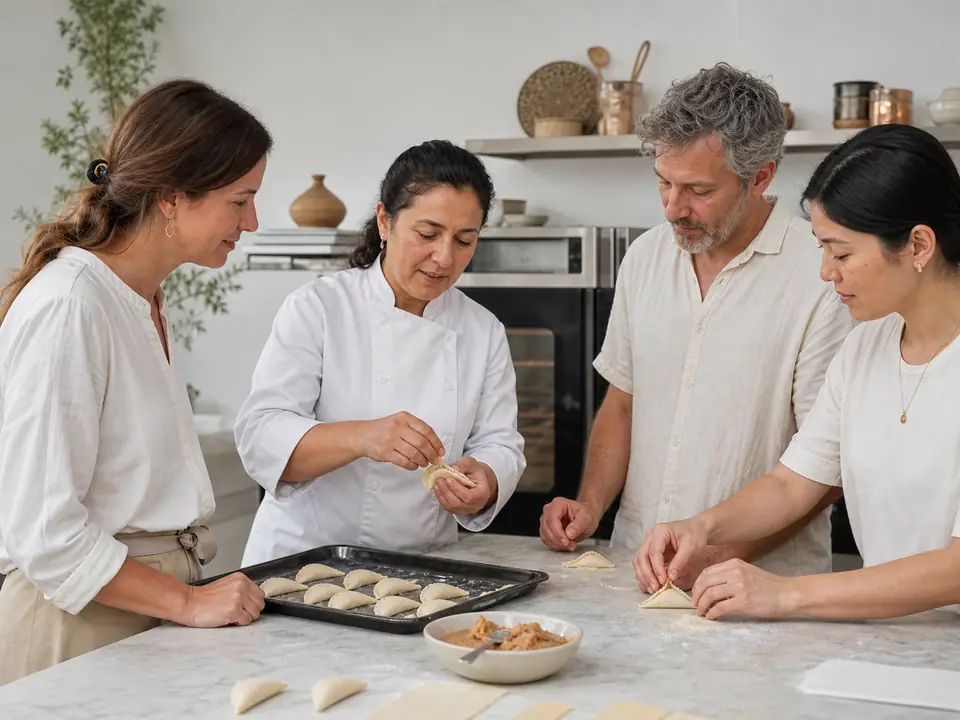
What this class covers
The star is usually kaab el ghzal (gazelle horns): a delicate crescent of thin pastry wrapped around a rose- and orange-blossom-scented almond paste, curved by hand. It is fiddly, meditative work, and doing it under a Moroccan pastry cook's eye is far easier than following a video.
Depending on the host you might also fold briouat (little honey-dipped almond triangles in warqa pastry), roll ghriba (crackle-topped almond or sesame shortbreads), or shape chebakia, the sesame flower-knots fried and soaked in honey that appear during Ramadan.
Pastry is precise, so expect more measuring and shaping than a tagine class — but it is forgiving enough for beginners, and the reward is a box of sweets and skills for the tea tray.
What you'll cook
- Kaab el ghzal (gazelle horns) — Almond-paste crescents scented with orange-blossom and rose water.
- Briouat — Honey-dipped almond triangles folded in warqa pastry.
- Ghriba — Crackle-topped almond or sesame shortbread biscuits.
- Mint tea — The essential partner — you will pour it too.
How the class runs & how long it takes
A typical session runs about 3–4 hours. Here is the usual shape of the day:
- 1
Make the fillings
Blend almond paste with sugar, orange-blossom and rose water.
- 2
Roll & shape
The core skill — thin pastry, careful folding and hand-curving.
- 3
Bake or fry
Into the oven, or fried and dipped in honey depending on the sweet.
- 4
Box & tea
Pack your pastries and taste them with a glass of mint tea.
What to expect
Expect precise, detailed handwork — measuring, rolling thin and shaping by hand — rather than the loose improvisation of a tagine.
Expect to take a box of your own pastries away, which makes this one of the most rewarding classes to gift or bring home.
Usually included
- Almonds, honey and orange-blossom water
- Warqa or pastry dough
- A box of the sweets you make to take away
- Recipes
Who this class suits
- Keen bakers and detail-lovers
- Anyone with a sweet tooth
- People who want an edible souvenir to take home
- Rainy-day or afternoon activities
How to choose the right class
- Ask which pastries are on the menu — gazelle horns are the classic centrepiece.
- Confirm you get to take a box home, as most pastry classes let you.
- Check whether it is baking-only or includes fried, honey-dipped sweets like chebakia.
- If you have a nut allergy, flag it early — almonds are central to most Moroccan pastry.
Frequently asked questions
What Moroccan pastries will I learn to make?
Usually kaab el ghzal (almond gazelle horns), and often briouat, ghriba or chebakia depending on the host. All lean on almonds, honey and orange-blossom water.
Is a Moroccan pastry class hard for beginners?
It is more precise than a tagine class, with careful rolling and shaping, but it is forgiving and beginner-friendly — and much easier with a pastry cook guiding your hands than from a recipe alone.
Can I take the pastries home?
Yes — most pastry classes send you off with a box of what you made, which makes this one of the best classes for an edible souvenir or a gift.
Try the recipes at home
Booked, or just browsing? These free step-by-step recipes cover the dishes this class teaches: