Class type
Moroccan Dessert Class in Marrakech
Moroccan desserts are not just the ornate pastry-tray sweets — everyday meals often end with something simpler and homelier: a fragrant orange-and-cinnamon salad, sweet steamed seffa, or warm honey-drizzled sfenj. A dessert class covers this comforting, less-formal sweet side of the cuisine.
- Duration
- 2.5–3.5 hours
- Group size
- Small group or private (2–10)
- Level
- All levels
- Price
- Custom quote from our team
Email confirmation within 24 hours · 30% deposit confirms your booking · Privacy policy
What this class covers
Where a pastry class is fiddly and precise, a dessert class is warmer and more relaxed. A centrepiece is often seffa — steamed couscous or vermicelli tossed with butter, cinnamon, sugar and almonds and mounded into a sweet, comforting dish sometimes served with milk.
You will likely also make the elegant orange-and-cinnamon salad (sliced oranges with cinnamon, orange-blossom and a scatter of dates or almonds) that ends so many Moroccan meals, plus a homely sweet like honeyed sfenj or a simple almond ghriba.
It is an approachable, affordable class, lovely for those with a sweet tooth who do not want the precision of full pastry work, and it fills out your repertoire with the everyday endings Moroccans actually eat at home.
What you'll cook
- Sweet seffa — Steamed couscous or vermicelli with cinnamon, sugar, butter and almonds.
- Orange-and-cinnamon salad — The classic light, fragrant end to a Moroccan meal.
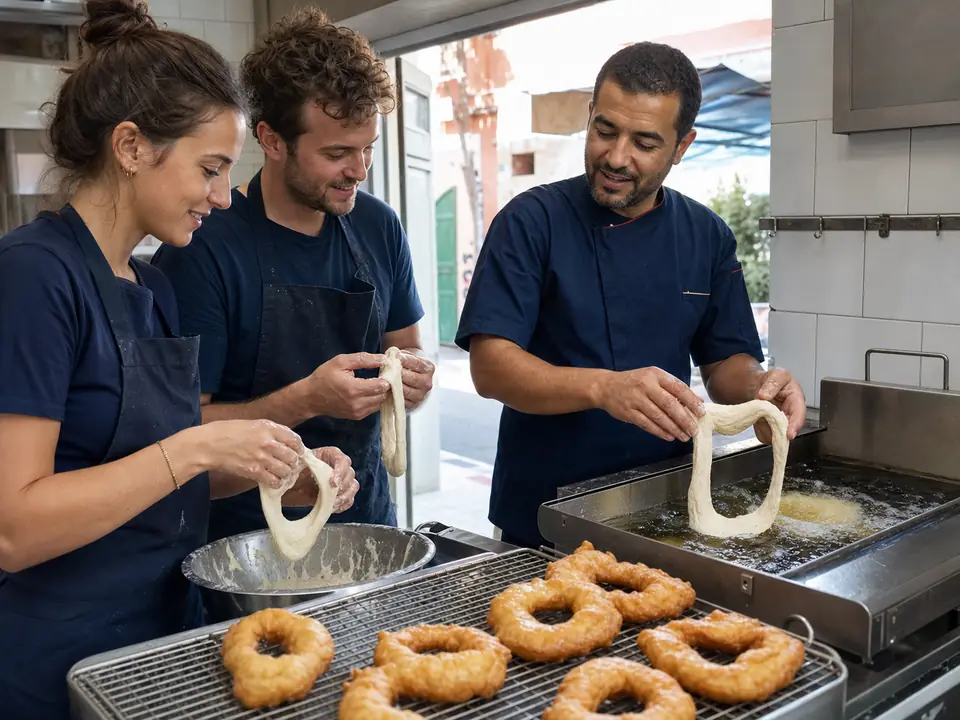
- Honeyed sfenj — Warm Moroccan doughnuts drizzled with honey.
- Ghriba — Simple crackle-topped almond shortbread.
How the class runs & how long it takes
A typical session runs about 2.5–3.5 hours. Here is the usual shape of the day:
- 1
Steam the seffa
Cook and sweeten the couscous or vermicelli base.
- 2
Prep the fruit
Slice and dress the orange-and-cinnamon salad.
- 3
Fry or bake
Make honeyed sfenj or bake simple ghriba.
- 4
Sweet spread
Lay out the desserts with mint tea and share.
What to expect
Expect homely, comforting desserts rather than the ornate formal pastries — warmer and more forgiving.
Expect an approachable, affordable session that rounds out your Moroccan repertoire with everyday sweets.
Usually included
- Almonds, honey, cinnamon and fruit
- Cooking session
- The desserts you make
- Recipes
Who this class suits
- Sweet tooths who want relaxed rather than precise
- Anyone building a full meal repertoire
- Budget-minded and beginner cooks
- Families (the desserts are fun and forgiving)
How to choose the right class
- Decide between this and a formal pastry class — desserts here are homelier and easier.
- Confirm seffa is on the menu if you want the signature sweet dish.
- Ask about fried sweets like sfenj if you want a hands-on element.
- Flag nut allergies — almonds feature throughout.
Frequently asked questions
What is seffa?
Seffa is a sweet Moroccan dish of steamed couscous or vermicelli tossed with butter, cinnamon, icing sugar and almonds, mounded up and sometimes served with milk. It is comforting and often eaten as a dessert or a sweet course.
How is a dessert class different from a pastry class?
A pastry class focuses on the precise, ornate tea-tray sweets like gazelle horns. A dessert class covers homelier, everyday endings — seffa, orange-and-cinnamon salad and honeyed sfenj — and is more relaxed and forgiving.
What is a typical Moroccan dessert at home?
Everyday meals often end simply — fresh fruit, an orange-and-cinnamon salad, or sweet seffa — rather than the elaborate pastries reserved for celebrations and the tea tray.
Try the recipes at home
Booked, or just browsing? These free step-by-step recipes cover the dishes this class teaches: