Dishes & their history
The History of Harira
Harira is the soup that fills Moroccan homes at sunset through Ramadan — a fragrant, hearty broth of tomato, lentils and chickpeas, often with meat, thickened to a velvety texture and finished with fresh herbs. Nourishing after a long day of fasting, it is also eaten year-round, and its history reflects the layered make-up of Moroccan cuisine.
- Read
- 7 min
- Topic
- Dishes & their history
- Updated
- 19 July 2026
At a glance
- Harira is a tomato-based soup with lentils, chickpeas and herbs, often thickened with a flour or egg mixture.
- It is the classic dish for breaking the fast during Ramadan.
- Its ingredients reflect Amazigh, Arab and Andalusi threads and later New World tomatoes.
The soup of the fast
Harira is bound up with Ramadan, when Muslims fast from dawn to sunset. Breaking the fast — iftar — traditionally begins with dates and a bowl of harira, which restores energy gently and is easy on an empty stomach. Its warmth, protein and carbohydrate make it ideally suited to the moment, and for many families the smell of harira simmering is the smell of the holy month.
It is by no means only a Ramadan dish, though. Harira is served at homes and in cafés year-round, a beloved everyday soup as much as a ritual one.
What goes in the pot
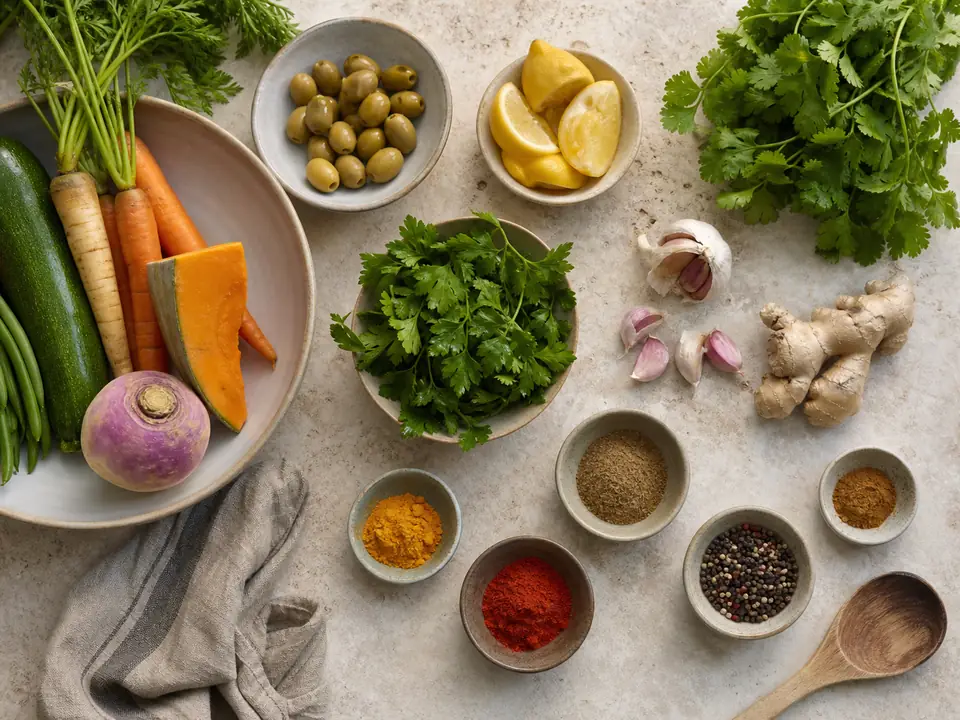
There are countless family recipes, but the core is consistent: a tomato base built up with pulses, aromatics and warm spices, simmered long and finished with fresh coriander and parsley. A signature step is the thickening that gives harira its characteristic silky body.
- Tomato base: the foundation, though tomatoes arrived only after the Columbian exchange.
- Lentils and chickpeas: ancient pulses providing heartiness and protein.
- Tadouira: a flour-and-water (or yeast) mixture stirred in to thicken and enrich the soup.
- Herbs and spices: coriander, parsley, ginger, pepper and often a little saffron or turmeric.
A dish of many roots
Harira cannot be pinned to a single origin. Its pulses and grain reflect the ancient Amazigh larder, its spicing and refinement owe much to Arab and Andalusi cooking, and its now-essential tomato only entered Moroccan kitchens after the New World crops spread through the region. The result is a genuinely layered dish, and its precise history is not documented in a way that allows one neat story.
Traditionally harira is served with dates, sticky chebakia and hard-boiled eggs during Ramadan. To follow those threads, read the history of chebakia and Ramadan sweets and about New World foods in Moroccan cuisine.
Frequently asked questions
What is harira?
Harira is a Moroccan soup based on tomatoes, lentils and chickpeas, often with a little meat, seasoned with herbs and warm spices and thickened to a silky texture. It is hearty, aromatic and nutritious.
Why is harira eaten during Ramadan?
Harira is the traditional dish for breaking the daily fast at iftar because it is nourishing yet gentle on an empty stomach. It is usually eaten with dates and sweets like chebakia after a day without food or drink.
What makes harira thick and silky?
The characteristic body comes from tadouira, a mixture of flour and water (sometimes with a little yeast) stirred into the simmering soup near the end of cooking. Some cooks use a beaten egg instead or as well.
Where does harira come from?
Harira has layered roots rather than a single origin: its pulses reflect the ancient Amazigh larder, its spicing owes much to Arab and Andalusi cooking, and its tomato base came only after New World crops reached Morocco. Its precise history is not documented as one tidy story.