Markets & daily life
The Neighbourhood Hanout
Alongside the grand souks and weekly markets, everyday Moroccan food life runs on the hanout — the tiny neighbourhood corner shop crammed with a little of everything. Open long hours and found on almost every street, the hanout and its shopkeeper (the mool hanout) are a cornerstone of daily provisioning and community life across Morocco.
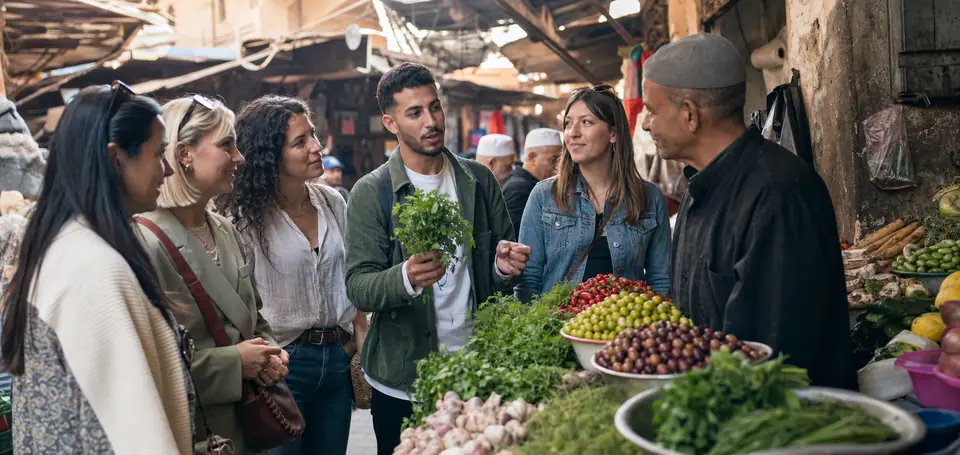
A little of everything
The hanout is a small, often minuscule general store packed floor to ceiling with staples: bread, milk, eggs, oil, sugar, tea, tinned goods, biscuits, soft drinks, sweets, cigarettes, soap, and countless odds and ends. It's where you dash for whatever you've run out of, any time of day, without going to the market or a supermarket. Its convenience and long hours make it indispensable to neighbourhood life.
A distinctive feature is buying in tiny quantities — a single egg, a spoon of tomato paste, a little oil decanted into your own container, a few cigarettes, one portion of butter. The hanout sells things by the single item or small measure, which suits everyday needs and tighter budgets, and reflects a way of shopping little and often for exactly what's needed.
Credit and community
The mool hanout usually knows the families of the neighbourhood personally, and this relationship underpins an informal credit system: regular customers often run a tab, buying on credit through the month (or through hard times) and settling up later. This trust-based arrangement is a quiet but important support in community life, especially for those on modest incomes.
The hanout is thus more than a shop — it's a social node. The shopkeeper is a familiar figure who keeps an eye on the street, passes messages, and is woven into the fabric of the quarter. Children are sent to the hanout on errands, neighbours chat there, and it anchors the daily rhythm of the neighbourhood.
Everyday food provisioning
For daily food, the hanout complements the market: you buy fresh produce, meat and fish from the souk or specialist sellers, and top up on staples and forgotten items from the corner shop. Bread is often bought fresh daily, milk and eggs as needed, and the hanout fills every gap in between. Its role is convenience and immediacy — the shop you can reach in a minute for whatever the kitchen suddenly lacks.
For a visitor, the hanout is a handy source of water, snacks and basics, and a small window into everyday Moroccan life beyond the tourist markets. Popping into a corner hanout, greeting the shopkeeper, and buying a bottle of water or some biscuits is a small, ordinary act that connects you to the real daily rhythm of a Moroccan neighbourhood.
Good to know
- The hanout is your go-to for water, snacks and forgotten staples, open long hours.
- You can buy in tiny amounts — a single egg, a little oil, a few items at a time.
- The shopkeeper knows the neighbourhood; regulars often buy on informal credit.
- Use the souk for fresh produce and the hanout to top up on staples in between.
- Greeting the mool hanout is a small, genuine connection to everyday Moroccan life.
Frequently asked questions
What is a hanout in Morocco?
The hanout is the tiny neighbourhood corner shop found on almost every street, packed with staples — bread, milk, eggs, oil, tinned goods, sweets and countless odds and ends — open long hours for whatever you've run out of.
Can you buy single items at a Moroccan corner shop?
Yes — a distinctive feature of the hanout is selling in tiny quantities: a single egg, a little oil, a few cigarettes, one portion of butter. It suits shopping little and often for exactly what's needed.
Do Moroccans buy on credit at the hanout?
Often — the shopkeeper knows local families personally, and regular customers frequently run a tab, buying on informal credit through the month and settling up later. This trust-based system is a quiet support in community life.
From the kitchen
Explore the food behind the culture with these recipes: