Markets & daily life
How Moroccans Shop for Food
The way Moroccans shop for food is markedly different from the big weekly supermarket run common in the West. It's daily, fresh and local — buying from the souk, specialist sellers and the corner hanout, choosing seasonal produce, and shopping little and often for exactly what the day's cooking needs. This rhythm shapes the freshness and character of Moroccan food.
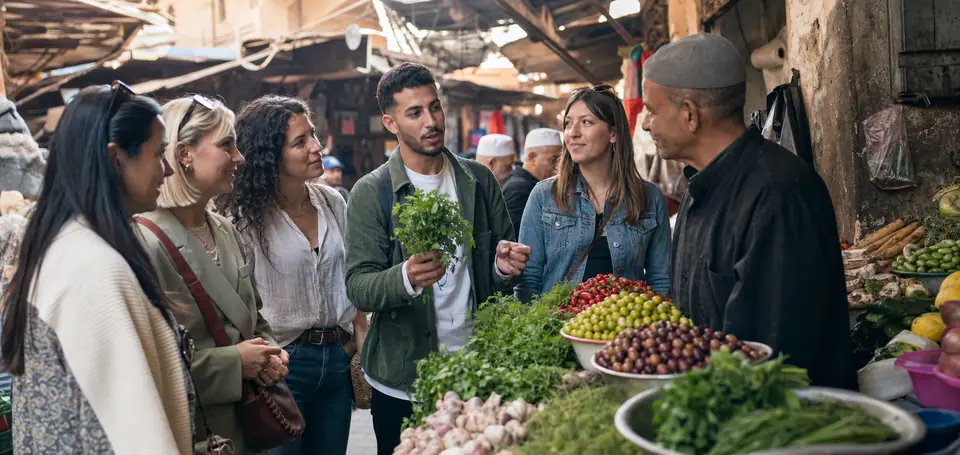
Fresh and daily
Rather than one big weekly shop, many Moroccans buy food fresh, often daily or every few days, for the meals immediately ahead. Bread is bought or baked fresh each day; vegetables, herbs, meat and fish are bought fresh close to when they'll be cooked. This daily habit means ingredients are at their freshest and cooking follows what's good and available that day, rather than a pre-planned weekly menu.
This approach reflects both a preference for freshness and, historically, limited home refrigeration and storage — you buy what you need when you need it. It's a big part of why Moroccan food tastes so fresh and seasonal.
Souk, specialist and hanout
Shopping is spread across several sources rather than one shop. Fresh produce comes from the souk or market and produce sellers; meat from the butcher (often chosen and cut to order, sometimes the animal freshly slaughtered); fish from the fishmonger, best near the coast; spices, olives and preserved goods from the spice and dried-goods stalls. The tiny neighbourhood hanout fills in staples and forgotten items, sold in small quantities and open long hours.
Buying from specialist sellers means expertise and choice — the butcher advises on cuts, the spice merchant grinds a blend, the olive seller lets you taste. Relationships matter: regular customers are known, advised and sometimes extended credit, and a good relationship with your sellers means better service and produce.
Seasonal and local
Moroccan shopping follows the seasons closely. You buy what's in season and abundant — the market's offerings shift through the year, and cooking flexes to match, so summer brings tomatoes, melons and stone fruit, autumn quinces and pomegranates, winter oranges and hearty vegetables. Seasonal produce is fresher, cheaper and better, and eating with the seasons is simply how the market works.
While modern supermarkets and hypermarkets have grown in Moroccan cities, the traditional pattern of fresh, daily, local shopping from souks and specialist sellers remains strong, especially for produce and the food that matters. For a visitor, watching or joining this shopping — a market tour, a wander through a produce souk — reveals how central fresh, seasonal, local ingredients are to the whole cuisine.
Good to know
- Moroccans shop fresh and often, not in one big weekly haul — buy for the meals ahead.
- Spread shopping across specialists: butcher, fishmonger, produce seller, spice stall.
- The corner hanout fills in staples and small quantities any time of day.
- Buy what's in season — it's fresher, cheaper and what the market naturally offers.
- Relationships with sellers earn better service, advice and produce.
Frequently asked questions
How do Moroccans shop for food?
Fresh, daily and local — buying from the souk, specialist sellers (butcher, fishmonger, spice merchant) and the corner hanout, little and often for the meals immediately ahead, and choosing seasonal produce, rather than doing one big weekly supermarket run.
Why do Moroccans shop for food daily?
For freshness and, historically, because of limited home refrigeration — you buy what you need when you need it. Bread, produce, meat and fish are bought fresh close to cooking, so ingredients are at their best and cooking follows what's good that day.
Do Moroccans use supermarkets?
Modern supermarkets and hypermarkets have grown in the cities, but the traditional pattern of fresh, daily, local shopping from souks and specialist sellers remains strong, especially for produce and the food that matters most.
From the kitchen
Explore the food behind the culture with these recipes: