Markets & daily life
Buying Street Food in Morocco
Street food is one of the great pleasures of eating in Morocco — cheap, delicious and everywhere, from the legendary evening food stalls of Marrakech's Jemaa el-Fnaa square to the grills, soup carts and snack sellers of every town. Knowing what to try and how to choose a good stall lets you eat the street with confidence and delight.
What to eat
The range is enormous. Grilled meats and kefta skewers, merguez sausages, and brochettes sizzle over charcoal. Snail soup (babbouche) is a beloved cup of spiced broth from carts and stalls. Look for maakouda (fried potato cakes), sardines, harira soup (especially in the evening and at Ramadan), bissara (fava-bean purée eaten for breakfast), sfenj (fresh doughnuts), msemen and, in Marrakech, the famous tanjia and steamed sheep's head for the adventurous.
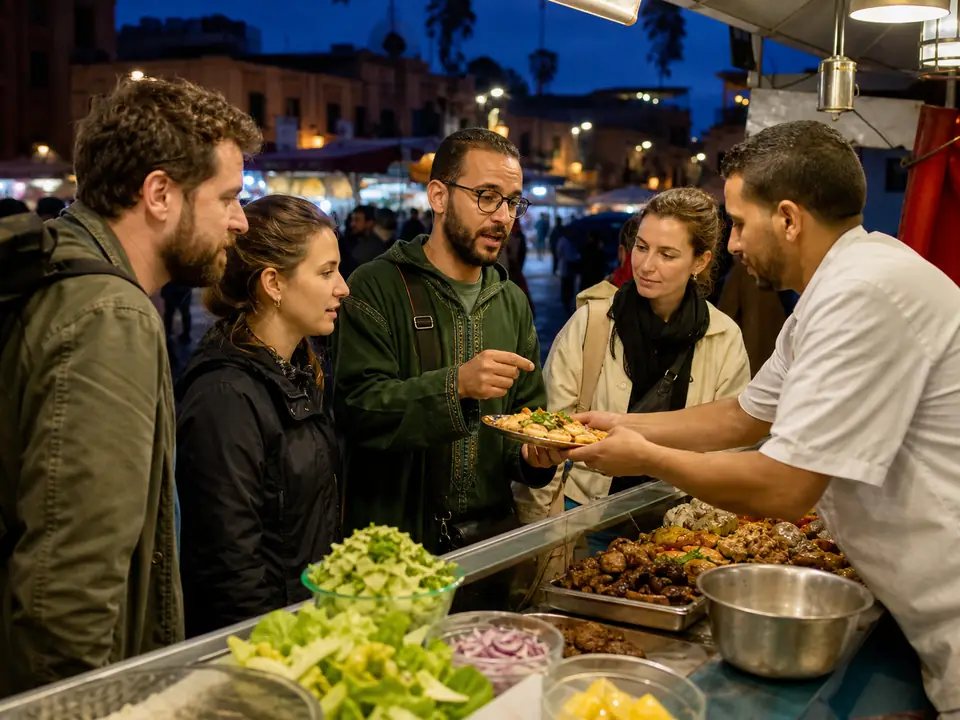
The Jemaa el-Fnaa in Marrakech is the most famous street-food spectacle, transforming each evening into a vast open-air food court of numbered stalls, smoke and lights. Beyond it, every medina and market has its own snack sellers, grill stands and sweet stalls. Prices are low, portions generous, and much of it is best eaten hot and fresh on the spot.
Choosing a good stall
The golden rule everywhere is to eat where it's busy — a stall with a crowd of locals has high turnover, so the food is fresh and freshly cooked, and popularity is a good sign of quality. Favour food that's cooked to order in front of you and served piping hot, over things sitting out lukewarm. Grilled, fried and boiled items cooked fresh are generally safest.
Watch the stall for a moment: is it clean, is the cook handling food and money hygienically, is there a steady stream of customers? Trust your instincts. Staying hydrated with bottled or safe water and easing into richer street food gradually helps a stomach unused to it. Millions eat Moroccan street food happily every day; a little sensible stall-picking keeps it a joy.
How to order and eat
Ordering is informal — point, ask, and you'll be served, often to eat standing or perched on a bench. At the Jemaa el-Fnaa stalls, touts cheerfully compete for your custom; pick one that's busy, sit down, and order a spread to share. Bread comes with almost everything, used to scoop. Have small change ready, and confirm prices for anything not clearly marked to avoid surprises.
Street food is social and unpretentious — part of its charm is eating shoulder to shoulder with locals. Try a bit of everything, share dishes, and don't be afraid to ask what something is. It's some of the best-value, most characterful eating in the country, and a direct taste of everyday Moroccan food life.
Good to know
- Eat where it's busy with locals — high turnover means fresh, freshly cooked food.
- Favour items cooked to order and served piping hot over lukewarm pre-cooked food.
- Try snail soup, grilled skewers, maakouda, sfenj, harira and bissara.
- Have small change ready and confirm prices for anything unmarked.
- Ease into rich street food gradually and drink safe or bottled water.
Frequently asked questions
Is Moroccan street food safe to eat?
Generally yes, with sensible stall-picking — eat where it's busy with locals (high turnover, fresh food), favour items cooked to order and served piping hot, and drink safe or bottled water. Millions eat it happily every day.
What street food should I try in Morocco?
Grilled meat and kefta skewers, snail soup (babbouche), maakouda (potato cakes), sfenj (doughnuts), harira and bissara soups, sardines, and in Marrakech the famous tanjia — plus the whole spectacle of the Jemaa el-Fnaa evening food stalls.
How do I order at the Jemaa el-Fnaa food stalls?
It's informal and lively — touts compete for custom, so pick a busy stall, sit down and order a spread to share. Bread comes with most things for scooping. Have small change ready and confirm prices for anything not clearly marked.
From the kitchen
Explore the food behind the culture with these recipes: