Rituals & etiquette
Food and Hospitality the Moroccan Way
In Morocco, hospitality is not optional — it is a moral obligation, deeply rooted in Islamic teaching and Amazigh tradition. And the primary vehicle of hospitality is food. A guest must be fed generously, repeatedly and abundantly. Understanding this obligation, and its rituals, is understanding the culture itself.
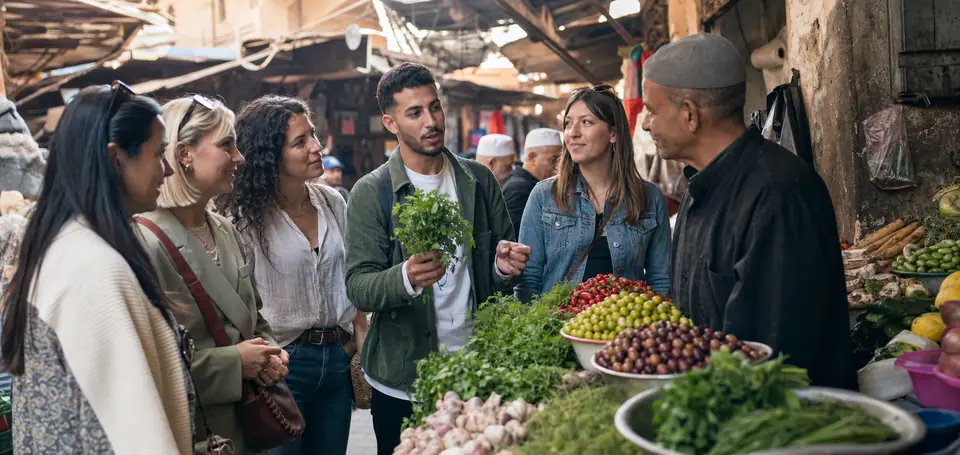
The obligation to feed
A guest in a Moroccan home will be offered food — often before they even sit down. Tea appears immediately. A meal follows, and it will be more food than the number of people warrants, because abundance is the point. Serving just enough implies calculation; serving too much demonstrates generosity. The host's honour is bound up in the quality and quantity of what is served.
This is not performative — it is sincere. A family that cannot afford extravagance will still offer the best they have. A glass of tea, bread, olive oil and olives — served with warmth — is genuine hospitality. The obligation is to give generously from what you have, not to pretend to have more than you do.
The rituals of welcome
The sequence is broadly consistent. Tea is served first, often with nuts or dried fruit. This is the welcome period — conversation, pleasantries, settling in. The meal follows: a shared tagine or couscous, accompanied by salads and bread. Fruit is served after the main course. More tea follows the fruit. Pastries may appear with the tea.
The host serves. The host urges. The host insists. 'Eat, eat' (koul, koul) is the constant refrain. A polite guest initially protests ('I'm full, thank you') and then accepts more. This back-and-forth — the host's insistence and the guest's gracious yielding — is a social dance both parties understand. Refusing food outright (without good reason like dietary restriction) can be read as a rebuff.
Food as social currency
Food in Morocco is how relationships are built, maintained and expressed. An invitation to eat is an invitation to intimacy. Bringing food to a neighbour is an act of care. Feeding someone well creates a bond of gratitude and reciprocity. Business negotiations, family reunions, religious occasions and neighbourly relations all revolve around the shared meal.
For visitors to Morocco, understanding this means accepting food graciously, eating with appreciation, and recognising that the meal is the relationship — not a prelude to it. Complimenting the food, eating with visible pleasure and expressing gratitude are the strongest forms of respect you can offer.
Good to know
- Accept food and tea when offered — refusal can be read as a rebuff.
- The host will insist you eat more; it is a social dance, not pressure. Yield graciously.
- Compliment the food sincerely — it is the strongest form of respect.
- Abundance is the point: more food than needed demonstrates generosity, not waste.
- Bring a small gift (pastries, fruit) when visiting a Moroccan home — reciprocity matters.
Frequently asked questions
Why do Moroccan hosts insist you eat so much?
Generosity and abundance are the point. Serving just enough implies calculation; serving too much demonstrates honour and care. The insistence is sincere — the host's reputation is tied to how well the guest is fed.
Is it rude to refuse food in Morocco?
Outright refusal can be read as a rebuff. If you genuinely cannot eat more, declining politely while expressing gratitude is acceptable. The expectation is that you will initially protest and then accept more — this is a social dance both parties understand.
What should I bring when visiting a Moroccan home?
Pastries, fruit or sweets are the standard gifts. Sugar used to be traditional. Bring something modest but thoughtful — the gesture of reciprocity matters more than the expense.
From the kitchen
Explore the food behind the culture with these recipes: