Weekly rituals
A Moroccan Tea Ceremony
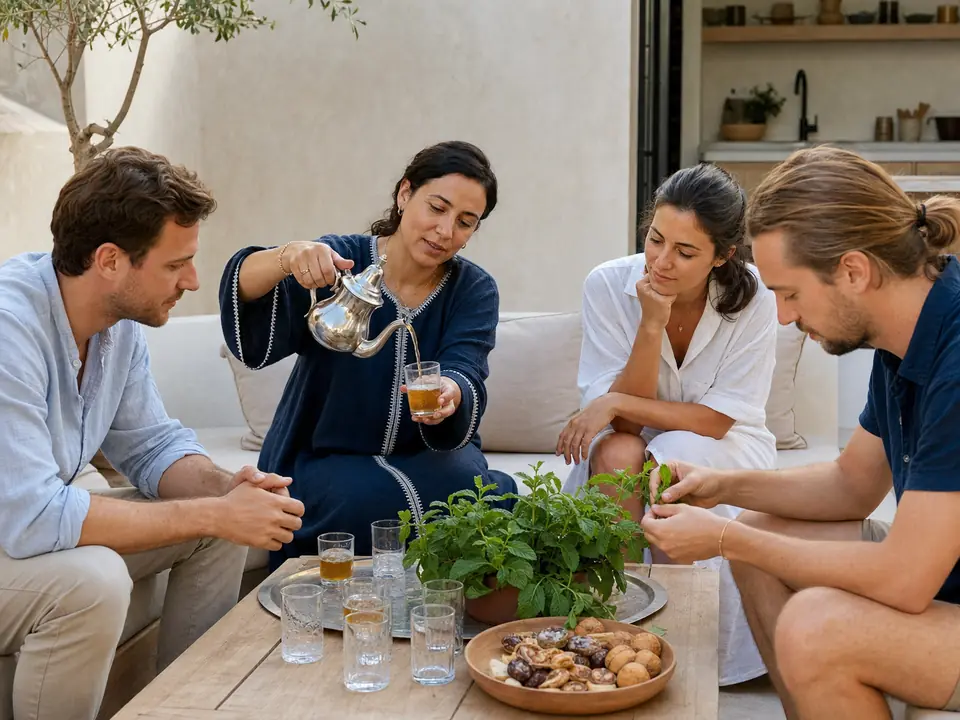
In Morocco, mint tea is not so much a drink as a language of welcome. It greets a guest at the door, seals a bargain in the souk, closes every meal and fills every idle afternoon. Preparing and pouring it well is a genuine skill and a point of pride, and the small ceremony around it — the high pour, the foamy crown, the three re-steeped glasses — is one of the quickest ways to understand Moroccan hospitality.
- The drink
- Atay — mint tea
- The base
- Gunpowder green + nana mint
- The pour
- From a height, for the crown
- The meaning
- Welcome & hospitality
At a glance
- The base is Chinese gunpowder green tea, fresh spearmint (nana) and plenty of sugar.
- It is poured from a height to aerate it and build a light foam, the 'crown'.
- Serving tea is a core act of hospitality; the host, often the eldest, pours.
- The three glasses, gentle to bitter, are a proverb about slowing down and staying.
What goes in the pot
Authentic Moroccan mint tea (atay) has just three components, balanced by feel: gunpowder green tea — a Chinese green tea rolled into tight pellets that unfurl in hot water — a generous bunch of fresh spearmint, called nana, and sugar, traditionally chipped from a hard sugar cone. The result is bright, herbaceous and frankly sweet, served hot in small glasses rather than cups, all day long.
The green tea gives body and a gentle astringency; the mint gives its unmistakable cooling perfume; the sugar balances the tannins and, in a hot climate or after a rich meal, restores and soothes. In winter or when mint is scarce, cooks reach for other herbs — wild absinthe (chiba), sage, lemon verbena or a few drops of orange-blossom water — but nana mint is the classic. Learn the recipe in full in our mint tea recipe, and the leaf and herbs in the mint spice profile.
How it is made
The method matters as much as the ingredients, and every household has its own touch, but the essence is: rinse, steep, sweeten, aerate. First the gunpowder tea is rinsed with a little boiling water that is swirled and poured off, washing away dust and the harshest bitterness. Then the pot is filled with boiling water and the green tea steeps over low heat. A large bunch of mint and a generous amount of sugar go in, and the whole thing is warmed through.
Finally the tea is mixed by pouring — a glass is filled and returned to the pot two or three times to blend the sugar evenly and check the strength — before it is tasted, adjusted, and served. It is a hands-on, unhurried process, and watching a Moroccan host make it is part of the pleasure.
- Rinse: wash the gunpowder tea with a splash of boiling water, poured off.
- Steep: infuse the green tea in boiling water over low heat.
- Add mint & sugar: a big bunch of nana and plenty of sugar, warmed through.
- Mix by pouring: return a glass to the pot two or three times to blend.
- Serve: pour into small glasses from a height.
The high pour and its crown
The theatrical high pour — lifting the pot a foot or more above the glass — is the signature of the ceremony, and it is not only showmanship. Aerating the tea as it falls softens the tannins, mixes the sugar, cools it a little to a drinkable temperature, and builds a delicate layer of foam on top, the 'crown' (keffa). A good crown is the mark of tea made with care, and a host will often pour the first glass back and re-pour to raise it. The narrow-spouted metal pot and the small heatproof glasses are designed precisely for this arc of tea.
It takes practice to pour high without splashing, and it is one of the first things taught in a hands-on cooking class that includes the tea service. Done well, it turns the making of a drink into a small performance of welcome.
The etiquette of hosting tea
Tea is hospitality made visible. When you enter a home or a shop, or sit down to negotiate in the souk, tea will very often appear, and accepting it is the gracious move even if you only sip. It is usually the host — frequently the head of the household or the eldest present — who prepares and pours, and serving the guests first is a mark of respect. If you are the guest, let your host pour; if you are hosting, keep the glasses coming.
A well-known Maghrebi saying frames the three glasses a guest is traditionally poured from the same leaves: 'The first glass is as gentle as life, the second as strong as love, the third as bitter as death.' As the leaves re-steep, the flavour genuinely changes across the three servings — and the proverb quietly asks you to slow down and stay a while. To place the ritual within the wider table manners, read our food etiquette guide and the fuller mint tea ritual.
The dishes of the occasion
The specific plates that belong to this moment in the Moroccan calendar.
Frequently asked questions
What tea is used in Moroccan mint tea?
Chinese gunpowder green tea — leaves rolled into small pellets — is the base. It is brewed with fresh spearmint (nana) and sugar. The green tea provides body and mild astringency, while the mint and sugar balance it into the sweet, aromatic drink served all day.
Why is Moroccan tea poured from high above the glass?
The high pour aerates the tea, blends in the sugar, cools it to a drinkable temperature and creates a light foam called the crown (keffa). A good crown signals a carefully made glass, and the tall metal pot and small glasses are designed for this pour.
Is it rude to refuse Moroccan tea?
Offering tea is a central gesture of hospitality, so declining outright can feel like a small rejection. If you cannot drink it, accept graciously and take a token sip, or explain warmly. A polite acknowledgement matters more than finishing the glass.
What do the three glasses of Moroccan tea mean?
A traditional Maghrebi saying describes the three glasses poured from the same leaves as 'gentle as life, strong as love, bitter as death'. The flavour really does change as the leaves re-steep, and the proverb is an invitation to slow down, stay and share time with your host.