Ramadan & holy days
Iftar Dishes: The Moroccan Sunset Table
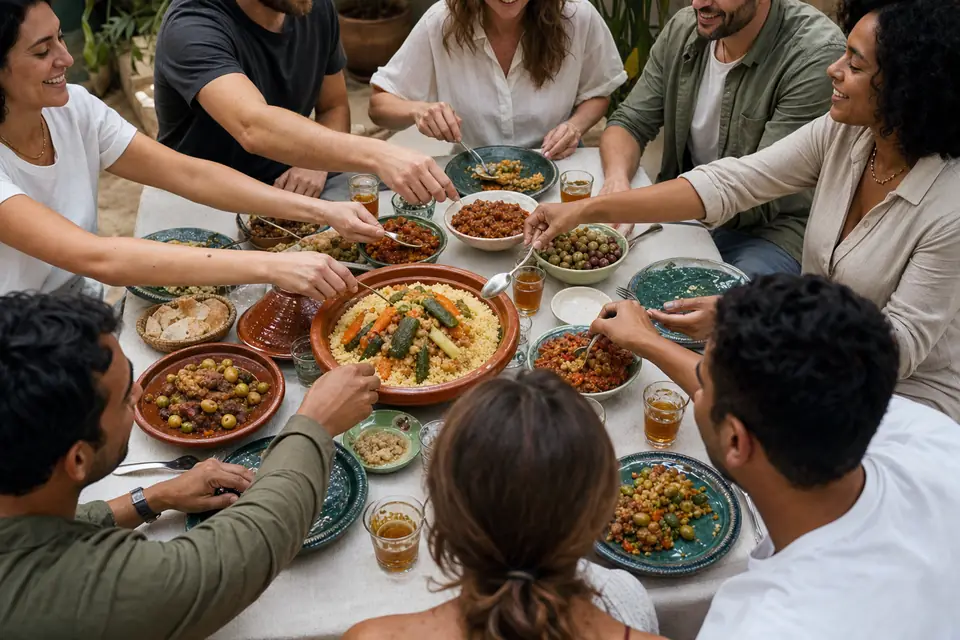
The Moroccan iftar — ftour — is one of the most tightly choreographed meals in the country's calendar. Break it down plate by plate and a clear logic appears: something sweet and gentle to open the stomach, a hydrating soup, energy-dense pastries, protein, and a great deal of liquid. Here is the sunset table in close-up, and the order it is really eaten in.
- When
- At sunset, during Ramadan
- First bite
- A date & a sip of milk
- The soup
- Harira
- The sweet
- Chebakia
At a glance
- Ftour follows an order: dates and milk first, then soup, then everything else.
- Harira is the near-universal soup; some regions and homes serve bissara or a lighter chorba.
- Sweet and savoury sit side by side — chebakia is dunked straight into the salty-savoury soup.
- Rehydration matters as much as food: milk, juices and water are central, not an afterthought.
The opening: dates, milk and a soft landing
The fast is broken the instant the maghrib call sounds, and the first thing eaten is deliberately gentle. A date — or an odd number of them, by tradition — and a mouthful of milk or water settle a stomach that has been empty since dawn and raise blood sugar before the heavier food arrives. Some families drink a sweetened milk, an almond-milk (sharbat), or a date-milk shake at this moment. Only then does everyone sit properly to the meal.
This soft opening is not just habit; it is practical. Diving straight into rich food after a long fast is uncomfortable, so the date-and-milk ritual paces the body into the meal.
The soup that anchors everything
Harira is the sun around which the Moroccan iftar orbits. Its combination of tomatoes, lentils, chickpeas, aromatic herbs and a flour thickening is filling, warming and rehydrating, and its slight tang from lemon and tomato wakes up a tired palate. Bowls are refilled freely, and the soup is eaten with — not before — the sweet chebakia, whose honeyed stickiness plays against the savoury broth in a way that surprises first-timers and then becomes addictive.
Not every table serves harira every night. In some homes and regions a lighter chorba or a bowl of bissara (puréed split-fava soup) stands in, and cooks vary the harira itself — more or less meat, with or without rice or broken vermicelli. Cook the classic version with our harira recipe, or the split-fava alternative with the bissara recipe.
The supporting cast
Around the soup spreads a constellation of smaller plates, each with a job. Hard-boiled eggs, halved and dipped in cumin and salt, add protein. Folded breads — msemen and the semolina griddle-cake harcha — bring comforting starch and a vehicle for honey or cheese. Savoury briouat, crisp little triangles filled with spiced meat, cheese or vermicelli, add richness. And there is always sweetness beyond the chebakia: sticky sesame-honey pastries, sometimes the coiled sweet griddle bread, and dates in every form.
- Hard-boiled eggs with cumin and salt — quick, cheap protein.
- Msemen & harcha — folded and semolina breads, with honey or cheese.
- Savoury briouat — crisp filled triangles of meat, cheese or rice vermicelli.
- Chebakia & sellou — the honeyed sweets that restore energy.
- Juices & milk — orange, avocado, almond or 'panaché' mixes to rehydrate.
After the soup: a pause, then more
In many households the ftour comes in two waves. The first is the soup-and-sweets spread eaten the moment the fast breaks. Then, after the maghrib prayer and often a rest, a second, more dinner-like meal follows later in the evening — a tagine, grilled meat, or a lighter main — for those still hungry. This two-stage eating is why Ramadan nights feel so food-filled: the sunset spread is an opening act, not always the whole show.
For the fuller picture of how the month works around these meals — the pre-dawn suhoor, the pastry-making, the etiquette of visiting — see our Ramadan food in Morocco overview and the in-depth Ramadan foods guide.
Being a guest at an iftar
An invitation to break the fast with a Moroccan family is a warm, generous thing and worth accepting. Arrive a little before sunset, bring dates or a box of pastries, and do not eat until your host breaks the fast — the shared first date is part of the moment. Pace yourself: the table looks enormous, but it is meant to be grazed across the evening, not cleared at once.
As at any Moroccan meal, eat from the section of the shared dish in front of you and use your right hand; our etiquette guide covers the details. To taste an ftour-style spread outside Ramadan, many cooking classes teach harira and chebakia, and a Medina food tour can walk you through the sweets.
The dishes of the occasion
The specific plates that belong to this moment in the Moroccan calendar.
Frequently asked questions
What is the difference between iftar and ftour?
They are the same meal — the breaking of the daily Ramadan fast at sunset. 'Iftar' is the classical Arabic term used across the Muslim world, while 'ftour' (or f'tour) is the everyday Moroccan word. In Morocco 'ftour' can also just mean breakfast on a normal day.
In what order is a Moroccan iftar eaten?
It opens with a date and milk or water, then harira soup eaten together with sweet chebakia. Around these come eggs, folded breads, briouat and juices. Often a second, more dinner-like meal — a tagine or grilled dish — follows later in the evening after prayers.
Why is sweet chebakia eaten with savoury soup?
The pairing is deliberate: after a long fast the body craves both the hydration and warmth of the soup and the quick sugar energy of the honeyed pastry. The salty-savoury harira and the sticky-sweet chebakia balance each other, and eating them together is the classic Moroccan ftour combination.
What should I bring if invited to a Moroccan iftar?
Dates or a box of pastries are ideal and always welcome. Arrive shortly before sunset, and wait for your host to break the fast first — sharing that opening date is part of the ritual. Pace yourself across the evening rather than filling up at the first spread.