Weekly rituals
Moroccan Breakfast Customs
Ask what Moroccans eat for breakfast and the honest answer is: it depends on the day. A busy weekday morning is bread, oil and tea, taken quickly. A Sunday or a holiday is a slow, generous table of folded breads, honey, almond spread and fresh doughnuts that can last an hour. Both are 'breakfast' — and both are governed by the same simple, comforting customs.
- Timing
- Early & unhurried on days off
- Everyday base
- Bread, olive oil & tea
- Weekend treats
- Msemen, harcha, baghrir, sfenj
- To drink
- Mint tea or coffee
At a glance
- Weekday breakfast is simple: bread with olive oil, butter, jam or cheese, and tea or coffee.
- Weekend and holiday breakfasts expand into griddle breads, baghrir, sfenj and amlou.
- Bread is the constant; the spreads and breads around it change with the day and the region.
- Breakfast is a hospitality moment too — guests are fed generously before anything else.
The everyday morning
On a normal working or school day, the Moroccan breakfast (ftour, the same word used for breaking the Ramadan fast) is modest and quick. The centre of it is bread — usually the round daily loaf, khobz — torn and eaten with good olive oil, butter, honey, jam, or the soft fresh cheese jben. There is often a boiled egg, some olives, and always something hot to drink: sweet mint tea, or coffee, frequently taken as café au lait (nous-nous, 'half-half').
It is unfussy and nourishing, built to set someone up for the morning without ceremony. The olive oil in particular is a point of pride — many families use oil from their own or a relative's trees — and dipping warm bread into a saucer of good green oil is, for many Moroccans, the taste of home. Our olive oil and argan guide explains why.
The weekend spread
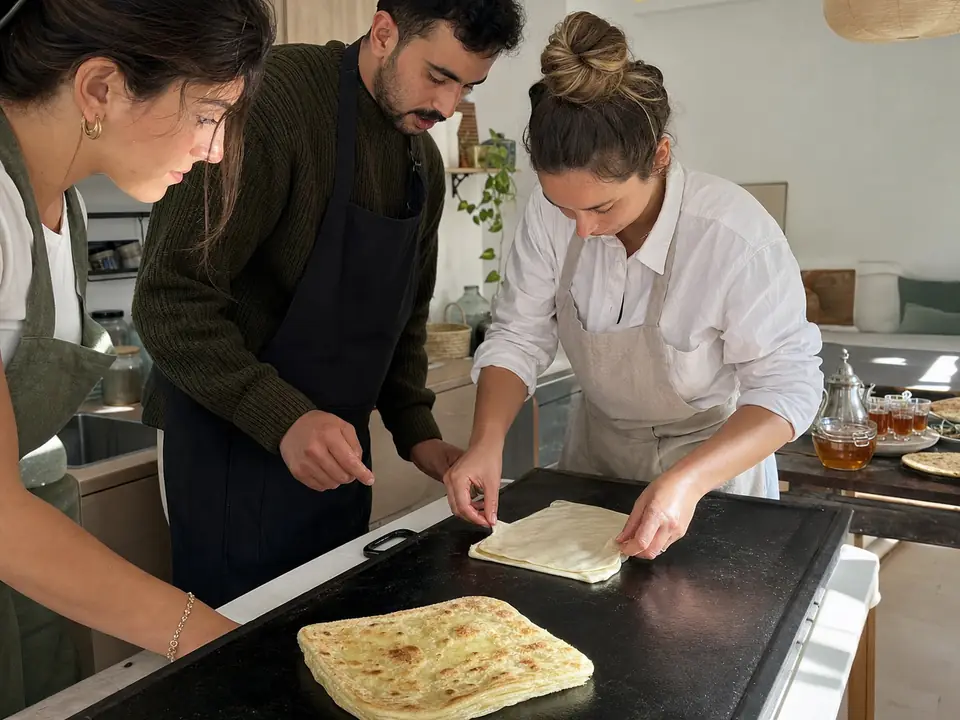
When there is time — a Sunday, a day off, a holiday, or guests to honour — breakfast becomes a proper spread and one of the loveliest meals in the Moroccan repertoire. Out come the griddle breads: msemen, the folded, flaky square pan-fried until crisp-edged; meloui, its coiled cousin; and harcha, the buttery semolina cake with a cornbread crumb. Baghrir, the spongy 'thousand-hole' pancake, soaks up warm honey and butter. And for a real treat, especially bought fresh from a street fryer, there is sfenj — light, chewy Moroccan doughnuts.
These are eaten with an array of sweet and rich accompaniments: honey, melted butter (or the two whisked together), jam, and above all amlou — the addictive southern spread of roasted almonds, argan oil and honey, often called Moroccan Nutella. Make the stars at home with our msemen, sfenj and amlou recipes, and learn the whole family of breads in the bread types guide.
- Msemen & meloui: folded and coiled griddle breads, with honey and butter.
- Harcha: pan-toasted semolina cake, split and filled with jam or cheese.
- Baghrir: honeycomb pancakes drenched in a honey-butter syrup.
- Sfenj: chewy fried doughnuts, best straight from a street fryer.
- Amlou: roasted-almond, argan and honey spread for dipping bread.
Regional and hearty variations
Breakfast is not only sweet. In colder months and in many working households, a hot, savoury morning dish takes over. Bissara — a warming purée of dried split fava beans or peas, pooled with olive oil and dusted with cumin and paprika — is a classic winter street breakfast, especially in the north and the Middle Atlas. Eggs fried in the fat of preserved khlii meat make a rich, savoury plate. And leftovers from the night before are fair game.
There are sweet grain dishes too, like herbel, a soothing milky barley or wheat porridge eaten on cold mornings. The exact spread shifts with region, season and household means, but the shape holds: bread and a hot drink at the core, with either sweet griddle breads or a savoury hot dish built around them. Try the winter classic with our bissara recipe.
The customs around the table
A few gentle customs shape the Moroccan morning. Bread is treated with respect and never wasted — a dropped piece is picked up, not left. Tea and coffee are sweet by default, so say so in advance if you prefer less sugar. And breakfast, like every Moroccan meal, is a hospitality moment: a guest staying over will be fed a generous spread before anything else in the day is allowed to happen, and refusing outright can seem ungracious — accept, and eat what you can.
For visitors, the weekend breakfast spread is one of the easiest and most delicious ways into Moroccan food culture, and many cooking classes begin the day by teaching msemen or baghrir on the griddle. For the deeper background, see the dedicated Moroccan breakfast guide and how tea threads through it in the tea ceremony.
The dishes of the occasion
The specific plates that belong to this moment in the Moroccan calendar.
Frequently asked questions
What do Moroccans eat for breakfast?
On weekdays, bread (khobz) with olive oil, butter, honey, jam or cheese, plus olives, perhaps an egg, and sweet mint tea or coffee. At weekends and on holidays, the spread grows to include griddle breads like msemen and harcha, baghrir pancakes, fried sfenj doughnuts and the almond spread amlou.
What is amlou?
Amlou is a thick, sweet spread from southern Morocco made of roasted almonds ground with argan oil and honey. Often called 'Moroccan Nutella', it is eaten at breakfast by dipping warm bread or griddle breads such as msemen into it.
Do Moroccans eat sweet or savoury breakfasts?
Both. The classic spread is largely sweet — honey, jam, amlou and honeyed griddle breads — but savoury options are common too, especially in winter: bissara (fava-bean purée), eggs fried in khlii, olives and cheese. Bread and a hot drink anchor every version.
What is sfenj?
Sfenj is a Moroccan doughnut — a ring of light, chewy, lightly fried yeast dough, traditionally bought fresh from a street fryer in the morning and eaten plain, dusted with sugar, or dipped in honey. It is a beloved weekend and holiday breakfast treat.