Old city · Marrakech food guide
Jemaa el-Fnaa Food Stalls: What to Eat at Marrakech's Night Market
Jemaa el-Fna is Marrakech's great open square and the most famous food spectacle in Morocco. By day it is snake charmers, henna artists and orange-juice carts; at dusk it transforms as scores of numbered stalls roll out benches, fire up grills and send smoke and calls across the plaza. It is touristy and chaotic — and, ordered wisely, genuinely delicious.
- Character
- Open-air night market
- Best for
- Grills, soup & spectacle
- Prime time
- Dusk until late
- Watch for
- Touts & unpriced plates
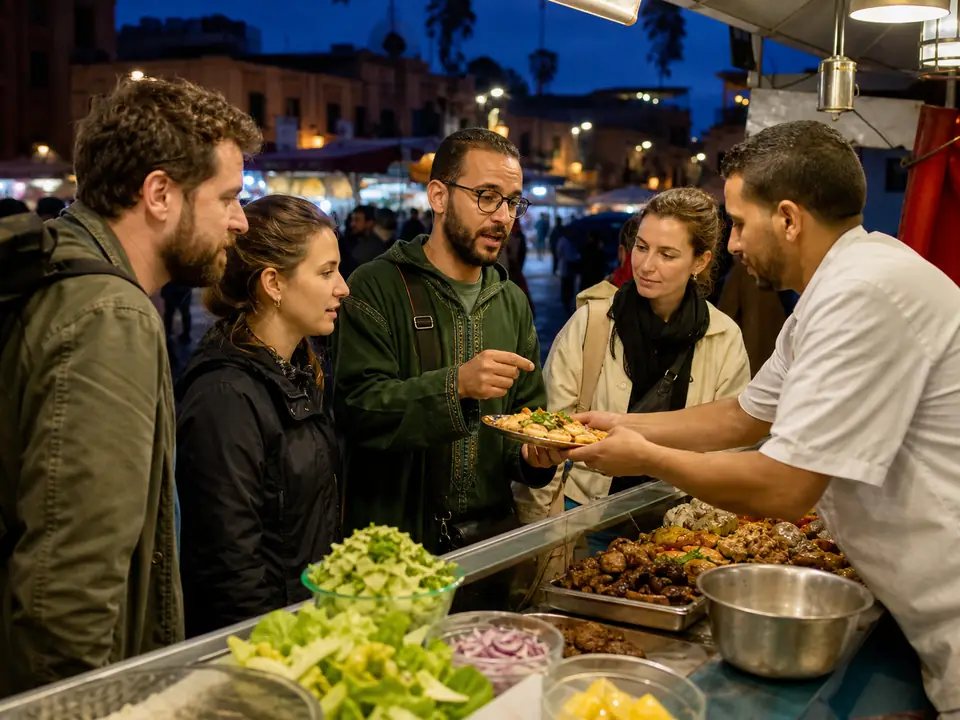
The food character of the square
The square (its name is variously spelled Jemaa el-Fna, Jemaa el-Fnaa or Djemaa el-Fnaa) sits at the mouth of the souks and is the pivot of the whole Medina. UNESCO recognises its evening gathering as a Masterpiece of the Oral and Intangible Heritage of Humanity — the food is only part of a nightly circus of musicians, storytellers and crowds. The rooftop cafés ringing the square are the classic spot for a mint tea and a photograph looking down over the smoke and lanterns at sunset.
The food stalls themselves are numbered and largely interchangeable in menu, and the touts working them are famously persistent — a good-natured hard sell is part of the experience. That does not mean the food is bad; a stall with a big local and visitor crowd, high turnover and food grilled to order in front of you can be very good. It does mean you should treat pricing with care and never let a plate of unrequested 'extras' land on your table unpriced.
For the freshest, most local eating in the old city, the square is not the whole story — the back-lane cook-shops and Mechoui Alley are arguably better value. But for atmosphere, the square at night is unmissable, and a few dishes here are worth the theatre.
What to eat on the square
- Grilled meats & kefta
- Brochettes of lamb and chicken, spiced kefta and merguez sausages, grilled to order over charcoal and served with bread and a fiery tomato relish. Pick a busy stall turning skewers fast.
- Babbouche (snail soup)
- Dedicated snail carts serve small snails in a peppery, cumin-and-thyme broth from big steaming cauldrons — sip the broth after; it is prized as a digestive and cold remedy.
- Grilled sardines & fried fish
- Fresh sardines stuffed with chermoula or a paper cone of small fried fish — a coastal touch trucked up from the Atlantic and cooked crisp on the spot.
- Tangia & steamed specialities
- Some stalls serve slow-cooked tangia and steamed sheep's head (tête de mouton) — the latter an old-Marrakech delicacy for the adventurous, sold by the piece.
- Fresh orange juice
- The barrow carts ringing the square press orange juice all day for a few dirhams a glass; confirm the price and ask for it without added sugar or water.
- Msemen & sweets
- Griddle stalls fold and fry msemen to order with honey, and dried-fruit and pastry carts sell chebakia, sellou and stuffed dates for the walk home.
Markets & souks nearby
- Jemaa el-Fnaa food stalls The nightly stall market itself — how it is laid out, what each cart type sells, and how to order without getting stung.
- Rahba Kedima (spice square) A two-minute walk into the souks: spices, dried fruit, olives and apothecary stalls, quieter than the main square.
- Souk Semmarine The covered souk artery leading off the north side, lined with dried-fruit and nut sellers if you want something for later.
Cooking classes & food tours here
- Jemaa el-Fnaa night food tour The single best way to eat the square: a local guide picks the honest stalls, orders in Darija and settles the bill so you just taste.
- Snail soup (babbouche) tour A themed crawl for the curious eater, built around the square's snail carts and other old-Marrakech street specialities.
- Mechoui Alley tour Steps from the square: the pit-roast lamb lane, where you point at the meat, have it weighed and eat it with cumin and bread.
- Cooking classes in the Medina Prefer to cook than graze? Riad-based classes a short walk from the square turn the market haul into a full meal.
Local tips for eating in Jemaa el-Fnaa
- Go after dark. The food stalls only set up in the late afternoon and hit their stride once the sun is down — arrive from about 7pm onward.
- Refuse unrequested extras. Politely wave away side dishes you did not order; if they stay on the table they will appear on the bill.
- Confirm every price first. Ask 'bch-hal?' (how much?) before anything is served — for the meat, the bread and the juice — and there are no surprises.
- Follow the local crowd. A stall busy with Moroccan families, not just tour groups, is cooking fresh and pricing more fairly.
- Watch your things. The square is dense and lively at night; keep bags zipped and to the front, as you would in any crowded market.
Frequently asked questions
What time do the Jemaa el-Fnaa food stalls open?
The evening food stalls begin setting up in the late afternoon, roughly from 5pm, and are in full swing after dark, usually from about 7pm until late. During the day the square has juice carts and snack sellers but not the full grill-stall market.
Is the food at Jemaa el-Fnaa good or just for tourists?
Both. It is touristy and the touts are relentless, but a busy stall grilling to order can be genuinely good. For the best value and most local eating, pair the square with the back-lane cook-shops and Mechoui Alley, or take a guided night food tour.
How do I avoid being overcharged on the square?
Agree the price of everything before it is served, refuse extra dishes you did not order, and keep the receipt or tally in view. Choosing a busy stall with visible prices and lots of locals also helps keep things honest.
What is the most famous thing to eat at Jemaa el-Fnaa?
The grilled meats and the snail soup (babbouche) are the square's signatures, along with fresh-pressed orange juice from the day carts. Adventurous eaters go for the steamed sheep's head, an old-Marrakech delicacy sold at a few stalls.