Old city · Marrakech food guide
Kasbah Food Guide: Tanjia, Terraces & Royal Marrakech
The Kasbah is the old royal citadel in the southern Medina — the seat of Marrakech's sultans, home to the Saadian Tombs, the grand gate of Bab Agnaou and the Kasbah mosque with its landmark minaret. It is quieter and more monumental than the souks to the north, and its food leans to the deeply traditional: this is tanjia country, and the terraces here look out over palace walls rather than market smoke.
- Character
- Royal, monumental, calmer
- Best for
- Tanjia & rooftop tagines
- Typical spend
- Mid-range
- Landmarks
- Saadian Tombs, Bab Agnaou
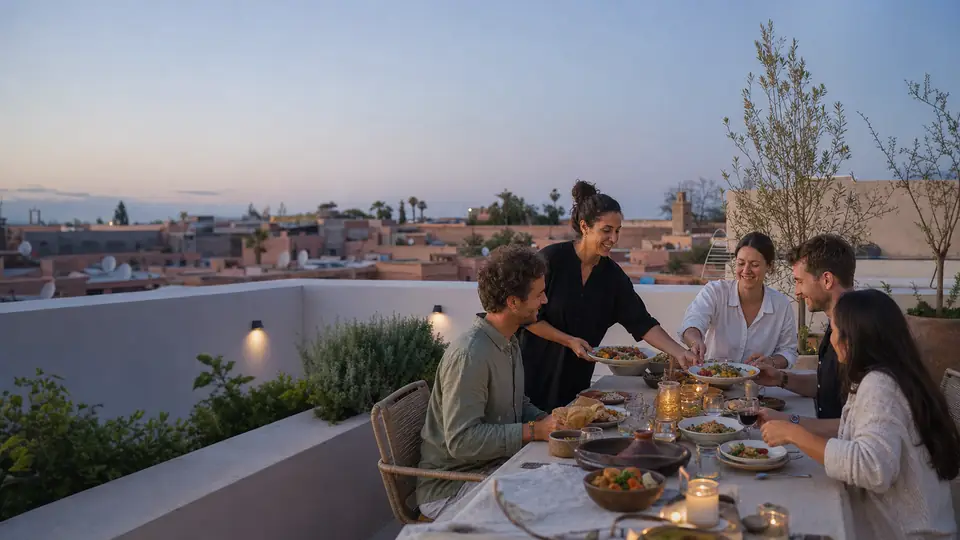
The food character of the Kasbah
The Kasbah sits behind its own walls in the south of the Medina, reached through the horseshoe-arched Bab Agnaou, one of the finest gates in the city. Around it cluster the great royal monuments — the Saadian Tombs, the ruins of the El Badi Palace, the Bahia Palace a little to the east — so the quarter draws sightseers by day and empties in the evening. That gives its eating a calmer, less frenetic feel than the souks.
Food here is traditional and, thanks to the crowds visiting the tombs and palaces, includes a fair share of terrace restaurants serving the classic tagine-and-couscous repertoire with a view. The quarter's real culinary claim, though, is the tanjia — the clay-urn stew that is Marrakech's own dish, historically cooked by the city's working men and slow-braised in the ashes of the neighbourhood hammam furnace.
The eastern edge of the Kasbah runs into Place des Ferblantiers and the Mellah, so the metalworkers' square, the spice market and the olive stalls are all within an easy walk — handy if you want to buy the preserved lemons and smen that a good tanjia depends on.
What to eat in the Kasbah
- Tanjia marrakchia
- The quarter's signature — beef or lamb sealed with preserved lemon, garlic, cumin and smen in a clay urn and cooked for half a day in hammam embers. Read the tanjia guide for the full story.
- Rooftop tagine with a view
- Terrace restaurants near the tombs and palaces serve the classic chicken-with-preserved-lemon and lamb-with-prunes tagines looking out over the Kasbah rooftops and minaret.
- Couscous
- The Friday seven-vegetable couscous appears across the quarter's kitchens at midday; try the recipe or read the tradition behind it.
- Grilled meats & brochettes
- Charcoal grills near the gate do lamb and kefta skewers with bread and salad — the quick lunch between sightseeing stops.
- Mint tea on a terrace
- The Kasbah is made for a slow, sweet glass of tea after the tombs — poured from a height, with a pastry. See the mint tea ritual.
Markets & souks nearby
- Place des Ferblantiers The metalworkers' square on the Kasbah's eastern edge, ringed by lantern-makers and opening straight into the Mellah spice market.
- Mellah spice market A short walk east: the covered spice-and-produce market of the old Jewish quarter, strong on preserved lemons, olives and spice blends.
Cooking classes & food tours here
- Cooking classes in the Kasbah Learn the tanjia and classic tagines in a riad in the royal quarter, often with a shop at the nearby Ferblantiers and Mellah markets.
- Tanjia marrakchia tour A focused tour on the city's signature dish — how it is packed, where it is cooked in the hammam furnace, and where to eat the best.
Local tips for eating in The Kasbah
- Eat around your sightseeing. The Kasbah empties in the evening, so make lunch your meal here — after the Saadian Tombs or El Badi — and save dinner for a livelier quarter.
- Order tanjia ahead if you can. A true tanjia takes hours in the embers; the best places make a set number, so ask earlier in the day or book a class that cooks one.
- Combine with the Mellah. The spice market and olive stalls are a five-minute walk east — do your ingredient shopping in the same trip.
- Dress a little modestly near the mosque. This is a monumental, religious quarter; covering shoulders and knees is respectful, especially around prayer times.
- Terraces cost more for the view. You pay a premium for the rooftop outlook; the food is often standard tagine, so choose for the view or eat more cheaply in the lanes.
Frequently asked questions
What food is the Kasbah quarter known for?
The tanjia — Marrakech's own clay-urn stew of meat, preserved lemon, cumin, garlic and smen, slow-cooked in hammam embers. The quarter is also full of terrace restaurants serving classic tagines and couscous near the Saadian Tombs and Bab Agnaou.
Where should I eat near the Saadian Tombs?
The lanes around Bab Agnaou and towards Place des Ferblantiers have terrace restaurants and grill counters. For the most local food, walk a little east into the Mellah; for the classic dish, seek out a place serving proper tanjia.
Is the Kasbah a good area for dinner?
It is better for lunch. As a monumental, sightseeing quarter it quietens in the evening, so many visitors eat here at midday and head to the square, Gueliz or Hivernage for dinner and atmosphere.
What is the difference between tanjia and tagine?
A tagine is cooked in a cone-lidded pot on gentle heat; a tanjia is sealed in a tall clay urn and slow-cooked buried in the embers of a hammam furnace. Tanjia is specifically a Marrakech speciality, traditionally the bachelor's and workman's dish.