Eid al-Fitr in Casablanca menu
Eid al-Fitr in Casablanca — A Modern City's Celebration Table
Casablanca celebrates Eid al-Fitr with one foot in tradition and one in the rhythm of a modern city. The morning after Ramadan begins gently — msemen and baghrir with honey and coffee — before the family gathers for a proper midday meal of seffa and a bright chicken tagine. A generous pastry table of kaab el ghazal and ghriba runs all day for the stream of visitors. This menu maps out a Casablanca Eid from breakfast to the sweet table, with a shopping list and timeline. Browse the recipes for each dish.
The menu
Eid breakfast
Msemen and baghrir with honey and smen
The celebratory breakfast: flaky msemen and a-thousand-hole baghrir, drenched in honey and melted smen.
Midday centrepiece
Seffa medfouna
Sweet steamed vermicelli mounded over hidden chicken, dusted with cinnamon and sugar — the Eid dish of many Casablanca homes.
Main
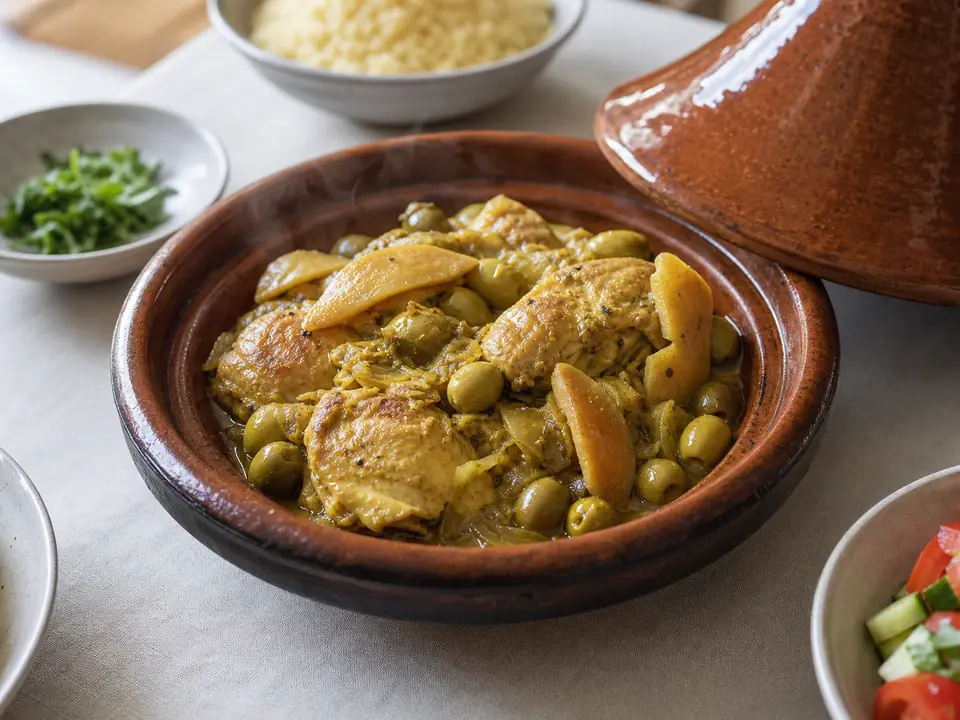
Chicken tagine with preserved lemon and olives
A bright, classic tagine that feeds a crowd and holds while guests arrive.
Side
Moroccan salad trio
Zaalouk, taktouka and a raw tomato-onion salad to lighten the sweet-rich table.
Sweet table
Kaab el ghazal, ghriba and fekkas
The all-day cookie table for visitors — gazelle horns, crumbly ghriba and twice-baked fekkas.
Drink
Mint tea and fresh orange juice
Endless mint tea for the guests, cold orange juice for the children.
Shopping list
- Flour and fine semolina (for msemen and baghrir)
- Honey and smen
- Fine vermicelli or seffa pasta, cinnamon and icing sugar
- A whole chicken plus extra thighs
- Preserved lemons and green olives
- Aubergines, peppers and tomatoes (for zaalouk and taktouka)
- Ground almonds, orange-blossom water (for kaab el ghazal)
- Sesame, anise and eggs (for ghriba and fekkas)
- Gunpowder green tea and fresh mint
- Oranges for juicing
Prep timeline
-
2-3 days before
Bake the pastry table — kaab el ghazal, ghriba and fekkas all keep well in tins.
-
Day before
Steam and prepare the seffa base; make the salads; joint the chicken.
-
Eid morning
Griddle msemen and baghrir fresh for breakfast; set out honey and smen.
-
Late morning
Start the chicken tagine and finish steaming the seffa with its butter, cinnamon and sugar.
-
Throughout the day
Keep the tea flowing and the pastry table replenished for visitors.
Host's tips
- Bake all the cookies two or three days ahead — Eid is about receiving guests, not being stuck at the stove.
- Seffa can be steamed in advance and given a final butter-and-steam just before serving.
- Fry msemen fresh on the morning itself; they are best minutes off the griddle.
- Keep a warm tagine holding for the flow of relatives who arrive at unpredictable hours.
- Set the sweet table early and let it run all day — it is the heart of Casablanca hospitality.
Questions about this menu
What do Moroccans eat on the morning of Eid al-Fitr?
After a month of fasting, the first breakfast is celebratory: msemen, baghrir and harcha with honey, smen and coffee, often after the Eid prayer. Sweet breads mark the return to daytime eating.
What is seffa medfouna?
Sweet steamed vermicelli or couscous mounded over a hidden layer of chicken or lamb ('medfouna' means buried), finished with cinnamon, sugar and fried almonds. It is a festive centrepiece across Morocco.
How do Casablanca families handle all-day Eid visitors?
With a standing pastry table — kaab el ghazal, ghriba, fekkas — and constant mint tea, so anyone who drops in is welcomed without fresh cooking each time.
Can the Eid sweets be made ahead?
Yes. Almond and sesame cookies keep for a week or more in airtight tins, so most families bake them in the last days of Ramadan.
Is Eid al-Fitr a sweet or savoury celebration?
Both, but it leans sweet, especially at breakfast and the cookie table. The savoury tagine and salads at midday balance the day out.
Learn to cook this menu with a local in Marrakech
Every dish here is taught, hands-on, in a Marrakech cooking class — or taste them across the medina on a guided food tour.