Couscous & grains
Moroccan Seffa
Seffa turns couscous sweet: fine grain or broken vermicelli, steamed until fluffy, then dressed with butter, cinnamon, icing sugar, fried almonds and raisins and heaped into a fragrant cone. It sits on the line between main course and dessert, often served near the end of a celebration meal — sometimes with a savoury chicken hidden beneath the sweet grain in the version called seffa medfouna.
سفة · seffa
- Origin
- Across Morocco
- Type
- Sweet steamed grain
- Eaten at
- Celebrations, end of a feast
- Key flavour
- Cinnamon, orange blossom, almond
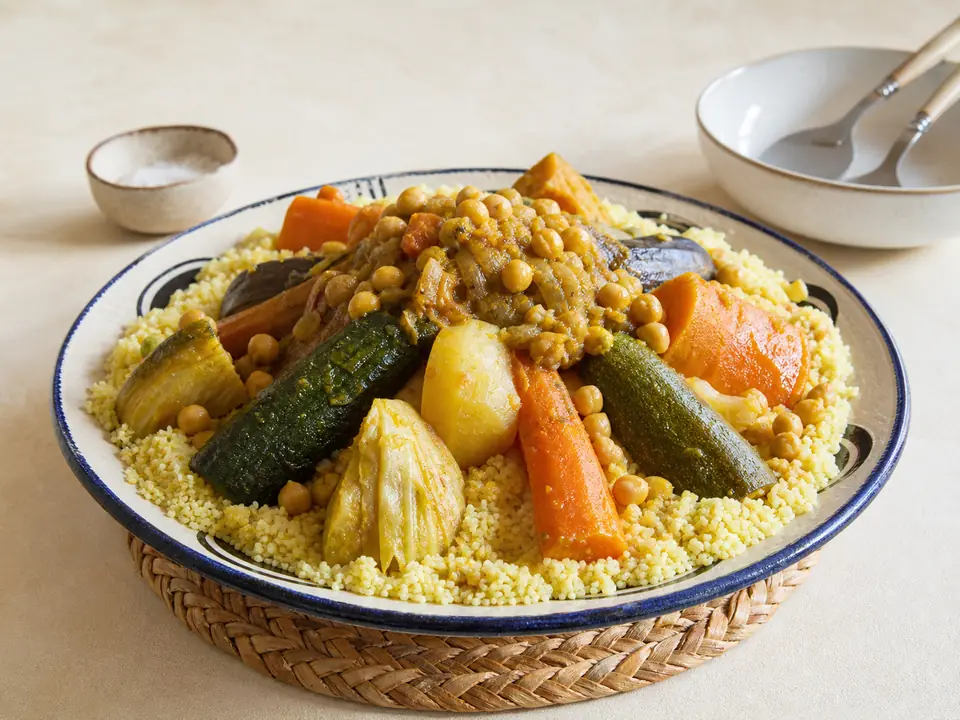
What Seffa is
Seffa is steamed fine couscous or, very often, broken vermicelli (cheveux d'ange) prepared the same painstaking way as savoury couscous — steamed, raked and steamed again — then finished sweet rather than savoury. It is buttered while hot, scented with orange blossom water, and mounded into a dome.
The grain is decorated at the table: lines of ground cinnamon down the cone, a snowfall of icing sugar, and a scatter of fried almonds and plumped raisins. Each person sweetens their portion further to taste, so it is as much sweet as savoury depending on the hand that serves it.
Origin & story
Seffa is celebration food — the grain of couscous, which carries such weight in Moroccan ritual, transformed into something festive and generous. It appears at weddings, at the naming ceremony a week after a birth, at the end of Ramadan and whenever a family marks an occasion, usually as one of the final dishes.
The buried version, seffa medfouna ('hidden seffa'), tucks a spiced chicken or pigeon under the sweet grain — a surprise beneath the cinnamon that plays sweet against savoury in the way Moroccan cooking loves, echoing the balance at the heart of pastilla.
Key ingredients at a glance
- Fine couscous or broken vermicelli (sha'riya)
- Butter and a splash of orange blossom water
- Ground cinnamon and icing sugar
- Fried blanched almonds
- Plump raisins
- For seffa medfouna: a spiced chicken hidden beneath the grain
This is a flavour snapshot, not a recipe. For quantities and method, see the full recipe linked below.
When & how it's eaten
Seffa is served as a shared cone in a wide dish, brought out toward the end of a festive meal or as a sweet centrepiece in its own right. Diners eat from their side of the mound, adjusting the sweetness with the sugar and cinnamon set alongside. It is rich, so portions are modest and it is nearly always followed by mint tea.
As seffa medfouna, with chicken beneath, it becomes a full main course — the sweet grain and savoury meat eaten together in one forkful, a hallmark of Moroccan celebration cooking.
Regional variations
The two big forms are couscous-grain seffa and vermicelli seffa; the vermicelli version is silkier and quicker. Toppings vary with the household — some add dates, dried figs or a custard-like sauce; others keep it to almonds and cinnamon. Seffa medfouna is the savoury-stuffed banquet version.
It overlaps with the broader family of sweet steamed grains and with couscous itself, from which it borrows its entire technique.
Where to try it in Marrakech
Seffa is a home and celebration dish, so you are most likely to meet it at a traditional restaurant that serves a set feast menu, or as the sweet finish on a Friday couscous tour. Ask for seffa medfouna if you want the savoury-stuffed version.
Learn the sweet-steamed technique in a couscous cooking class or a Moroccan dessert class, and cook it from our seffa recipe. It pairs beautifully with a pot of Moroccan mint tea.
Frequently asked questions
Is seffa a dessert or a main course?
Both, depending on the version. Plain sweet seffa is served as a dessert or sweet course, while seffa medfouna — with spiced chicken hidden under the grain — is a full main course.
What is seffa made from?
Fine couscous or broken vermicelli, steamed until fluffy, then dressed with butter, orange blossom water, cinnamon, icing sugar, fried almonds and raisins.
When is seffa served?
At celebrations — weddings, naming ceremonies, Eid and family feasts — usually toward the end of the meal, and often as a symbolic dish of abundance and sweetness.