Sweets & pastries
Moroccan Kaab el Ghazal
Kaab el ghazal — 'gazelle horns' or 'gazelle ankles' — are the most elegant of Moroccan sweets: slender crescent-shaped pastries with a thin, tender shell wrapped around a fragrant almond paste scented with orange blossom and cinnamon. Pale, curved and lightly dusted, they're the refined centrepiece of the pastry platter served with mint tea to guests and at celebrations.
كعب الغزال · kaʿb el-ġazāl
- Origin
- Fez / across Morocco
- Type
- Almond-filled crescent pastry
- Eaten at
- Weddings, tea time, guests
- Key flavour
- Almond, orange blossom, cinnamon
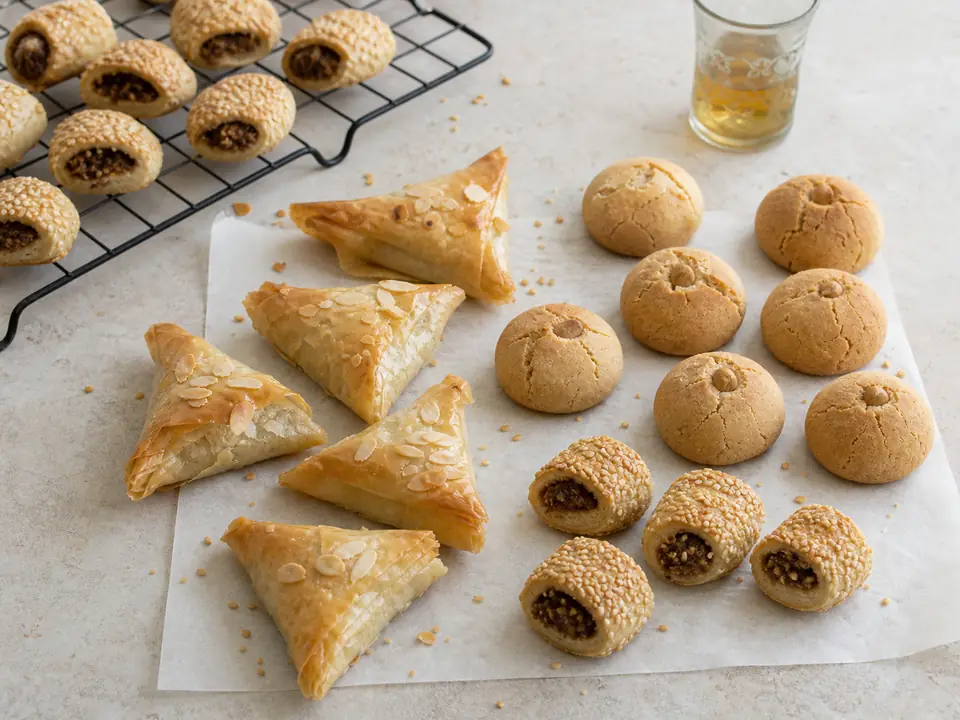
What Kaab el Ghazal is
Kaab el ghazal are made by wrapping a rope of almond paste in a very thin, delicate pastry, shaping it into a slim crescent, and baking it gently until just set and barely coloured — they're meant to stay pale, not golden. The pastry is thin enough to show the curve of the filling within, and the finished horns are sometimes brushed with orange blossom water and lightly dusted with icing sugar.
The filling is the soul: finely ground almonds bound with sugar, butter and a generous perfume of orange blossom water and cinnamon. Soft, moist and intensely almond-scented, it's balanced against the thin, short pastry shell.
Origin & story
Kaab el ghazal is Moroccan pastry at its most refined, with roots in the sophisticated sweet-making of Fez and the wider Andalusian almond tradition. It's a prestige sweet — the one a hostess offers to honour important guests, and a must at weddings and grand celebrations, where its elegant crescents signal care and status.
Shaping them well is a mark of skill: the pastry must be thin without tearing, the crescent neat and even. For that reason they're often the work of practised hands and a proud part of a family's celebration repertoire.
Key ingredients at a glance
- Finely ground blanched almonds
- Sugar and butter for the paste
- Orange blossom water and cinnamon
- A thin, tender pastry dough
- Sometimes a little gum arabic or mastic
- Icing sugar to finish (optional)
This is a flavour snapshot, not a recipe.
When & how it's eaten
Kaab el ghazal is a tea-time and celebration sweet, served on the pastry platter with a glass of mint tea, eaten by hand in a bite or two. It's a dish of hospitality — offered to guests as a sign of welcome — and a centrepiece at weddings and feasts, admired for its shape before it's eaten.
Being delicate and almond-rich, it's savoured slowly rather than eaten in quantity. It sits among the finest sweets alongside m'hanncha and honeyed briouat.
Regional variations
Beyond the classic baked pale crescent, there's a version brushed with orange blossom water and rolled in icing sugar while warm, and regional differences in how thin the pastry is and how strongly the filling is perfumed. The almond-and-orange-blossom heart, though, is constant.
It belongs to the almond-pastry family with m'hanncha, and both are staples of the celebration tea table.
Where to try it in Marrakech
Kaab el ghazal is sold at good pastry shops and served at traditional celebrations — a sweets and pastry crawl is the best way to taste and compare well-made ones, and they're a classic gift to bring home in a box.
Shape them in a Moroccan pastry class or a mint tea and pastry class, where the almond paste and delicate pastry are taught together. Serve with Moroccan mint tea and explore more sweets in the guides.
Frequently asked questions
What are gazelle horns (kaab el ghazal)?
Delicate Moroccan crescent pastries filled with orange-blossom-scented almond paste in a thin, pale shell. They're a refined tea-time and celebration sweet.
What is the filling in kaab el ghazal?
A soft paste of finely ground almonds, sugar and butter, perfumed with orange blossom water and cinnamon — moist, fragrant and intensely almond-flavoured.
When are gazelle horns served?
At weddings, celebrations and to honour guests, on the pastry platter with mint tea. As a refined, labour-intensive sweet, offering them is a gesture of hospitality.