Seasonal cooking
Winter Moroccan Comfort Food
Visitors are often surprised by how cold Morocco gets. Marrakech nights in December and January can be genuinely chilly, the Atlas turns white with snow, and homes without central heating rely on hot food to warm the body from the inside. Winter is when the Moroccan kitchen is at its most comforting — a season of steaming soups, slow-braised meat and deep, spiced tagines built for cold weather.
- Season
- November to February
- The warmers
- Harira, bissara, tanjia
- The base
- Root-vegetable tagines
- Street heat
- Hot sfenj & bissara
At a glance
- Moroccan winters are cold — the food does the heating that homes often do not.
- Warming soups lead the season: harira and the buttery split-fava bissara.
- Slow-cooked meat dishes — tanjia and rich lamb tagines — suit the long cold evenings.
- Root and hearty vegetables (turnip, pumpkin, carrot) fill the winter tagine.
Why Morocco cooks for warmth
Morocco's climate is far more varied than its sun-drenched reputation suggests. Inland cities like Marrakech and Fès have real winters, with cold nights and short, cool days from about November to February, and the High Atlas ranges are deep in snow. Traditional homes, thick-walled riads and rural houses alike, are built to stay cool in summer, which means they can be bracingly cold in winter — and with central heating far from universal, hot food carries much of the job of keeping warm.
So the winter table turns to dishes that steam, that simmer for hours, and that deliver deep, sustaining warmth: brothy soups, slow-braised meats, and tagines heavy with root vegetables and warming spices like ginger, cinnamon and pepper. It is comfort food in the most literal sense.
Soups that warm from within
Soup is the front line of Moroccan winter eating. Harira — the tomato, lentil and chickpea soup best known from Ramadan — is a year-round comfort, and a bowl of it on a cold day is deeply restorative; make it with our harira recipe. Its great winter partner is bissara: a thick, velvety purée of dried split fava beans (or peas) cooked down with garlic, finished with a generous pool of olive oil and a dusting of cumin and paprika, and mopped up with bread. Sold hot and cheap from street counters on winter mornings, especially in the north and the Middle Atlas, bissara is pure warmth in a bowl — the bissara recipe shows how.
Beyond these two, the season brings other hot bowls: hearty vegetable and grain soups, and the barley or wheat porridge herbel eaten for a warming breakfast. Explore the wider repertoire in our guide to Moroccan soups beyond harira.
- Harira: the tomato-lentil-chickpea soup, restorative on a cold day.
- Bissara: buttery split-fava purée with olive oil and cumin, a winter street breakfast.
- Herbel: a warming milky barley or wheat porridge for cold mornings.
Slow meat for long evenings
Winter is the season for the slowest, richest Moroccan meat dishes. Tanjia — Marrakech's own speciality of beef or lamb sealed in a clay urn with preserved lemon, garlic, cumin and smen and cooked for hours in the embers of a hammam furnace — is the ultimate cold-weather indulgence, unctuous and deeply savoury; read its story in our tanjia guide. Rich lamb tagines come into their own too, especially the sweet-savoury lamb with prunes, almonds and honey, whose warming spice and deep sweetness suit the season perfectly — see the lamb and prune tagine.
Another winter favourite is rfissa: shredded msemen or day-old bread piled under chicken slow-cooked with lentils, fenugreek and the herb blend ras el hanout, all soaked in a fragrant broth. Traditionally served to new mothers for its warming, restorative qualities, it is exactly the kind of dish a cold Moroccan evening calls for — our rfissa recipe has the method.
Winter vegetables and street warmth
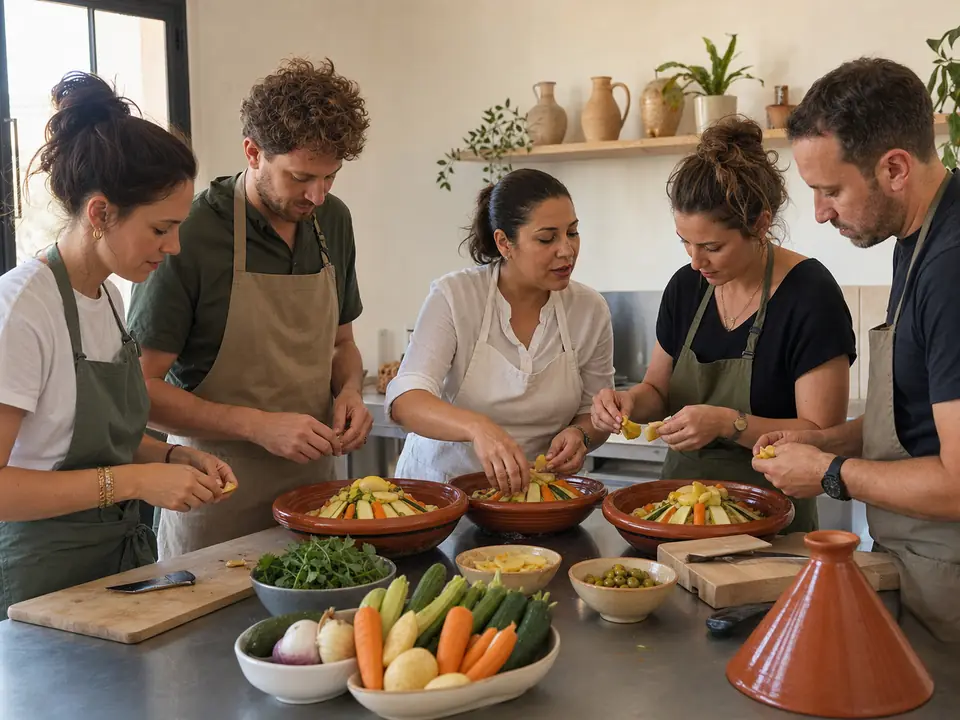
The winter tagine is built on the season's sturdy vegetables — turnips, carrots, pumpkin, sweet potato, cabbage, cauliflower and fennel — which stand up to long cooking and soak up the spiced broth. Citrus is at its peak too, so preserved and fresh lemons brighten the heavy braises, and oranges appear in the famous orange-and-cinnamon salad that cuts through a rich meal. Warming spices — ginger, black pepper, cinnamon, and the complex blend ras el hanout — are used with a heavier hand than in summer.
And then there is the street. On a cold Moroccan morning nothing beats a bag of hot sfenj doughnuts, fried to order and eaten with the fingers, or a paper cone of roasted chestnuts from a brazier, or that bowl of bissara steaming on the counter. For the lighter flip side of the year, see summer and lighter Moroccan dishes.
The dishes of the occasion
The specific plates that belong to this moment in the Moroccan calendar.
Frequently asked questions
Does it get cold in Morocco in winter?
Yes. Inland cities like Marrakech and Fès have cold nights and cool days from about November to February, and the High Atlas mountains are covered in snow. With central heating far from universal, hot food plays a big part in keeping warm, which shapes the winter table.
What is bissara?
Bissara is a thick Moroccan soup of dried split fava beans (or peas) cooked down with garlic and finished with a pool of olive oil and a dusting of cumin and paprika. Sold hot and cheap from street counters on winter mornings, it is a beloved cold-weather comfort food.
What are the best warming Moroccan dishes for winter?
Soups like harira and bissara, slow-cooked meats such as tanjia and rich lamb-and-prune tagine, the restorative chicken-and-lentil rfissa, and root-vegetable tagines. Hot street sfenj doughnuts and roasted chestnuts add warmth on cold mornings.