Autumn Olive Harvest menu
Autumn Olive Harvest Menu — A Table for the Pressing Season
Autumn is the olive harvest, when Moroccan families press the year's oil and cook to celebrate the first bright, peppery pressing. This menu honours the season: dishes built around new olive oil and cured olives, an olive-heavy chicken tagine, warm bread for dipping, and a quince dessert that catches autumn's other harvest. It is an earthy, golden table. Below are the courses, a shopping list and a timeline. See the recipes and a how-to on curing olives at home.
The menu
To dip
New olive oil with bread and za'atar
The first pressing, peppery and green, poured into a dish with warm bread and herbs — the taste of the harvest.
Starter
Warm olive and pepper salad
Cured olives warmed with roasted peppers, garlic and cumin — simple and oil-rich.
Main
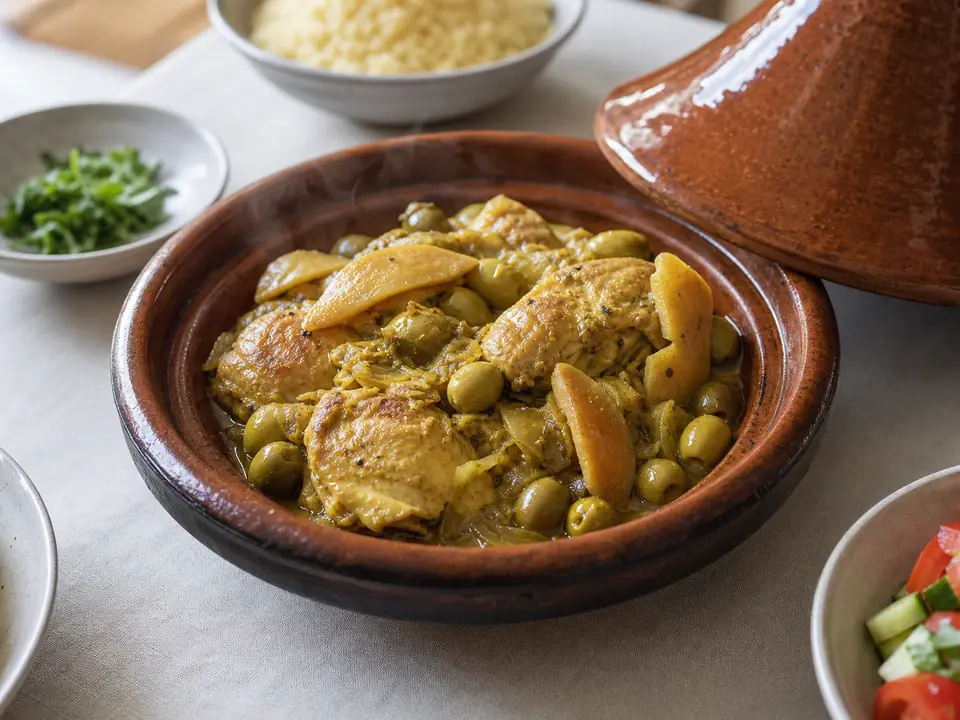
Chicken tagine with green olives and preserved lemon
The classic olive tagine, made when olives are at their freshest and best.
Side
Loubia with new oil
White beans stewed and finished with a generous drizzle of the season's new olive oil.
Dessert
Quince poached with honey and cinnamon
Autumn quince gently poached until rosy, sweetened with honey and warm spice.
Drink
Mint tea and warm spiced milk
Mint tea, plus warm milk with cinnamon and a little honey for the cooling evenings.
Shopping list
- New-pressing (or best-quality) olive oil
- Cured green and black olives
- Chicken, jointed
- Preserved lemons, onion, ginger and saffron (for the tagine)
- Roasted peppers, garlic and cumin (for the warm salad)
- Dried white beans and tomato (for loubia)
- Quinces, honey and cinnamon
- Za'atar or dried thyme
- Khobz or country bread
- Milk, cinnamon, green tea and fresh mint
Prep timeline
-
Day before
Soak the white beans; poach the quince and let it steep in its rosy syrup.
-
Afternoon
Cook the loubia; start the chicken-and-olive tagine braising.
-
1 hour before
Warm the olive salad; reheat the loubia and finish it with new oil.
-
30 minutes before
Warm the bread; set out the new oil for dipping.
-
At the table
Open with oil and bread, then the tagine and beans, and finish with the poached quince.
Host's tips
- Show off the new oil unheated — its peppery, grassy freshness is the whole point of the harvest table.
- Blanch cured olives briefly if they are very salty before adding to the tagine.
- Quince needs long, gentle poaching to turn tender and rosy — don't rush it.
- Finish the beans with a raw drizzle of the new oil at the table, not during cooking, to keep its flavour.
- This is an earthy, oil-forward menu — use the best olive oil you can find or press.
Questions about this menu
When is the olive harvest in Morocco?
Roughly from late October into December, depending on the region. Families and villages press the year's oil in this window, and the fresh, peppery new oil is celebrated at the table.
Why is new olive oil special?
Freshly pressed oil is greener, more peppery and more aromatic than aged oil, with a slight throat-catch from its polyphenols. It is prized for dipping and finishing rather than cooking.
How is quince eaten in Morocco?
Both sweet and savoury — poached with honey and cinnamon as a dessert, or braised into lamb and beef tagines. Its floral, tart flesh suits Morocco's sweet-savoury style.
Can I use supermarket olive oil?
Yes, but choose a good extra-virgin one and use it generously, especially raw for dipping and finishing. The menu is built to showcase oil, so quality matters more than usual here.
What is za'atar?
A herb-and-sesame blend, typically thyme, sumac and toasted sesame. Mixed with olive oil, it makes a classic dip for bread and pairs beautifully with the season's new oil.
Learn to cook this menu with a local in Marrakech
Every dish here is taught, hands-on, in a Marrakech cooking class — or taste them across the medina on a guided food tour.