Street food
Sfenj (Moroccan Donuts)
Sfenj are Morocco's answer to the donut — golden, puffy rings of unsweetened fried dough, cooked to order in huge vats of bubbling oil and eaten warm from the fryer. They are breakfast food, snack food, and one of the most beloved street foods in the country.
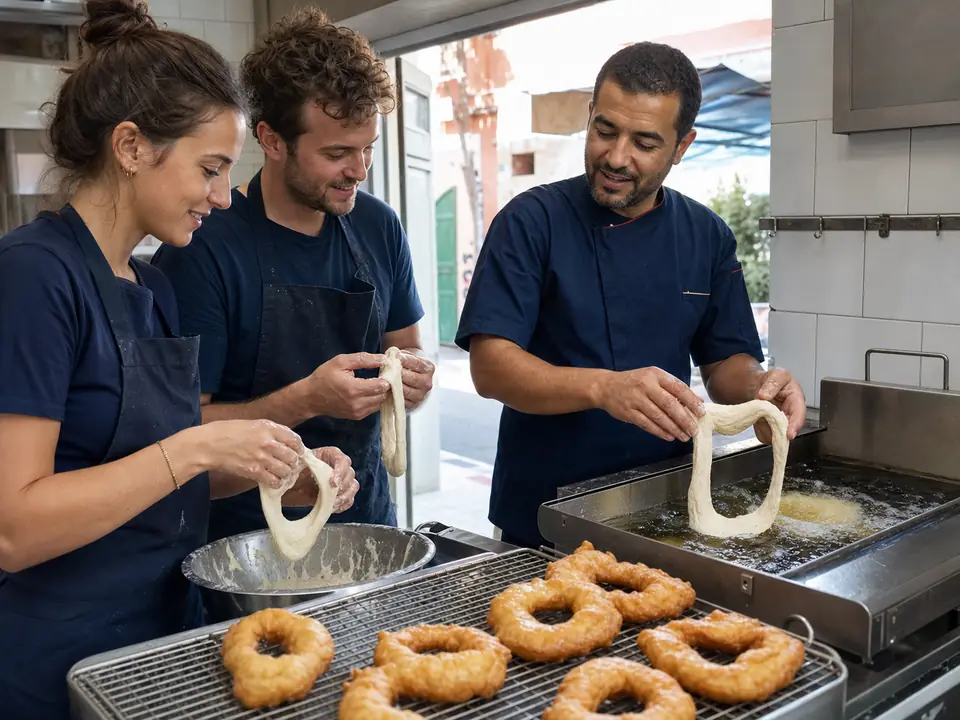
Unlike Western donuts, sfenj contain no sugar or eggs in the dough itself — the sweetness comes from a dip in sugar, a drizzle of honey, or nothing at all. The exterior is crisp and golden; the interior is airy, chewy and slightly elastic. They are made fresh throughout the morning by specialist sfenj vendors who shape each ring by hand, stretching a ball of dough around their fingers and dropping it into the oil with a practiced flick.
A hot sfenj with a glass of mint tea on a Marrakech morning is one of the simplest and most perfect breakfast experiences in the world.
Varieties of Sfenj
Plain sfenj
Region: Nationwide
The standard: a ring of fried dough eaten plain or with a sprinkle of sugar. Crisp outside, pillowy inside. Best within minutes of frying.
Sfenj with honey
Region: Nationwide
Sfenj drizzled with warm honey or dipped in a dish of honey. The sweetness contrasts with the plain, yeasty dough.
Sfenj balls (sfingia)
Region: Northern Morocco
Small, round sfenj without the hole — more like a fried dough ball. Slightly denser and easier to eat on the go.
How to eat sfenj
Sfenj are eaten by hand, hot from the fryer. Tear pieces off and dip in sugar or honey. Pair with a glass of mint tea or a café au lait. They are breakfast food or mid-morning snack food — by afternoon, most sfenj vendors have closed. Street sfenj are often served on a small square of brown paper or threaded onto a reed straw.
Where to try it in Marrakech
Every neighbourhood in Marrakech has a sfenj vendor. Look for the large, blackened frying vat (usually visible from the street) and a queue of locals in the morning. The area around Bab Doukkala, the Mellah, and small streets off Jemaa el-Fnaa are reliable. Some riads serve fresh sfenj at breakfast. A breakfast cooking class may include sfenj-making.
How sfenj is made
A very simple dough of flour, water, salt and yeast is mixed and kneaded until smooth and elastic, then left to rise for 1-2 hours. The dough is not rolled or shaped with tools — the vendor tears off a ball, stretches it around their fingers into a ring, and drops it directly into hot oil (about 180C). The sfenj fries for 2-3 minutes per side until puffed and golden. No sugar, eggs, butter or milk are in the dough — the richness comes entirely from the frying oil.
History and origin
Sfenj are part of a family of fried dough traditions that span the Mediterranean and Middle East — related to the Spanish churro, the Turkish lokma, and the Middle Eastern zalabia. The name likely derives from the Arabic word for sponge (isfanj). Sfenj have been a Moroccan street food for centuries; the sfenj vendor is one of the oldest recognisable trades in the Moroccan medina.
Insider tips
- Eat sfenj within 15 minutes of frying — they go stale and chewy quickly.
- The best sfenj vendors have a constant queue and a fast turnover. If the vat is idle, the sfenj may be sitting.
- A sfenj costs 1-2 MAD (about 10-20 cents) — one of the cheapest foods in Morocco.
- Do not confuse sfenj with European-style donuts available in modern bakeries — they are a completely different thing.
Related recipes
Frequently asked questions
Are sfenj sweet?
The dough itself is unsweetened. Sweetness is added by the eater — a sprinkle of sugar, a dip in honey, or nothing at all. This makes sfenj versatile — some people eat them plain with a savoury breakfast.
Are sfenj vegan?
The dough is vegan (flour, water, yeast, salt). They are fried in vegetable oil, not animal fat. However, they are not health food — deep-frying adds significant calories.
What time are sfenj available?
Sfenj vendors typically operate from dawn (around 6am) to mid-morning (10-11am). Some busier stalls stay open until early afternoon. By evening, sfenj are rarely available.