Street food
Moroccan Potato Fritters (Maakouda)
Maakouda (also spelled maaqouda or ma'kouda) are golden, crispy-outside, fluffy-inside potato fritters that are the workingman's street food of the Moroccan medina. Mashed potatoes seasoned with cumin, turmeric, garlic and fresh parsley are shaped into thick patties, dredged in flour or breadcrumbs, and deep-fried until a dark golden crust forms.
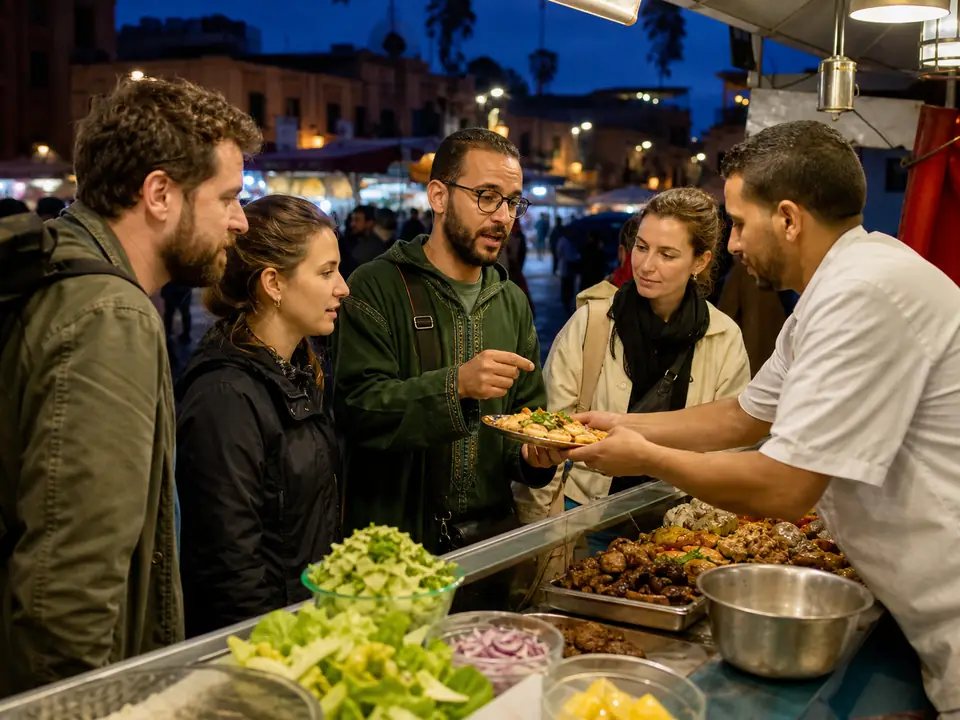
They are eaten in a bread roll with harissa, chopped tomato and onion as one of Morocco's most affordable sandwiches, or served on a plate as a snack with a wedge of lemon. At 2-5 MAD per piece (20-50 cents), maakouda are one of the cheapest filling snacks in the country.
Maakouda appear at every street-food stall, every neighbourhood grill, and every Ramadan iftar table. They are comfort food in its purest form — crispy, starchy, spiced and deeply satisfying.
Varieties of Maakouda
Classic maakouda
Region: Nationwide
Plain potato fritters seasoned with cumin, turmeric, garlic and parsley. Deep-fried until deeply golden. The standard version found at every street stall.
Cheese maakouda
Region: Urban areas
Potato fritters with a cube of cheese (often La Vache qui rit) pressed into the centre. The cheese melts into a gooey pocket inside the crispy shell.
Herb maakouda
Region: Northern Morocco
Made with extra fresh herbs — coriander, parsley, dill — for a greener, more aromatic fritter. Lighter and more fragrant.
How to eat maakouda
Maakouda are eaten by hand. In a sandwich, they are tucked into a half-baguette or khobz with harissa, chopped tomato and onion. As a standalone snack, squeeze lemon over them and eat hot. They are also served as part of a mixed plate of fried snacks alongside briouats and sfenj. During Ramadan, maakouda are a common iftar item.
Where to try it in Marrakech
Street-food stalls throughout Marrakech's medina sell maakouda from mid-morning. The stalls around Bab Fteuh, the Mellah and Jemaa el-Fnaa are reliable. Look for the bubbling fryer and a display of golden fritters. Any sandwich shop in the medina will make you a maakouda sandwich for a few dirhams.
How maakouda is made
Potatoes are boiled until soft, mashed, and mixed with cumin, turmeric, garlic, salt, fresh parsley and sometimes an egg to bind. The mixture is shaped into thick rounds (about 8cm across, 2cm thick), dredged in flour, and deep-fried in hot oil for 3-4 minutes per side until a deep golden crust forms. The fritters should be crispy outside and fluffy inside.
History and origin
Maakouda is a relatively modern dish — potatoes arrived in Morocco from the Americas in the 17th-18th century. The fritter itself is a classic Moroccan adaptation: take an imported ingredient, season it with existing Moroccan spices (cumin, turmeric) and fry it. Maakouda became a medina street-food staple in the 20th century as potatoes became cheap and abundant.
Insider tips
- Eat maakouda hot — they lose their crispness fast. If the fritters are sitting in a pile, ask for a freshly fried one.
- The harissa on a maakouda sandwich can be very spicy — ask for 'shwiya' (a little) if you are heat-sensitive.
- Maakouda are one of the safest street foods for cautious eaters — they are deep-fried at high heat.
- During Ramadan, maakouda are everywhere — every food stall adds them to the iftar lineup.
Related recipes
Frequently asked questions
Are maakouda the same as falafel?
No. Maakouda are potato-based; falafel are chickpea-based (or fava bean). The spice profiles are different: maakouda use cumin and turmeric; falafel use coriander, cumin and herbs. The textures are also distinct — maakouda are fluffy; falafel are denser.
Are maakouda vegan?
Usually yes — the basic recipe is potato, spices and flour, fried in vegetable oil. Some versions include egg as a binder, but this is not universal. Ask the vendor if you need to be sure.