Main dish
Kefta (Moroccan Meatballs)
Kefta is the backbone of Moroccan street food and home cooking — hand-seasoned minced meat (beef, lamb or a mix) shaped into meatballs, sausages or patties and either grilled over charcoal, simmered in a spiced tomato sauce, or tucked into a bread roll with harissa. It is fast, affordable, universally loved, and endlessly adaptable.
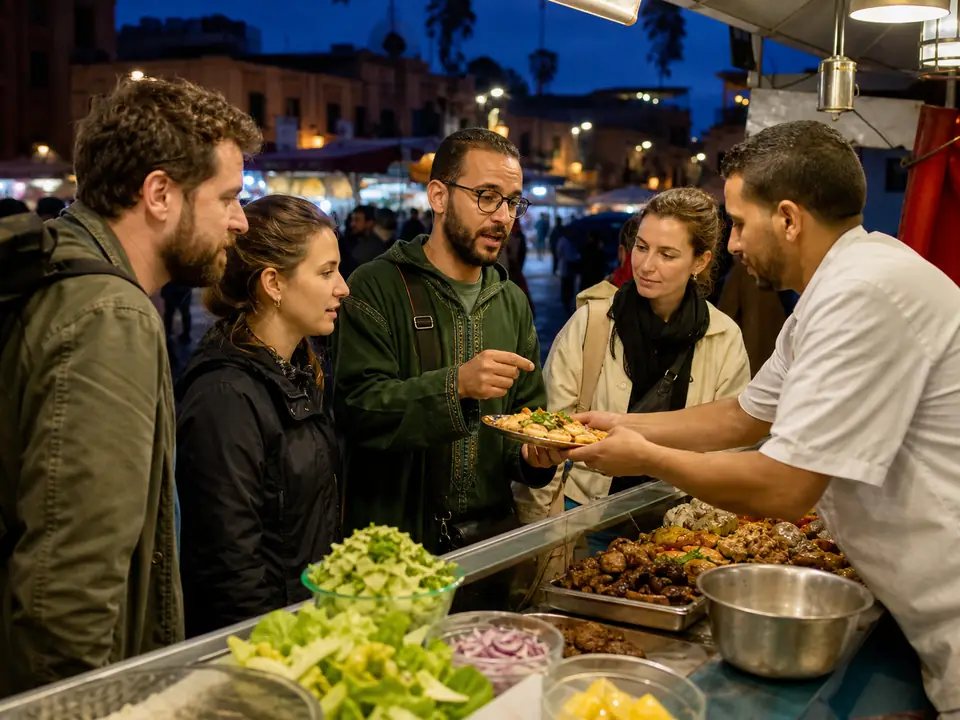
The Moroccan kefta spice blend — cumin, paprika, fresh parsley, onion, and sometimes cinnamon — gives the meat a distinctive warmth. Unlike Middle Eastern kofta, Moroccan kefta rarely uses pine nuts or rice, keeping the texture dense and meaty. The most famous preparation is kefta tagine: meatballs simmered in a cumin-heavy tomato-onion sauce with eggs cracked on top to poach.
Kefta is everyday food — the thing you eat when you are hungry, in a hurry, and want something deeply satisfying. It is also the first dish many Moroccan children learn to make.
Varieties of Kefta
Kefta tagine with eggs (Kefta mkawra)
Region: Nationwide
Meatballs simmered in a cumin-tomato sauce with eggs poached on top. Served in the tagine pot with bread for scooping. A staple lunch dish across Morocco.
Grilled kefta skewers (Kefta meshwi)
Region: Nationwide
Minced meat shaped around flat metal skewers and grilled over charcoal. Served with bread, grilled tomatoes and onions. The quintessential street-food kefta.
Kefta sandwich
Region: Nationwide
Grilled kefta patties or crumbled meat tucked into a half-baguette or khobz with harissa, chopped onion and tomato. Fast, cheap, and available at every corner.
Kefta with rice
Region: Urban areas
Meatballs in tomato sauce served over white rice instead of with bread. A common home-cooking variant, especially for children.
How to eat kefta
Kefta tagine is eaten straight from the pot with bread, scooping sauce and meatball together. Break the poached egg and mix it into the sauce. Grilled kefta on skewers is eaten with bread, grilled vegetables and sometimes a simple salad. A kefta sandwich is eaten on the go, standing at the counter. In all cases, the cumin-spiced meat is the star and the accompaniments are simple.
Where to try it in Marrakech
Kefta is everywhere in Marrakech. The open-air grills of Jemaa el-Fnaa serve kefta skewers from dusk until late. Small neighbourhood grill shops throughout the medina offer kefta sandwiches and plates. Riad restaurants include kefta tagine on lunch menus. For the best grilled kefta, look for a grill shop with a visible charcoal fire and high turnover.
How kefta is made
For kefta tagine: mince is mixed with grated onion, chopped parsley, cumin, paprika, salt and pepper, then rolled into walnut-sized balls. A sauce of grated tomato, onion, cumin, paprika and olive oil simmers until thickened. The meatballs are added and cook for 15-20 minutes. Eggs are cracked into wells in the sauce in the last 5 minutes. For grilled kefta: the same mixture is shaped around flat skewers and grilled over very hot charcoal, turned once, for 4-5 minutes total.
History and origin
Kefta (from the Persian kufta, meaning 'pounded') has ancient roots across the Middle East and North Africa. In Morocco, it evolved into a distinctly local preparation emphasising cumin, fresh herbs and simplicity. It has been street food for centuries — the charcoal grill (mangal) and the meatball are as old as the medina itself. Kefta tagine as a dish is documented in medieval Moroccan cookbooks.
Insider tips
- Ask for kefta with a mix of beef and lamb — the fat from the lamb keeps the meatballs moist.
- In a kefta tagine, the sauce is at least as important as the meatballs — use plenty of bread to mop it up.
- At a street grill, watch for high turnover — fresh kefta off the charcoal is far better than reheated.
- The egg on a kefta tagine should be just set, with a runny yolk — ask for it 'beid nayyid' (soft egg).
Related recipes
Frequently asked questions
What is the difference between kefta and kofta?
Kefta is the Moroccan/Maghreb spelling and style — emphasising cumin, paprika and fresh parsley with a dense, all-meat texture. Kofta (Middle Eastern) often includes rice, bulgur or breadcrumbs and may use different spice profiles. The concept is the same; the seasoning is regional.
Is kefta always beef?
No. Kefta can be made from beef, lamb or a combination. Lamb kefta is slightly richer; beef is leaner. In Morocco, a 50/50 mix is common. Chicken and turkey kefta exist but are not traditional.
Can kefta tagine be made without eggs?
Yes. The eggs are an addition, not a requirement. Kefta in tomato sauce without eggs is a perfectly valid and common preparation.