Market · Rahba Kedima & the herbalists
Marrakech Spice Souk Tour
Rahba Kedima — the old spice square — is where Marrakech smells like itself: cumin, cinnamon, dried rosebuds and the medicinal tang of the herbalists' jars. This tour decodes the pyramids and sacks, teaches you what ras el hanout really is, how to spot real saffron from fake, and how to buy spices by weight without overpaying. You leave able to build a Moroccan spice rack and read a tagine's seasoning by smell.
- Duration
- 1.5–2 hours
- Best time
- Mid-morning, before the midday heat
- Pace
- Easy, mostly standing at stalls
- Area
- Rahba Kedima & the herbalists
Overview
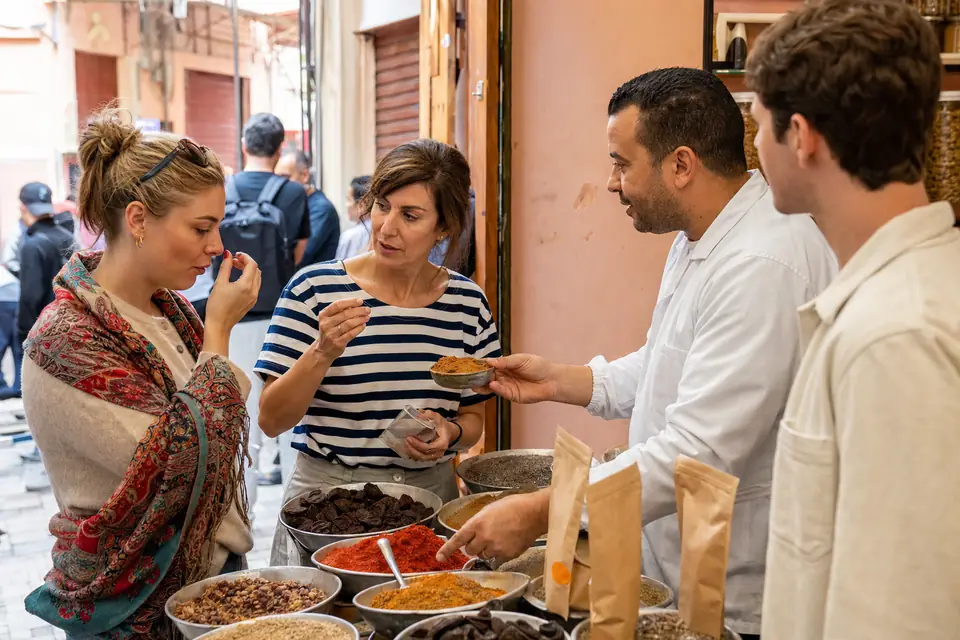
Rahba Kedima doubles as the spice and apothecary square. Around its edges sit the attarine (herbalist) shops, their walls lined with jars of dried herbs, roots, minerals and folk remedies, while the centre fills with open sacks of cooking spices. It is theatrical and genuinely useful — this is where local cooks and traditional healers actually shop.
The key skill is buying by weight and by smell. Whole spices keep their oils and are freshest; a good merchant will crush a little cumin or grind a pinch of ras el hanout in front of you so you can smell it. Saffron should be deep red threads with a sweet, hay-like aroma — powders and cheap 'saffron' are usually safflower or turmeric.
What you'll taste
- Ras el hanout — The 'head of the shop' blend — a dozen or more spices from cumin and coriander to rosebud, mace and grains of paradise. Every merchant's is different.
- Cumin (kamoun) — The backbone of Moroccan grilling and the cumin-salt served with brochettes; smell for warmth, not dust.
- Saffron (zaafran) — Threads from the Taliouine region south of Marrakech; a few strands bloomed in warm water colour and perfume a whole tagine.
- Cinnamon & ginger — Warm sweet spices used across savoury tagines and pastries alike — Morocco blurs the two freely.
- Dried rosebuds & orange blossom — Floral notes for pastries, tea and ras el hanout — the perfume of Moroccan sweets.
- Preserved lemons & smen — Salt-cured lemons and aged fermented butter, the funk-and-tang duo behind a proper chicken tagine.
The route
- 1
Enter Rahba Kedima
Get your bearings in the open square — spice sacks in the middle, herbalists around the edge, basket sellers on one side.
- 2
A working spice stall
Choose a stall busy with locals; ask to smell whole cumin, coriander and a ground pinch of the house ras el hanout.
- 3
Saffron check
Learn the real-saffron test — deep red threads, sweet hay aroma, slow colour release in warm water — before you buy any.
- 4
The herbalist (attarine)
Step into an apothecary shop for the theatre of the jars — argan, nigella, musk, and the famous 'Berber pharmacy' patter.
- 5
Preserved goods
Preserved lemons, olives and smen from a nearby seller — the fermented, salted backbone of home cooking.
- 6
Weigh and buy
Finish by buying a small, sealed selection by weight to take home — cumin, a saffron pinch, a good ras el hanout.
When to go & what it costs
Go mid-morning when the stalls are freshly stocked and the square is active but not yet baking. The spice souk works year-round and is largely covered or shaded. Allow ninety minutes to two hours if you want to browse the herbalists properly rather than just buy and go.
Cost & cash: Spices are sold by weight and prices are negotiable at some stalls — know that saffron and true ras el hanout cost more, and mixed 'ras el hanout' can vary wildly.
Insider tips
- Buy whole spices where you can and grind at home — they keep their oils far longer than pre-ground.
- Ask for the house ras el hanout to be ground fresh so you can smell it before committing.
- For saffron, insist on threads, check for a sweet aroma, and buy a small quantity from a reputable stall.
- Prices soften if you buy a few things together; a friendly haggle is expected on spices.
- Get everything sealed in small bags or tins for the flight home and keep receipts for customs.
Etiquette & how to eat like a local
- It is fine to smell and ask questions, but do not plunge your hands into open spice sacks.
- The herbalist's hard sell is part of the show — browse freely and buy only what you want.
- Haggle politely and with a smile; walking away is a normal, accepted move.
- Ask before photographing a merchant behind their pyramids of spice.
- A small purchase after a long tasting is good manners even if you did not find the perfect saffron.
Frequently asked questions
What is ras el hanout and should I buy it here?
Ras el hanout means 'head of the shop' — a merchant's signature blend of a dozen or more spices used in tagines, couscous and grilled meats. The spice souk is the best place to buy it because you can smell and compare blends; ask for it ground fresh.
How do I tell real saffron from fake in the souk?
Real saffron is whole deep-red threads with a sweet, hay-like smell that releases colour slowly in warm water. Powders, bright-yellow strands or suspiciously cheap 'saffron' are usually safflower or turmeric. Buy small amounts of threads from a trusted stall.
Are spice prices fixed or negotiable?
They are usually negotiable, sold by weight. Prices soften if you buy several items together. Saffron and genuine ras el hanout legitimately cost more, so a rock-bottom price is a warning sign, not a bargain.
Can I take Moroccan spices home on a plane?
Dried spices are generally fine in most countries in sealed packaging in your luggage — ask the merchant to bag and seal them, and keep them accessible for security. Check your home country's rules on plant products and quantities before you travel.
Cook what you tasted
Loved something on the walk? Take it home. Learn the dish hands-on with a Marrakech chef, or follow a free step-by-step recipe.