Market · Bab Doukkala
Bab Doukkala Local Market Tour
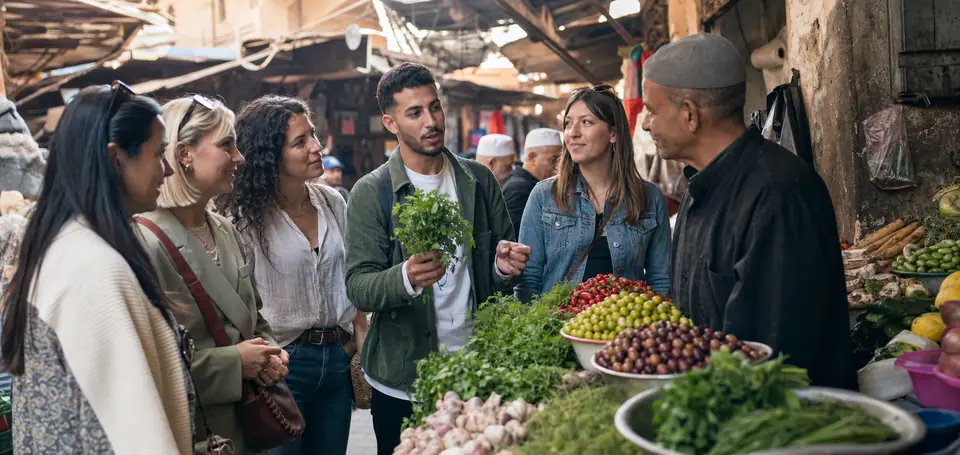
Bab Doukkala is where Marrakech shops for dinner — a genuine neighbourhood produce and food market in the northwest Medina, near-invisible to tourists and all the better for it. No souvenir stalls, no touts: just fishmongers on ice, mountains of seasonal vegetables, a bread oven, a spit-roast chicken counter and the everyday rhythm of a working Moroccan market. This is the least performative food tour in the city and, for many, the most revealing.
- Duration
- 1.5 hours
- Best time
- Morning, for the freshest produce and fish
- Pace
- Easy, busy working market
- Area
- Bab Doukkala
Overview
Every Marrakech neighbourhood has a market like Bab Doukkala, but this one is large, central-ish and easy to reach, which makes it the best window into how the city actually feeds itself. Cooking classes that start with a market visit often bring you here or somewhere like it, because it is where you learn seasonality — what is ripe, what is cheap, what a Moroccan cook builds the day's tagine around.
There is little to buy as a tourist and everything to learn. You see whole fish on ice, live poultry, spit-roasting chickens, herbs by the armful, and the vegetables of the season. It teaches you to cook the way locals do: from the market inward, letting the produce decide the menu.
What you'll taste
- Seasonal vegetables — Whatever is ripe — spring artichokes and broad beans, summer tomatoes and courgettes, winter pumpkin and cardoons.
- Fresh herbs — Coriander, flat-leaf parsley and mint sold in fist-sized bunches, the green backbone of every dish.
- Rotisserie chicken — Whole chickens turning on the spit, sold hot with bread and a scoop of fries or rice — a cheap local lunch.
- Fresh fish — Sardines, sea bream and calamari on ice, brought up from the Atlantic coast at Essaouira and Safi.
- Olives & pickles — The neighbourhood olive stall, cheaper and less polished than the tourist souks.
- Bread from the ferran — Round khobz baked in the communal wood oven, still warm when you buy it.
The route
- 1
Bab Doukkala gate
Enter near the old city gate; the market spreads through the lanes just inside, away from any tourist route.
- 2
Vegetable rows
Walk the produce first to read the season — the freshest, cheapest thing today is what a local would cook tonight.
- 3
Herb sellers
Buy a bunch of coriander and parsley to learn how much greenery a Moroccan dish really uses.
- 4
Fishmongers
The fish on ice, brought from the Atlantic — see how sardines and bream are cleaned and sold.
- 5
Rotisserie & bread
A spit-roast chicken with warm khobz is the market's ready-made lunch; eat it like a local.
- 6
Olives & spices
Round off at the olive and spice stalls for pantry bits at honest neighbourhood prices.
When to go & what it costs
Come in the morning, when the fish is freshest and the produce is at its peak before the day's cooking begins. The market winds down in the afternoon. It is a working market, not a show, so there is no 'right' time for spectacle — just go when the stalls are full and the neighbourhood is shopping.
Cost & cash: Local prices, sold by weight — noticeably cheaper than anywhere aimed at visitors.
Insider tips
- This is a learning tour more than a buying one — read the season, then cook from it.
- The rotisserie chicken with bread is one of the best cheap lunches in the Medina.
- Buy herbs by the bunch, not the sprig; Moroccan cooking uses handfuls.
- Prices are local and low — no hard haggling needed, just fair small cash.
- Pair a market visit with a cooking class that shops here first, then cooks what you chose.
Etiquette & how to eat like a local
- Respect that people are here to shop for dinner — do not block the busy fish and vegetable lanes.
- Ask before photographing; this is a residential neighbourhood, not an attraction.
- Dress modestly — you are in a local, non-touristed quarter.
- Greet stallholders; a little Arabic or French earns warmth and fair prices.
- Handle produce gently and only when you intend to buy.
Frequently asked questions
Is Bab Doukkala worth visiting if I am not cooking?
Yes, as a window into everyday Marrakech life. There is little to buy as a tourist, but seeing the seasonal produce, the fish on ice and the neighbourhood rhythm tells you more about Moroccan food than any souvenir stall. Grab a rotisserie chicken lunch while you are there.
What is the best market for a cooking class shop?
A local produce market like Bab Doukkala is ideal because it teaches seasonality — you build the day's menu around what is ripe and cheap. Many Marrakech cooking classes begin with exactly this kind of market walk before returning to the kitchen.
How is it different from the main souks?
The central souks sell crafts, spices and snacks largely to visitors. Bab Doukkala sells dinner to locals — vegetables, fish, poultry, bread — at neighbourhood prices with no touts. It is where the city shops, not where it performs.
When is the market busiest and freshest?
Mornings. The fish arrives fresh, the produce is at its peak, and the neighbourhood does its main shop before the day's cooking. Things quieten and thin out through the afternoon.
Cook what you tasted
Loved something on the walk? Take it home. Learn the dish hands-on with a Marrakech chef, or follow a free step-by-step recipe.