Seasonal · Medina, after sunset
Ramadan Food Tour
During the holy month of Ramadan, Marrakech's food rhythm inverts: the daytime streets are quiet, and then at sunset the city breaks its fast together in a wave of harira, dates and sweets. A Ramadan food tour is a special, respectful window into this — the ftour (iftar) spread, the special breads and pastries made only now, the night markets that come alive after dark, and the pre-dawn suhoor. It asks more sensitivity of the visitor and rewards with a uniquely communal food experience.
- Duration
- Evening, from just before sunset
- Best time
- During Ramadan, at the sunset ftour
- Pace
- Seated ftour then night walking
- Area
- Medina, after sunset
Overview
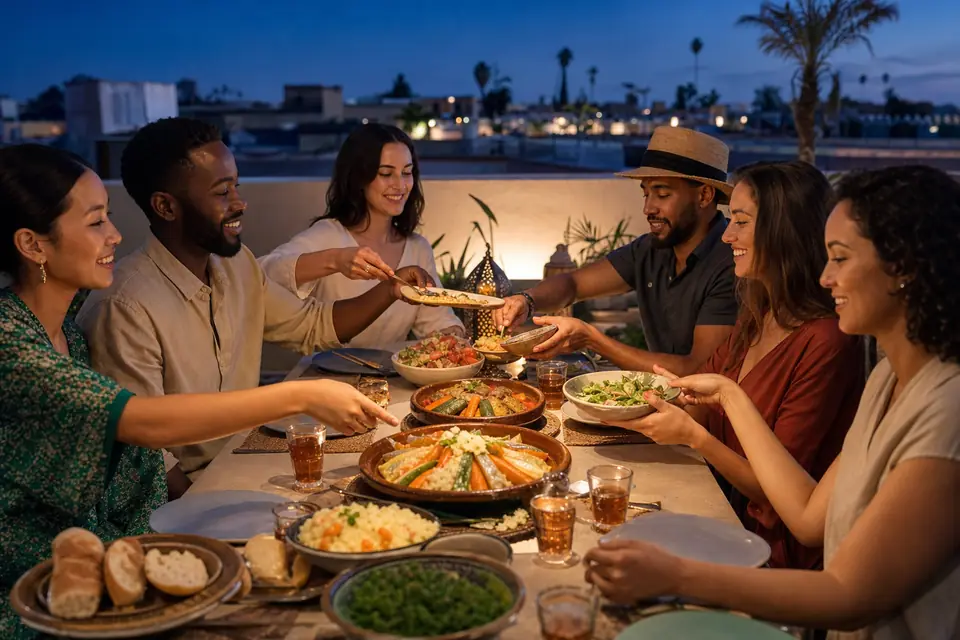
Ramadan reshapes eating in Marrakech completely. Through daylight hours observant Muslims neither eat nor drink, so cafés and food stalls are quiet or closed and the city seems to hold its breath. Then, at the maghrib call to prayer, the fast is broken — ftour (also called iftar) — traditionally with dates and milk, then harira soup, chebakia, boiled eggs, and a spread of breads and sweets, before a fuller meal later in the evening.
After ftour the city reawakens: the Medina fills, sweet shops do a roaring trade in chebakia and sellou, and the night stretches long, often to the pre-dawn suhoor meal that fortifies people for the coming fast. For a respectful visitor, sharing in ftour and tasting the month's special foods is one of the most moving food experiences Morocco offers — with real etiquette attached.
What you'll taste
- Dates & milk — The traditional first bite that breaks the fast, following the Prophetic custom.
- Harira — The tangy tomato-lentil-chickpea soup that anchors ftour across Morocco.
- Chebakia — Sesame-coated, honey-drenched fried flower-shaped pastries made especially for Ramadan, eaten with harira.
- Sellou (sfouf) — A rich, energy-dense blend of toasted flour, almonds, sesame and honey to sustain through the fast.
- Msemen & baghrir — Griddle breads and honeyed pancakes that fill the ftour and suhoor tables.
- Boiled eggs & briouat — Eggs with cumin and savoury or sweet briouat rounding out the fast-breaking spread.
The route
- 1
Feel the daytime hush
Notice the quiet daytime streets — a striking contrast that sets up the evening's release.
- 2
Sweet-shop stock-up
Before sunset, see the sweet shops piled with chebakia and sellou made specially for the month.
- 3
Break the fast
At the maghrib call, share ftour — dates, milk, then harira, eggs and pastries — the emotional heart of the day.
- 4
The city reawakens
After ftour the Medina fills; walk the reanimated night streets and markets.
- 5
Night sweets & tea
More pastries and mint tea as families and friends gather late into the evening.
- 6
Toward suhoor
Learn about the pre-dawn suhoor meal that fortifies people before the next day's fast.
When to go & what it costs
This tour only exists during Ramadan, whose dates shift each year on the lunar calendar. The pivotal moment is sunset (maghrib) — arrive just before to feel the anticipation and share the fast-breaking. The night then runs long. Daytime, expect quiet streets, closed stalls and to refrain from eating and drinking in public yourself.
Cost & cash: Ftour is often generous and inexpensive; many families and mosques also share food freely with others.
Insider tips
- During daylight in Ramadan, do not eat, drink or smoke in public out of respect for those fasting.
- Arrive just before sunset to experience the charged, communal moment the fast is broken.
- Chebakia and sellou are made specially for Ramadan — this is the one time to taste them at their freshest.
- Some restaurants close in the day and reopen for ftour; plan your own meals around the rhythm.
- If invited to a family ftour, accept graciously and bring dates, milk or pastries as a gift.
Etiquette & how to eat like a local
- Refraining from eating and drinking in public during fasting hours is the essential courtesy.
- Dress modestly and behave quietly and respectfully, especially near mosques at prayer times.
- Wait for the call to prayer and your host's cue before eating at ftour.
- Break your fast, if joining, with dates as is traditional, using the right hand.
- Accept invitations warmly — sharing ftour with a visitor is considered a blessing, and a small gift is proper.
Frequently asked questions
Can tourists visit Marrakech during Ramadan?
Yes, and it can be a uniquely rewarding time, but it asks for sensitivity. Daytime is quiet with many stalls and cafés closed, and visitors should not eat, drink or smoke in public during fasting hours. In return you get the extraordinary, communal energy of the nightly fast-breaking and special seasonal foods.
What do Moroccans eat to break the fast?
Ftour traditionally begins with dates and milk, following Prophetic custom, then harira soup, honey-drenched chebakia, boiled eggs, sellou and griddle breads. A fuller meal often follows later in the evening, and a pre-dawn suhoor meal fortifies people before the next day's fast.
What special foods are only made during Ramadan?
Chebakia — sesame-coated, honey-soaked fried pastries — and sellou (also called sfouf), a rich toasted-flour, almond and honey blend, are made especially for Ramadan for their energy and keeping quality. Both appear on ftour tables across Morocco throughout the month.
Is it rude to eat in public during Ramadan in Morocco?
During daylight fasting hours, yes — it is considered disrespectful to eat, drink or smoke openly in public while others fast. Eat discreetly in your accommodation or in venues that remain open for non-fasters, and save street eating for after the sunset fast-breaking.
Cook what you tasted
Loved something on the walk? Take it home. Learn the dish hands-on with a Marrakech chef, or follow a free step-by-step recipe.