Soup & salad
Moroccan Harira
Harira is Morocco's most important soup — a thick, nourishing bowl of tomato, lentils, chickpeas, celery and fresh herbs that breaks the Ramadan fast every evening across the entire country. At sunset during the holy month, millions of Moroccans sit down to a bowl of harira, a few dates, and a glass of milk before the main meal begins.
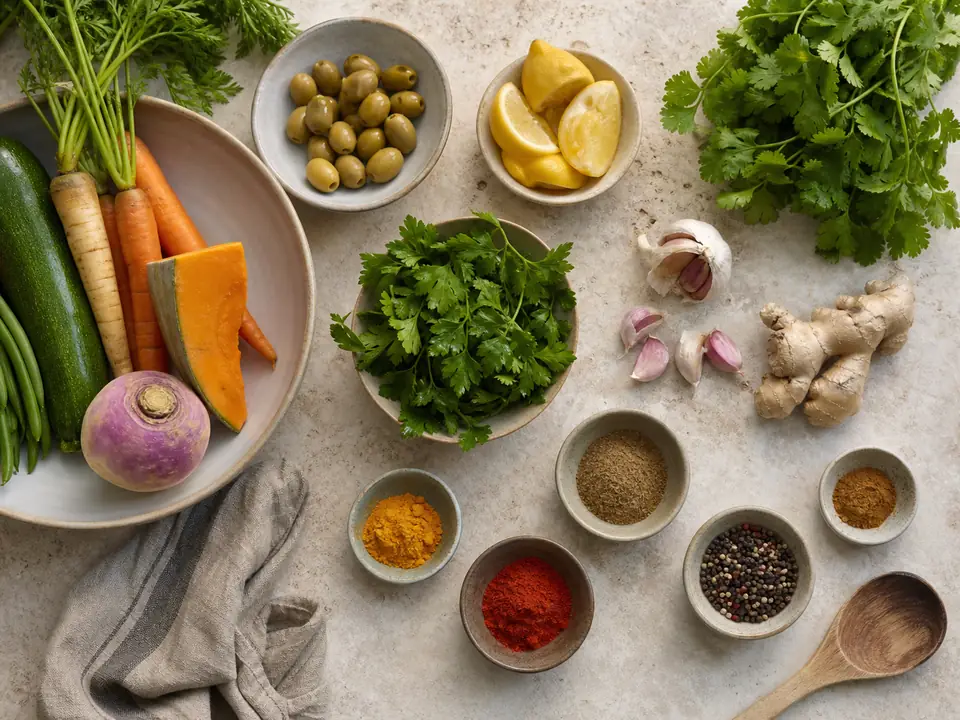
But harira is not only a Ramadan food. It is eaten year-round as a starter, a cold-weather warmer, and a breakfast soup. Every Moroccan family has its own recipe, and opinions about the correct harira run deep. Some add lamb; some keep it vegetarian. Some thicken with flour; others with eggs beaten into the broth (a technique called tedouira). The constants are tomato, lentils, chickpeas, fresh coriander, and the perfume of cinnamon and ginger.
For travellers, harira is affordable, available everywhere, filling, and an excellent introduction to the Moroccan flavour palette.
Varieties of Harira
Classic harira with lamb
Region: Nationwide
The most common version: a thick tomato broth with green lentils, chickpeas, diced lamb, vermicelli, fresh coriander and parsley, thickened with flour or tedouira. Warming and deeply savoury.
Vegetarian harira
Region: Nationwide
The same base without meat — still rich and satisfying thanks to the lentils, chickpeas and tomato concentration. A natural vegan option if made without the egg thickener.
Harira fassia (Fes-style)
Region: Fes
A slightly more refined version with smaller-cut vegetables, more saffron, and the tedouira egg thickening. Considered the most elegant harira.
Berkoukes harira
Region: Eastern Morocco / Oujda
A variation using hand-rolled berkoukes (large couscous pellets) instead of vermicelli. Heartier and chewier.
How to eat harira
Harira is served in a bowl, very hot, with a squeeze of lemon juice, a drizzle of olive oil, and accompanied by dates and chebakia (honey-sesame pastries) during Ramadan. Outside Ramadan, it is eaten with bread as a starter or a light meal. Some Moroccans stir in a spoonful of smen (aged butter) for extra richness. The lemon is essential — it brightens the entire bowl.
Where to try it in Marrakech
During Ramadan, harira is everywhere — street stalls, restaurants, riads and homes. Outside Ramadan, most Moroccan restaurants serve it as a starter. Jemaa el-Fnaa's food stalls offer harira bowls from late afternoon. Small neighbourhood restaurants throughout the medina serve excellent harira for 5-10 MAD a bowl. It is also a cooking class staple.
How harira is made
Diced onion, celery, tomato and meat (if using) are sautéed with ginger, cinnamon, turmeric and pepper. Water is added along with soaked chickpeas and lentils, and the soup simmers for 1-2 hours until everything is tender. Fresh coriander and parsley are added in generous handfuls. The soup is thickened in the last minutes with a flour-water slurry (or beaten egg whisked into hot broth — the tedouira method). Vermicelli goes in at the very end and cooks for 2 minutes. The final soup should be thick enough to coat a spoon.
History and origin
Harira is ancient and is documented in medieval Moroccan and Andalusian culinary manuscripts. Its role as the Ramadan fast-breaker (iftar soup) has made it one of the most culturally significant dishes in Moroccan life. The arrival of tomatoes from the Americas in the 16th century transformed the soup — before that, harira was sour-based, using fermented dough or vinegar for acidity. Today, the tomato-based version is universal.
Insider tips
- Always add lemon juice — it transforms the flavour from heavy to bright.
- During Ramadan, sunset is the magic hour. Find a café and order harira — the atmosphere of communal fast-breaking is unforgettable.
- Harira improves overnight. Day-two harira, reheated, is often better than fresh.
- A good harira should be thick and hearty, not thin and watery. If it is watery, move on.
- Pair harira with dates and chebakia for the traditional Ramadan combination.
Related recipes
Frequently asked questions
Is harira healthy?
Yes. Harira is high in plant protein (lentils, chickpeas), fibre, vitamins and minerals. The tomato base provides lycopene; the fresh herbs add vitamins C and K. It is relatively low in fat unless enriched with butter. It is one of the most nutritious soups in the Moroccan repertoire.
Can harira be made vegan?
Yes. Omit the lamb and the egg-based tedouira thickener. Use flour-water for thickening. The lentils and chickpeas provide ample protein. The result is naturally vegan and still deeply flavoured.
What does harira taste like?
Harira is tomato-forward, warmly spiced with cinnamon and ginger, herby from fresh coriander and parsley, and earthy from the lentils. It is thick, savoury and comforting — think of a more complex, spiced minestrone.