Soup & salad
Moroccan Zaalouk & Taktouka
No Moroccan meal begins without a spread of cooked salads — small plates of slow-cooked vegetables that crowd the table before the main dish arrives. Zaalouk and taktouka are the two most iconic. Zaalouk is a smoky, silky puree of charred aubergine and tomato, seasoned with garlic, cumin, paprika and fresh coriander. Taktouka is its cousin — grilled peppers and tomatoes cooked down into a thick, tangy, slightly spicy relish.
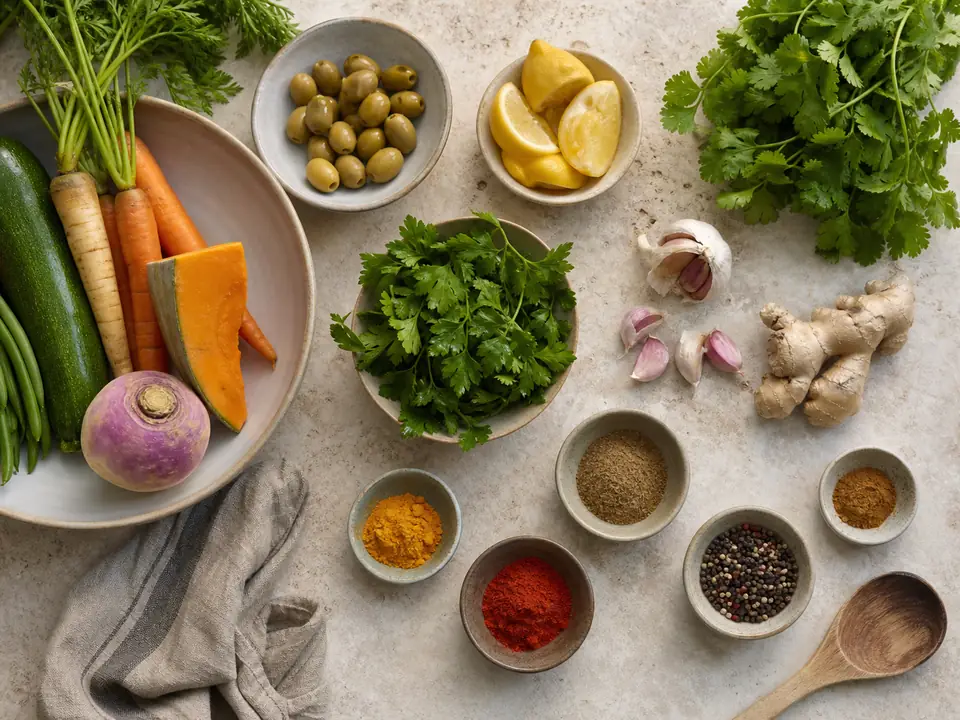
These are not side dishes in the Western sense. They are an integral part of the Moroccan table structure, served alongside olives, bread and other salads to open the meal. A riad dinner might present six or eight small bowls; a family supper might offer two or three. The salads are always room temperature or warm, never cold, and are scooped up with torn bread.
For travellers, the cooked salad course is one of the most satisfying parts of eating in Morocco — varied, vegetable-forward, and full of concentrated flavour.
Varieties of Zaalouk & Taktouka
Zaalouk (aubergine and tomato)
Region: Nationwide
The most famous cooked salad: charred aubergine mashed with cooked tomato, garlic, cumin, paprika, olive oil and fresh coriander. Silky and smoky.
Taktouka (pepper and tomato)
Region: Nationwide
Grilled green peppers and tomatoes cooked down with garlic, cumin and paprika into a thick, tangy relish. Slightly spicier than zaalouk.
Bakoula (mallow or spinach salad)
Region: Nationwide
Slow-cooked mallow leaves (or spinach as a substitute) with garlic, olive oil, preserved lemon and olives. Silky and earthy.
Carrot salad with cumin
Region: Nationwide
Cooked carrots (boiled or steamed) dressed with olive oil, lemon, cumin, garlic and fresh parsley. Sweet, bright and simple.
Beetroot salad with orange
Region: Fes / Marrakech
Cooked beetroot dressed with orange juice, cinnamon, and orange-flower water. A sweet, fragrant salad unique to Morocco.
How to eat zaalouk & taktouka
Cooked salads arrive in small bowls at the start of the meal. Tear off a piece of khobz and use it to scoop up the salad — bread is the utensil. Try each salad in turn, working around the table. They are meant to be shared. Never double-dip the same piece of bread. The salads stay on the table throughout the meal.
Where to try it in Marrakech
Every riad, restaurant and home in Marrakech serves cooked salads. They are the universal opener. Street restaurants and neighbourhood cafés include two or three salads with any main course. For the best variety, eat at a riad that serves a multi-course Moroccan dinner — you may get six or eight different salads. A cooking class will teach you to make three or four in an afternoon.
How zaalouk & taktouka is made
Zaalouk: aubergines are charred over open flame or roasted until collapsed, then peeled and mashed. Tomatoes are grated. Both are cooked together with garlic, cumin, paprika, olive oil and salt until thick and jammy. Fresh coriander and a squeeze of lemon finish it. Taktouka: green peppers and tomatoes are grilled until blistered, peeled, chopped and cooked down with garlic, olive oil, cumin and paprika. Both salads improve with resting and are best served at room temperature.
History and origin
Cooked salads are a cornerstone of Moroccan culinary tradition with Berber roots. The practice of slow-cooking vegetables into concentrated preparations that store well and travel easily reflects both the agricultural abundance of Morocco and the need to preserve food in a hot climate. The French word 'salade' is a misnomer — these are more akin to Mediterranean mezze or Indian chutneys than raw salads.
Insider tips
- Ask how many salads come with your meal — in a good restaurant, three to five is standard.
- Zaalouk tastes best the next day after the flavours have melded — make extra if cooking at home.
- If you only try one cooked salad, make it zaalouk — it is the quintessential Moroccan starter.
- These salads are naturally vegan and gluten-free (when eaten without bread).
Related recipes
Frequently asked questions
What is the difference between zaalouk and baba ganoush?
Both are aubergine-based, but zaalouk includes cooked tomato and is seasoned with cumin and paprika (Moroccan spice profile). Baba ganoush is tahini-based and part of the Levantine tradition. The textures are different: zaalouk is chunkier and more jammy; baba ganoush is smoother and creamier.
Are Moroccan cooked salads served cold?
No — they are served at room temperature or slightly warm, never cold from a refrigerator. This is important: the flavours and textures are best when the salads have had time to come to room temperature.
How many cooked salads are typically served at a Moroccan meal?
At a riad dinner or celebratory meal, five to eight different salads may appear. At a neighbourhood restaurant, two or three is standard. At home, it depends on the occasion and the cook's ambition.