Grills & street food
Moroccan Brochettes
Brochettes (qotban in Arabic) are Morocco's charcoal-grilled meat skewers: bite-size cubes of lamb, beef, chicken or offal, marinated in cumin, paprika, garlic and oil, threaded onto skewers and grilled fast and hot over glowing coals. Cheap, smoky and utterly moreish, they are the flavour of a Marrakech evening — nowhere more so than on Jemaa el-Fnaa.
قطبان · qotban / brochettes
- Origin
- Across Morocco
- Type
- Charcoal-grilled skewers
- Eaten at
- Evening street food, grills
- Key flavour
- Cumin, paprika, garlic, char
What Brochettes is
Brochettes are small cubes of meat — lamb and beef are classic, but chicken, kefta, and offal like liver, heart and kidney are all popular — marinated in a simple mix of cumin, paprika, garlic, olive oil and herbs, then skewered and grilled over charcoal. Liver skewers (kebda) are wrapped in a little caul fat to keep them juicy.
The cooking is quick and fierce: the coals sear the outside while the inside stays tender, and the fat dripping onto the embers throws up the smoke that gives brochettes their unmistakable aroma. They're small by design — you eat several, off the skewer, while they're still sizzling.
Origin & story
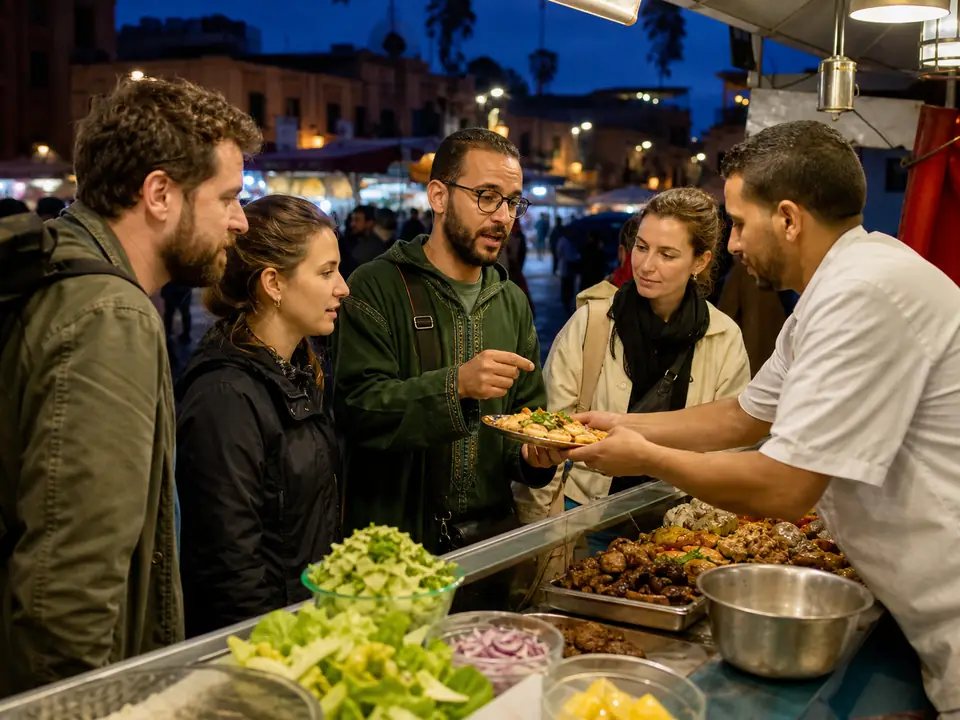
Grilled skewers are among the oldest and most universal ways to cook meat, and in Morocco they became a defining street food — the charcoal grill is a fixture of the medina, the roadside and above all the great open-air food theatre of Jemaa el-Fnaa, where rows of grill stalls fire up every evening as the sun drops.
They're social, affordable food: a plate of brochettes with bread and salad is a cheap, satisfying dinner shared among friends, and the ritual of picking a stall, watching the grilling and eating elbow-to-elbow with locals is part of the pleasure.
Key ingredients at a glance
- Cubed lamb, beef, chicken, or liver (kebda)
- Cumin, paprika and garlic
- Olive oil, parsley and onion for the marinade
- Caul fat for liver skewers
- Charcoal and metal skewers
- Bread, cumin, salt and tomato-onion salad to serve
This is a flavour snapshot, not a recipe.
When & how it's eaten
Brochettes are eaten hot off the grill, pulled from the skewer and wrapped in bread with a sprinkle of cumin and salt, some harissa and a fresh tomato-and-onion salad. It's fast, informal, hands-on food — you order by the skewer, and a mixed plate with kefta and different meats is common.
They're evening food above all, tied to the after-dark come-alive of the medina and the square. A round of brochettes, bread and a soft drink or mint tea is a classic cheap Marrakech dinner.
Regional variations
The choice is mostly the meat: tender lamb, leaner beef, chicken, or the prized liver and offal skewers for those in the know. Marinades stay in the cumin-paprika-garlic family but every grill has its own touch, and heat is adjusted with chilli or harissa on the side.
Brochettes belong to the wider Moroccan grill spread that includes kefta skewers, merguez sausage and grilled chops — usually all cooked on the same charcoal.
Where to try it in Marrakech
The obvious stage is Jemaa el-Fnaa at night, but the smaller neighbourhood grills often do it better — a grilled-meats and brochette tour or the night food tour steers you to the stalls with the best meat and highest turnover.
Learn to marinate and grill them in a street food cooking class, and understand the seasoning through our cumin and paprika guides. Pair with kefta and explore more in the guides.
Frequently asked questions
What are Moroccan brochettes?
Charcoal-grilled meat skewers (qotban) — cubes of lamb, beef, chicken or offal marinated in cumin, paprika and garlic, then grilled fast over coals and eaten with bread and salad.
What meat is used for brochettes?
Most often lamb or beef, but chicken and offal — especially liver (kebda) wrapped in caul fat — are popular. A mixed plate of several is common.
Where are the best brochettes in Marrakech?
The evening grill stalls of Jemaa el-Fnaa are the famous setting, but neighbourhood charcoal grills with high turnover often serve better, fresher skewers.