Tagines & slow-cooked
Tanjia Marrakchia
Tanjia is the most Marrakchi dish there is, and it is named after its pot, not its recipe: a tall, urn-shaped terracotta jar. Meat, preserved lemon, garlic, cumin and a knob of smen go in, the top is tied shut, and the whole thing is buried in the warm ash of a wood-fired furnace to cook slowly for five to eight hours with no one watching it.
طنجية · ṭanjiya
- Origin
- Marrakech
- Type
- Ember-cooked pot roast
- Eaten at
- Men's Friday lunch, gatherings
- Key flavour
- Cumin, preserved lemon, smen
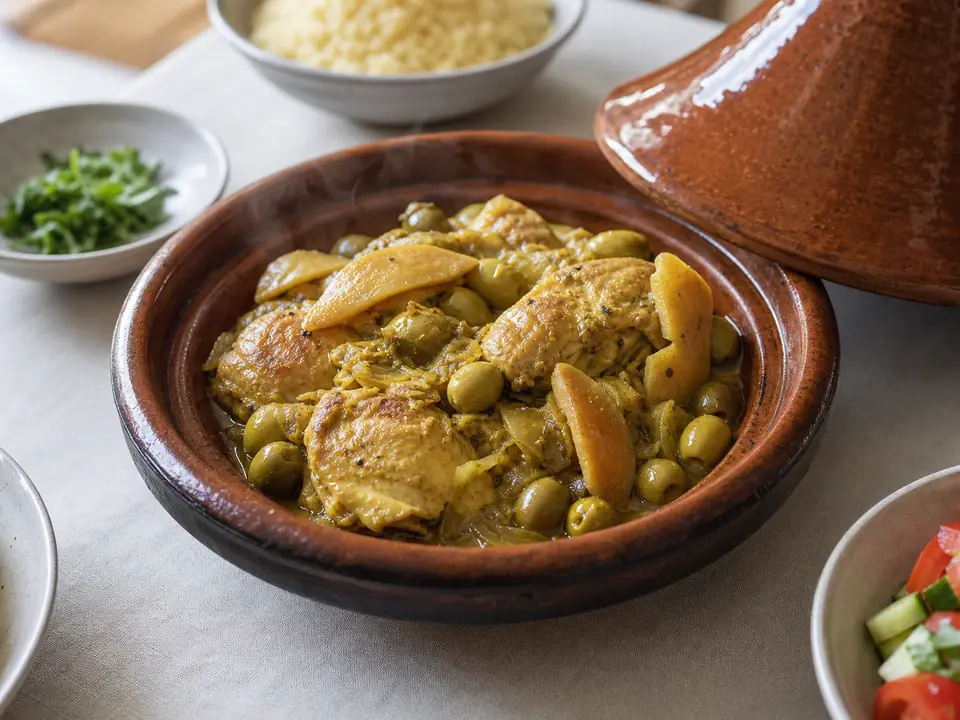
What Tanjia Marrakchia is
Tanjia is meltingly tender meat — usually beef shin or lamb, often on the bone with a little marrow — cooked in a sealed clay urn with almost nothing added but seasoning. There is no sauce-building, no browning, no stirring: everything goes in cold, the pot is closed, and time and gentle ash-heat do the work until the meat collapses and the fat turns to a rich, savoury glaze.
Because it cooks completely unattended, tanjia is famous as the plat des célibataires — the bachelor's dish. A workman would fill his pot at the butcher, drop it at the neighbourhood hammam furnace on his way to the fields, and collect a finished meal on the way home, no kitchen required.
Origin & story
Tanjia is inseparable from the farnatchi — the man who tends the fire that heats the public hammam (bathhouse). For generations the ashes that warmed Marrakech's baths did double duty as a free, low, all-day oven, and slipping the farnatchi a coin to nestle your pot in the embers was simply how a busy man got a proper meal.
It remains a deeply local, mostly male ritual: groups of friends club together, one buys the meat, another the bread and olives, and they collect their tanjia for a long Friday lunch in a garden or by the river. It rarely appears on tourist menus precisely because it belongs to that off-menu, word-of-mouth Marrakech.
Key ingredients at a glance
- Beef shin or lamb on the bone, sometimes with marrow bones
- Whole garlic cloves and a good dose of cumin
- Preserved lemon, chopped small
- A spoonful of smen (fermented aged butter) for its funky depth
- Saffron or turmeric, salt and pepper
- A splash of water — and nothing else
- The clay tanjia urn itself, tied shut with paper or cloth
This is a flavour snapshot, not a recipe.
When & how it's eaten
Tanjia is a hands-on, communal lunch, tipped out onto a shared plate and eaten with bread — the meat is so soft it needs no knife. It is the classic Friday dish for groups of men after the mosque, often taken out to a green spot like the Menara gardens or the palm groves to eat slowly over conversation.
The cumin is essential at the table, not just in the pot: a little dish of ground cumin and salt is passed round to dip each bite. Olives, bread and mint tea round it out; there are no vegetables and no fuss.
Regional variations
Purists keep it to beef, cumin, garlic, preserved lemon and smen. Some cooks add saffron for colour and perfume, a pinch of ras el hanout for complexity, or swap beef for lamb. Home versions now cook in a low domestic oven for those without a friendly farnatchi.
Outside Marrakech the dish is far less common — it is genuinely a city speciality — so what you find elsewhere is usually a Marrakchi cook exporting it rather than a true regional variant.
Where to try it in Marrakech
The most authentic route is a dedicated tanjia food tour, which takes you to the furnaces and hole-in-the-wall spots near the medina where locals actually leave their pots — a place you would struggle to find alone. Some traditional restaurants in the old city cook tanjia to order if you call ahead.
To understand the ember-cooked technique and the wider slow-cook family, try an authentic home cooking class, compare it with the mechoui tradition, or read more in our Moroccan food guides. It pairs naturally with a stop through the medina souks.
Frequently asked questions
Why is tanjia called the bachelor's dish?
Because it needs no cooking skill or kitchen — you season the pot, seal it, and leave it in the hammam furnace ash all day. A single working man could have a slow-cooked meal waiting with almost no effort.
What is the difference between tanjia and tagine?
A tagine is a shallow conical pot cooked on heat with layered ingredients and a sauce. A tanjia is a tall sealed urn cooked buried in ashes, with the meat essentially confit in its own fat and juices.
Is tanjia only found in Marrakech?
Effectively yes. It is the signature dish of Marrakech, tied to the city's hammam furnaces, and is rare elsewhere in Morocco except where Marrakchi cooks have carried it.