Spice
Saffron
زعفران · zaafran
Saffron — zaafran, the hand-picked stigmas of the crocus flower — is Morocco's most precious spice, grown most famously on the terraces around Taliouine in the Souss, where an annual harvest festival marks the season. A pinch perfumes a whole tagine with honeyed, hay-like warmth and a glowing orange colour. Because it is so costly, it is also the spice most often faked, so knowing how to test it matters.
- Type
- Spice
- Heat
- None
- Uses
- 5 classic dishes
Flavour & aroma
Real saffron is honeyed, floral and hay-like with a faint bitter-metallic edge, and it colours liquid a deep glowing orange. The aroma is unmistakable and a little goes a very long way — a large pinch of threads is enough for a family tagine. Too much turns a dish medicinal, so restraint is part of the craft.
In the Moroccan kitchen
Where saffron earns its place — the Moroccan dishes that rely on it:
- Chicken tagine with preserved lemon. Bloomed saffron gives the braise its glow and perfume.
- Couscous and festive broths. A pinch lifts the vegetable stew into something special.
- Fish tagines and mqualli sauces. Saffron and ginger define the yellow mqualli style.
- Rice and mrouzia. Adds warmth and colour to festive sweet-savoury dishes.
- Msemen syrup and drinks. A few threads perfume warm milk or a syrup.
How to use it
- Bloom threads in a little warm (not boiling) water for ten minutes before adding — it releases far more colour and aroma than adding them dry.
- Crush the threads between your fingers first to help them dissolve and share their colour evenly.
- Use threads, not powder, so you can see what you're getting and control the amount.
- Add the saffron water with the base spices so its perfume infuses the whole braise.
How to store it
Saffron keeps its aroma for a couple of years if stored airtight, dark and dry — it is one of the few spices worth buying a small stock of. Keep it away from steam and light. Never freeze the threads damp; keep them bone dry.
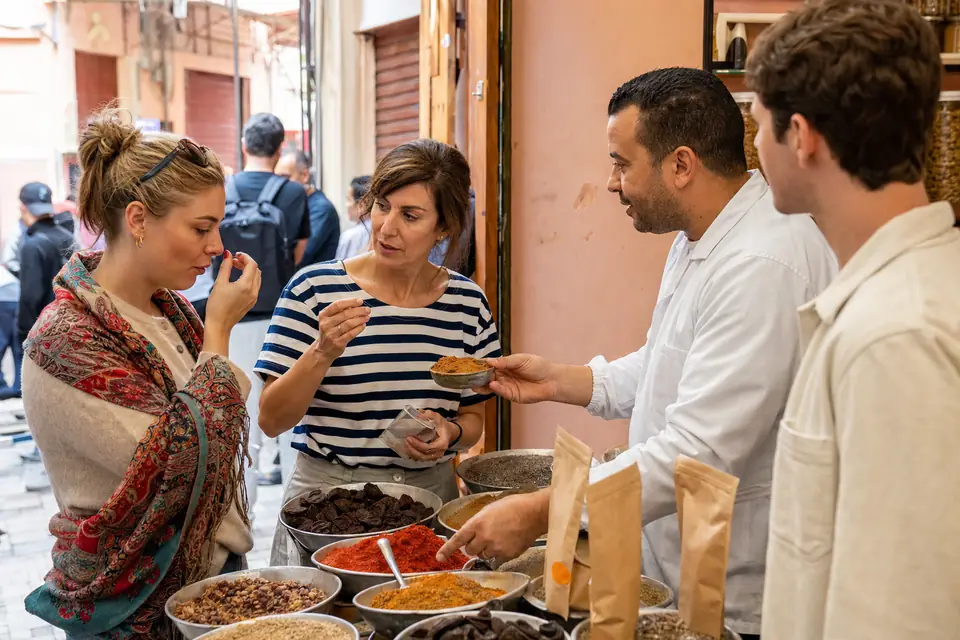
Buying it in the Marrakech spice souk
What to look for, and how not to overpay:
- Buy threads, not powder — powder is the easiest form to cut with turmeric or safflower.
- Do the water test: real saffron releases its colour slowly and the threads stay red, while dyed fakes bleed instant colour and go pale.
- Look for deep red threads with a slightly paler orange trumpet end; all-red 'perfect' threads can be dyed.
- Ask where it is from — Taliouine saffron is the prized Moroccan origin — and buy from a reputable attar rather than a street pyramid.
- Beware 'safflower' or 'false saffron' (el osfor), which is cheap dried petals sold to look like the real thing.
Substitutes
There is no true substitute for saffron's aroma. For colour alone, a little turmeric works, but it won't give the floral perfume — so use turmeric for the everyday pot and save real saffron for special dishes.
Pairs well with
Frequently asked questions
Where does Moroccan saffron come from?
The most famous Moroccan saffron is grown around Taliouine in the Souss region of the south, where the volcanic terraces and altitude suit the crocus. The town holds an annual saffron festival at harvest time.
How can I tell if saffron is real?
Buy threads, not powder, and do a water test: real saffron releases colour slowly while the threads stay red; fakes bleed instant colour and fade. Look for red threads with a paler orange trumpet end, and smell for the honey-hay aroma.
How do you use saffron in a tagine?
Bloom a pinch of crushed threads in a little warm water for ten minutes, then add the saffron water to the braise base. This releases far more colour and perfume than adding dry threads to the pot.
Why is saffron so expensive?
Each crocus flower yields only three stigmas, all picked by hand, and it takes many thousands of flowers to make a small weight of dried saffron. That labour is why it is called red gold — and why it is so often faked.