Class type
Moroccan Street Food Cooking Class in Marrakech
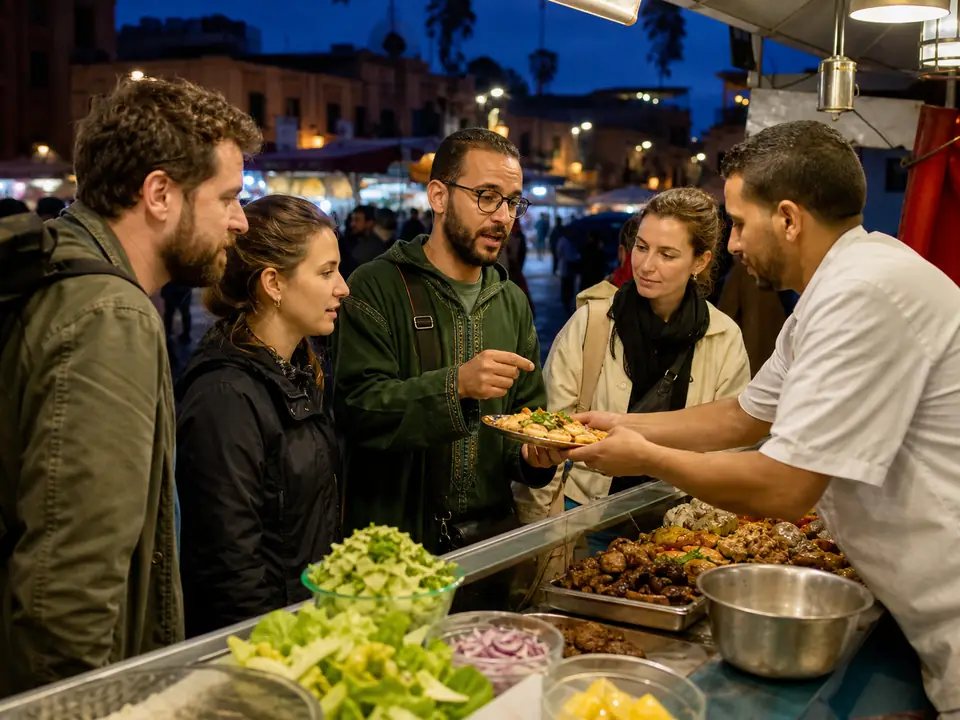
Marrakech's street food is a world of its own — the sizzling grills and juice stalls of Jemaa el-Fnaa, the morning doughnut sellers, the fritter carts. A street food class recreates that spirit in a kitchen: hands-on, casual and delicious, frying sfenj doughnuts, folding fritters and grilling spiced skewers.
- Duration
- 3–4 hours
- Group size
- Small group or private (2–10)
- Level
- All levels — casual and fun
- Price
- Custom quote from our team
Email confirmation within 24 hours · 30% deposit confirms your booking · Privacy policy
What this class covers
This is the loosest, most fun class in the repertoire — less about precise technique, more about the snacks locals actually eat on the move. You might fry sfenj (the airy, chewy Moroccan doughnut sold at dawn), make maakouda (spiced mashed-potato fritters), and grill kefta skewers of cumin-and-paprika minced meat.
Some hosts add briouat (savoury stuffed pastry cigars), harcha (griddled semolina bread) or a bowl of the snail broth and bissara that warm up the square on cool nights. The through-line is food eaten with your hands, fast, hot and satisfying.
It is a great choice if you have already wandered Jemaa el-Fnaa and want to know how those smells and snacks are made — and it tends to be more affordable and more relaxed than the formal tagine classes.
What you'll cook
- Sfenj — Airy, chewy Moroccan doughnuts, fried and dusted with sugar.
- Maakouda — Spiced mashed-potato fritters, crisp outside and fluffy within.
- Kefta skewers — Cumin-and-paprika minced meat, grilled on skewers.
- Briouat or harcha — Savoury pastry cigars or griddled semolina bread.
How the class runs & how long it takes
A typical session runs about 3–4 hours. Here is the usual shape of the day:
- 1
Doughs & mixes
Start the sfenj dough and the fritter and kefta mixes.
- 2
Fry
Fry sfenj and maakouda to golden — the fun, hands-on part.
- 3
Grill
Skewer and grill the spiced kefta.
- 4
Feast
Eat it all street-style, with your hands and plenty of napkins.
What to expect
Expect a casual, playful, hands-in-the-oil session rather than a refined technique class.
Expect the snacks you already saw on the square — this is the how-to behind Jemaa el-Fnaa.
Usually included
- Street-snack ingredients
- Cooking session
- The snacks you fry and grill
- Recipes
Who this class suits
- Foodies who loved the night market
- Younger travellers and groups of friends
- Anyone wanting a relaxed, affordable, fun class
- Snack and comfort-food lovers
How to choose the right class
- Confirm the menu leans street-snack (sfenj, fritters, skewers), not restaurant tagine.
- Ask whether there is a frying element — it is the fun part.
- Pair with an evening slot to mirror the night-market vibe.
- Flag if you want a vegetarian street spread (maakouda and sfenj are meat-free).
Frequently asked questions
What Moroccan street foods will I learn to make?
Usually sfenj (Moroccan doughnuts), maakouda (potato fritters) and kefta skewers, and often briouat or harcha. It mirrors the snacks sold around Jemaa el-Fnaa and the morning doughnut stalls.
What is sfenj?
Sfenj is a Moroccan doughnut — a wet, sticky dough hand-shaped into rings and deep-fried until airy and chewy, then eaten plain or dusted with sugar. It is a classic dawn and breakfast street snack.
Is a street food class vegetarian-friendly?
Largely. Sfenj, maakouda and many fritters are meat-free; only the kefta skewers use meat. Ask for a vegetarian street spread and the host can swap the skewers.
Try the recipes at home
Booked, or just browsing? These free step-by-step recipes cover the dishes this class teaches: