Soup & salad
Moroccan Bissara
Bissara is Morocco's humblest and most satisfying soup — a thick, silky puree of dried split fava beans (or split peas) seasoned with cumin, paprika and garlic, drizzled with good olive oil. It is breakfast food and cold-weather fuel, eaten from a bowl with bread at street-side stalls in the early morning.
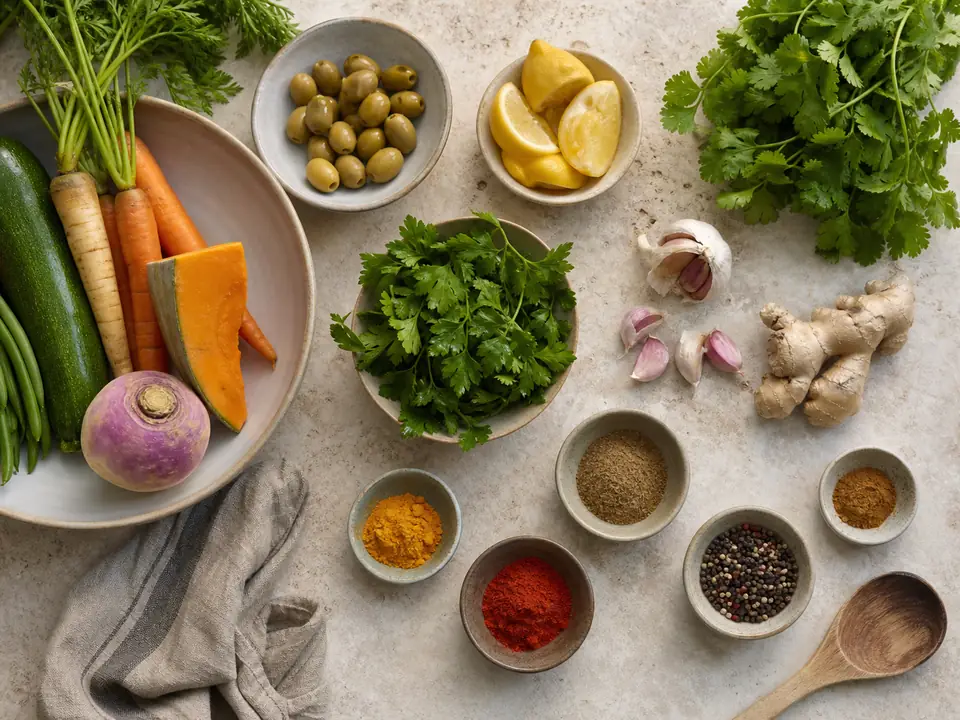
In northern Morocco and the Rif, bissara is the daily breakfast. Workers, students and labourers line up at dawn at tiny hole-in-the-wall shops where the soup simmers in vast cauldrons. A bowl costs almost nothing and fuels a morning's work. The quality depends entirely on the olive oil drizzled on top — a good glug of peppery Moroccan olive oil transforms bland beans into something extraordinary.
Bissara is peasant food in the best sense — cheap, nourishing, warming, and deeply satisfying. For travellers, it is one of the most authentic and affordable breakfast experiences in Morocco.
Varieties of Bissara
Thick bissara (puree)
Region: Northern Morocco / Chefchaouen
The most common version: fava beans cooked until completely soft and blended into a thick puree. Served in a bowl with cumin, paprika, olive oil and bread.
Thin bissara (soup)
Region: Nationwide
A thinner, more liquid version eaten as a soup. Sometimes includes whole beans alongside the puree for texture. More common in urban settings.
Bissara with split peas
Region: Central Morocco
Made with yellow or green split peas instead of fava beans. Sweeter and slightly different in colour. Common in areas where fava beans are less available.
How to eat bissara
Bissara is served very hot in a small bowl, drizzled generously with olive oil, dusted with cumin and paprika. Eat it with torn pieces of khobz (bread), using the bread to scoop the thick puree. Some people crack a raw egg into the hot bissara and stir it in. A glass of mint tea alongside is the classic pairing.
Where to try it in Marrakech
In Marrakech, look for small street-corner soup stalls that open at dawn and close by mid-morning. The area around Bab Aghmat and the Mellah has several excellent bissara vendors. Any small Moroccan café that serves a 'petit déjeuner marocain' (Moroccan breakfast) will likely include bissara. It is also available at Jemaa el-Fnaa's food stalls.
How bissara is made
Dried split fava beans are soaked overnight, then simmered with garlic, cumin, salt and water for 1-2 hours until completely soft. The beans are either mashed by hand or blended until smooth. The consistency should be thick enough to hold its shape on a spoon but thin enough to drip. The finishing — generous olive oil, a pinch of cumin, a shake of paprika — is critical. Without good olive oil, bissara is bland.
History and origin
Bissara is an ancient dish of the Maghreb, predating the Arab conquest. Fava beans (Vicia faba) have been cultivated in North Africa for thousands of years and were a dietary staple long before wheat or rice became common. The dish remains most deeply rooted in the Rif mountains and northern Morocco, where it is considered daily sustenance rather than a delicacy.
Insider tips
- The olive oil makes or breaks bissara — seek out a stall that uses good, fresh Moroccan olive oil.
- Eat it early — the best bissara stalls open at 6-7am and close by 10am.
- A bowl of bissara, some bread and mint tea costs about 10-15 MAD — one of the cheapest breakfasts in Morocco.
- If you are vegan, bissara is one of the safest and most satisfying options on the Moroccan food scene.
Related recipes
Frequently asked questions
Is bissara the same as hummus?
No. Bissara is made from fava beans or split peas, not chickpeas. It is served hot as a soup, not cold as a dip. The texture is similar to a thick puree, but the flavour — earthy, cumin-heavy, olive-oil-rich — is distinctly different from hummus.
Is bissara vegan?
Yes, in its standard form. Bissara contains only fava beans, garlic, cumin, olive oil and salt. Some people add an egg, but the basic preparation is naturally vegan and gluten-free.
What meal is bissara eaten at?
Primarily breakfast. In Morocco, bissara is the working person's morning fuel. It can also be eaten as a starter or a light lunch, but its spiritual home is the dawn breakfast stall.