Comparison · Dishes & staples
Couscous vs Rice
On the plate they can look interchangeable — a fluffy pale base for a stew. But couscous and rice could hardly be more different in what they are and how they behave. One is a hand-rolled wheat pasta that you steam; the other is a cereal grain you boil or absorb. Knowing which is which changes how you cook them and how they taste.
- Read
- 6 min
- Comparing
- Couscous vs Rice
- Updated
- 20 July 2026
The short answer
In one paragraph
Couscous is not a grain — it is tiny granules of steamed durum-wheat semolina, essentially a pasta. Rice is an actual cereal grain. Couscous cooks in minutes and has a light, nutty, slightly chewy bite; rice takes longer and ranges from fluffy to sticky. In Morocco couscous is the traditional staple; rice plays a smaller, mostly festive role.
The key difference: Couscous is a wheat pasta made from semolina; rice is a whole grain from a cereal plant. One contains gluten, the other does not.
At a glance
A side-by-side of the differences that matter.
| Aspect | Couscous | Rice |
|---|---|---|
| What it is | Steamed semolina granules — a wheat pasta | The seed of a cereal grass |
| Made from | Durum-wheat semolina, rolled with water | Whole or milled rice grains |
| Cooking method | Steamed (traditionally) or hydrated with hot liquid | Boiled, absorbed or steamed |
| Speed | Very fast — instant couscous swells in minutes | Slower — 10–40 minutes depending on type |
| Texture | Light, separate, nutty, faintly chewy | Fluffy to sticky depending on variety |
| Gluten | Contains gluten (it is wheat) | Naturally gluten-free |
| Role in Morocco | The traditional staple; the Friday dish | Occasional; used in dishes like sweet seffa |
When to choose couscous
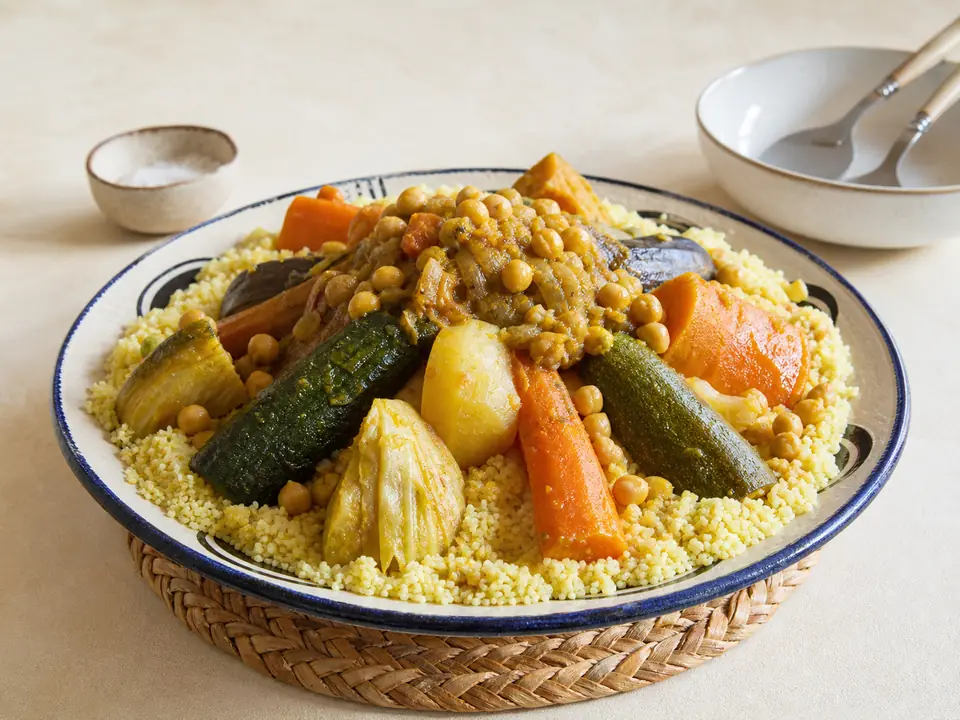
Choose couscous for anything Moroccan, and for speed. It is the authentic base for the country's signature communal meal, and its light, separate texture is built to catch a broth or the juices of a tagine. Boxed instant couscous is genuinely quick — pour over hot stock, cover, and fluff after a few minutes — while the traditional steamed method rewards effort with an even lighter result.
It also brings a gentle nuttiness that plain rice lacks, and it soaks up spice and butter beautifully. If you are cooking a Moroccan spread, couscous is the natural partner: start with our vegetable couscous and read where the grain comes from in our semolina and couscous guide.
When to choose rice
Choose rice when you need it to be gluten-free, when you want a neutral backdrop, or for dishes where its grain and stickiness matter. It is far more versatile across world cuisines, and its lack of gluten makes it the safe staple for anyone with coeliac disease or a wheat intolerance — the one clear situation where rice beats couscous outright.
In Moroccan cooking rice is the quieter player. It appears in some soups and in sweet dishes — a Moroccan rice pudding, or as an alternative base in seffa, which is more often made with fine couscous or vermicelli. For everyday Moroccan meals, though, couscous remains the default and rice the exception.
Nutrition at a glance
The two are broadly comparable as carbohydrates, with some honest differences. Couscous, being wheat, carries a little more protein and, unless wholewheat, is a refined starch. Rice varies enormously by type — white rice is refined, brown rice keeps its bran and fibre. Neither is meaningfully 'healthier' in isolation; portion size and what you serve on top matter far more.
- Wholewheat couscous and brown rice both add fibre over their refined versions.
- Couscous is off the menu on a gluten-free diet; rice is the standard substitute.
- Both are near flavourless plain, so they shine as a base for a well-seasoned stew.
The bottom line
For Moroccan food, couscous wins on authenticity, speed and its affinity for a rich broth. Rice wins when you need it gluten-free or want a neutral, sticky grain for another cuisine. They are not rivals so much as tools for different jobs — but on a Marrakech table, couscous is almost always the one you want.
Frequently asked questions
Is couscous just a type of rice?
No. Couscous is made from durum-wheat semolina, which makes it a pasta, not a grain. Rice is a true cereal grain. They only resemble each other once cooked and fluffed.
Is couscous or rice healthier?
Neither is clearly healthier. They are similar as carbohydrates; wholewheat couscous and brown rice both add fibre over refined versions. What you serve on top, and how much, matters more than the choice itself.
Is couscous gluten-free?
No — couscous is wheat and contains gluten. If you need a gluten-free staple, rice is the standard alternative, and there are also non-wheat 'couscous' made from corn or other grains.
Which cooks faster?
Instant couscous is faster, swelling in a few minutes once you pour over hot liquid. Most rice takes 10 to 40 minutes depending on the variety and method.