Grains, flour & pulses · السميدة / الكسكس · smida / seksu
Semolina & Couscous Grain
Durum semolina in three grades — and the hand-rolled grain that defines Friday
Semolina — coarse durum-wheat flour — is the quiet backbone of the Moroccan table, and couscous is its most famous form: tiny grains of rolled semolina, steamed light and fluffy, that anchor the Friday family meal. Knowing the grades of semolina and the kinds of couscous is the difference between a leaden plate and a perfect one.
- Darija
- smida / seksu
- From
- Durum wheat
- Grades
- Fine · medium · coarse
- Cooked by
- Steaming (couscoussier)
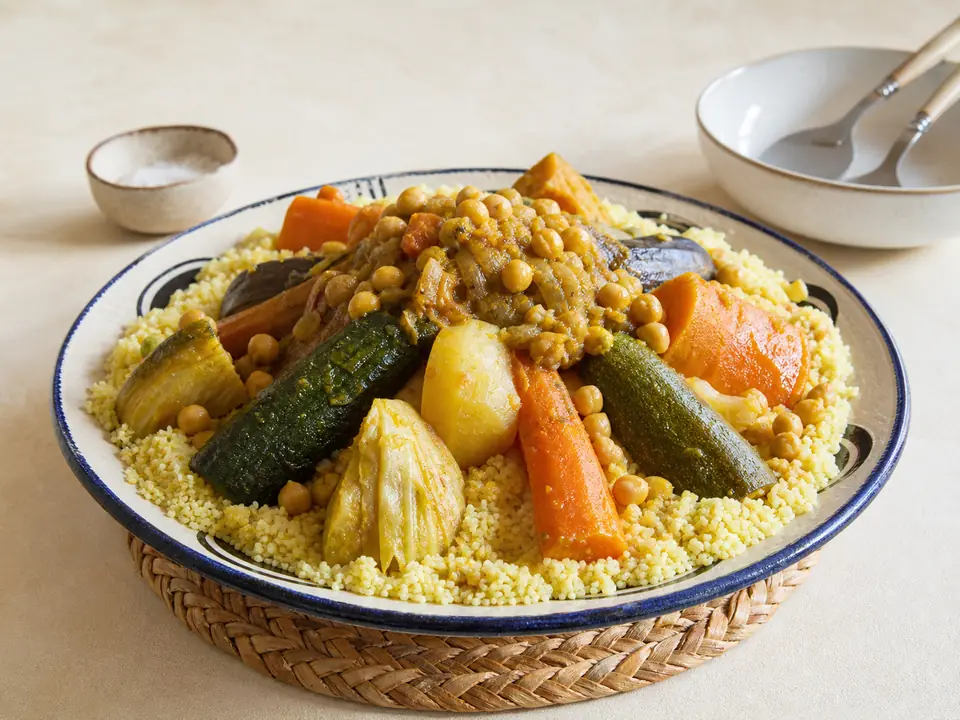
What it is
Semolina (smida) is milled from hard durum wheat and sold in three grades: fine (for msemen and harcha doughs, sellou, cakes and thickening), medium (all-purpose), and coarse (for rustic breads and some couscous). Couscous (seksu) is not a separate grain but semolina that has been moistened and rolled into tiny pellets, then dried.
Traditional couscous is hand-rolled (beldi) — women roll moistened semolina with a light dusting of flour until it forms even grains — and it is prized over machine-made for its irregular, tender texture. There are variants too: barley couscous (belboula), maize couscous, and very fine couscous for the sweet seffa.
Because it feeds a country and takes several forms, semolina-and-couscous earns a broad pantry entry — a staple to keep in grades, like flour, rather than a one-note ingredient.
In the Moroccan kitchen
The headline dish is couscous, traditionally steamed three times over the bubbling stew in the top of a couscoussier, fluffed and oiled between steamings so every grain stays separate — this is the technique that separates great couscous from the sludgy quick-cook version. It crowns the Friday family meal across Morocco.
Fine semolina, meanwhile, is the base of griddle breads like msemen and harcha, of the toasted sweet seffa, and of sellou; coarse semolina goes into country breads. It also thickens soups and coats fried foods.
The key skill across all of it is respecting the grain: steam couscous, don't boil it; hydrate semolina gradually; and rest doughs so the semolina fully absorbs its water.
- Couscous — steamed three times over the stew and served on Fridays
- Msemen and harcha — fine semolina griddle breads
- Seffa — fine couscous or semolina, steamed and sweetened
- Sellou and cakes — toasted fine semolina
- Barley (belboula) and maize couscous variants
How to choose & store
Buy semolina by the grade the recipe calls for — a bag simply labelled 'semolina' may be too coarse for msemen or too fine for couscous. Good semolina is pale gold, dry and free-flowing, with no clumps, musty smell or sign of weevils. For couscous, hand-rolled beldi grain (sold loose) rewards the effort of steaming; boxed instant couscous is convenient but never as fine-textured.
If you are steaming from scratch, a coarser, un-precooked couscous gives the best results; most supermarket couscous abroad is pre-steamed 'instant', which needs only soaking.
Storage — Keep semolina and dry couscous airtight in a cool, dry cupboard; they last many months. In humid or warm conditions the fridge or freezer guards against weevils and rancidity.
Buying it in Marrakech
What to look for at the stall — and how to buy well without invented prices to anchor you.
- Buy semolina and couscous loose by weight from grain and grocery stalls in the covered markets, where you can specify the grade.
- Ask for fine (dqiq/smida rqiqa), medium or coarse semolina by name so you get the right texture for your dish.
- For the real thing, seek hand-rolled beldi couscous — ask the seller if it is hand-rolled; it steams up far better than machine grain.
- Check the semolina is dry, clean-smelling and free-flowing, with no clumping or tiny insects.
- Pick up a couscoussier from the kitchenware souks if you plan to steam couscous properly at home.
Substitutes
- Fine and coarse semolina can be nudged toward each other by sieving, but for delicate doughs use the grade specified.
- Instant (pre-steamed) couscous substitutes for hand-rolled when time is short — hydrate rather than steam it — at the cost of texture.
- Barley couscous or maize couscous can replace wheat couscous for a rustic or gluten-conscious variation.
Frequently asked questions
What is the difference between semolina and couscous?
Semolina is coarse flour milled from durum wheat; couscous is semolina that has been moistened and rolled into tiny pellets, then dried. So couscous is a form of semolina, not a separate grain.
Why is couscous steamed three times?
Steaming couscous in a couscoussier — fluffing and oiling it between two or three steamings — hydrates the grains gently and keeps them separate and light. Boiling or over-soaking makes it stodgy. This repeated steaming is what gives traditional couscous its fluffy texture.
What grade of semolina do I need?
Fine semolina for msemen, harcha, seffa, sellou and cakes; medium for general use; coarse for rustic breads and some couscous. A bag labelled only 'semolina' may be the wrong grade, so ask specifically when buying loose.
Is hand-rolled couscous worth seeking out?
Yes. Hand-rolled beldi couscous has an irregular, tender texture that steams up far better than machine-made or instant couscous. Ask the seller whether it is hand-rolled; it is the traditional choice for a proper Friday couscous.