Grains, flour & pulses · الفارينة / الدقيق · farina / dqiq
Moroccan Bread Flour
Soft wheat, whole wheat, durum and barley — the flours behind daily khobz
Bread is the heart of every Moroccan meal — the edible spoon that scoops up tagine — and behind the daily round loaf of khobz sits a small pantry of flours: soft white wheat for a tender crumb, whole wheat and durum for body and flavour, and barley for the earthy country breads of the countryside.
- Darija
- farina / dqiq
- Main flour
- Soft wheat (white)
- For flavour
- Whole wheat · durum
- Country bread
- Barley flour
What it is
Moroccan bread flour is not one thing but a small family. Everyday khobz is usually made from soft-wheat white flour (farina), often with a proportion of whole-wheat flour or fine durum semolina mixed in for structure, chew and a wheatier taste. In the countryside and for rustic loaves, barley flour (dqiq zra') makes a denser, nuttier bread, and maize flour appears in some regional breads.
Blending is the norm rather than the exception: a baker's proportions of white to whole-wheat to semolina define the character of the loaf, from the fluffy Gueliz baguette-influenced breads to the sturdy medina rounds sent out to the communal oven.
Because bread is eaten at every meal and the flours are kept and combined like other staples, they belong squarely in the pantry — a working set of flours, not a single sack.
In the Moroccan kitchen
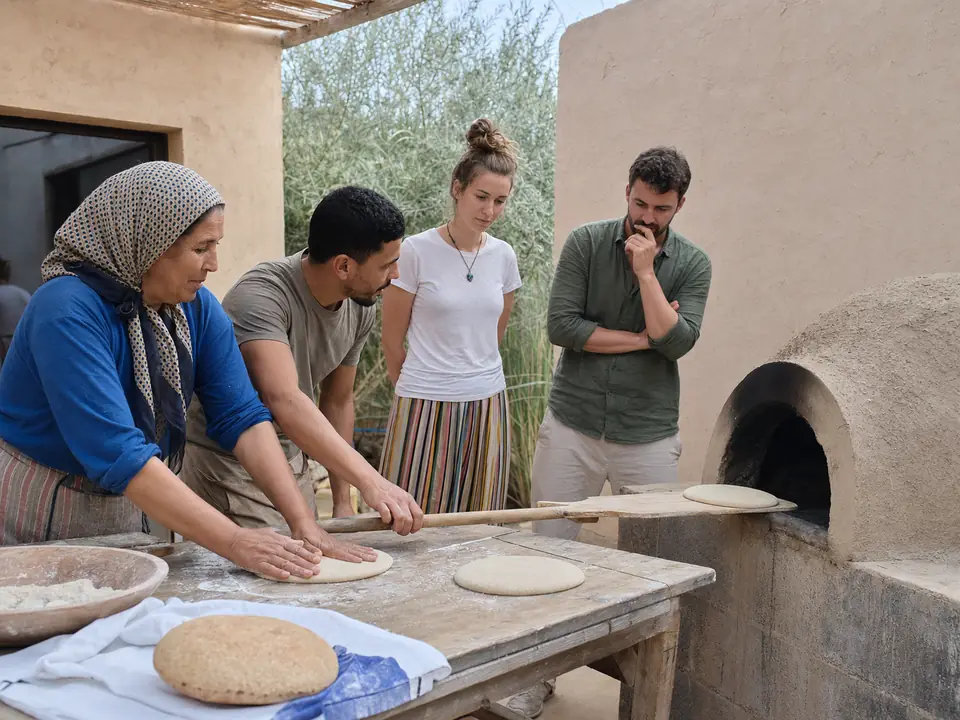
The flour's job is bread, and bread's job is to be the utensil and the plate. Round khobz and the pocket-like batbout are torn and used to scoop tagine, mop sauce and wrap grilled meat; there is no fork culture to compete with. Doughs are typically enriched only lightly and left to rise, then baked at home or carried on a board to the neighbourhood ferran (communal wood-fired oven) to bake.
Fine semolina and white flour also go into the griddle breads — msemen, harcha, batbout — and whole-wheat and barley flours into heartier country loaves. The choice of flour, and its blend, is what makes one bread pillowy and another dense and rustic.
Good bread-making here is about hydration and time more than technique: a well-rested, properly proved dough from a sensible flour blend beats any shortcut.
- Daily khobz — the round loaf that scoops every tagine
- Batbout — the soft, hollow griddle bread for stuffing
- Msemen and harcha — griddle breads from fine flour and semolina
- Rustic barley and whole-wheat country loaves
- Doughs carried to the ferran (communal oven) to bake
How to choose & store
Match the flour to the loaf: soft white flour for a light khobz, whole wheat or durum blended in for body and flavour, barley for a dense country bread. Good flour is dry, cool, cleanly milled and smells faintly sweet and wheaty; a musty or sour smell, clumping, or any sign of weevils means it is old or badly stored. Freshly milled flour from a stall with quick turnover behaves best in dough.
If you are recreating a Moroccan loaf abroad, a bread (strong) white flour cut with some whole-wheat and a little fine semolina gets you close to the traditional blend.
Storage — Keep flour airtight in a cool, dry place, away from heat and damp; white flour lasts many months, while whole-wheat and barley flours have more oil and stale faster, so buy them in smaller amounts or refrigerate.
Buying it in Marrakech
What to look for at the stall — and how to buy well without invented prices to anchor you.
- Buy flour loose by weight from grain and grocery stalls in the covered markets, where you can choose white, whole-wheat, durum or barley.
- Ask by type — farina for white soft-wheat flour, whole-wheat, or dqiq zra' for barley — to get the right flour for your bread.
- Check it is dry, cool and clean-smelling, with no clumps, musty odour or insects.
- Buy whole-wheat and barley flour in smaller quantities since their higher oil content stales faster.
- If you want the full experience, take your risen dough to a neighbourhood ferran to bake, as many Marrakchi households still do.
Substitutes
- For khobz abroad, use strong white bread flour, optionally cut with 20–30% whole-wheat and a spoon of fine semolina for the traditional texture.
- Durum/semolina flour can replace some white flour for a firmer, more golden crumb.
- Barley flour can be swapped for whole-wheat in country breads, or the reverse, adjusting water since they absorb differently.
Frequently asked questions
What flour is Moroccan bread made from?
Everyday khobz is usually soft-wheat white flour, often blended with some whole-wheat flour or fine durum semolina for structure and a wheatier taste. Rustic country breads use barley flour for a denser, nuttier loaf, and some regional breads use maize flour.
What is a ferran?
A ferran is the neighbourhood communal wood-fired oven. Many Marrakchi households still mix and prove their bread dough at home, then carry it on a board to the local ferran to be baked — a daily rhythm and a social hub of the medina.
How can I recreate Moroccan bread flour at home?
Use strong white bread flour as the base, cut with around 20–30% whole-wheat flour and a spoonful of fine semolina. That blend approximates the tender-but-sturdy texture of traditional khobz better than white flour alone.
How should I store bread flour?
Keep it airtight in a cool, dry place away from damp and heat. White flour lasts many months; whole-wheat and barley flours contain more oil and go stale faster, so buy them in smaller amounts or store them in the fridge.