Best of · Dishes & flavours
The Best Tagine to Try in Marrakech
The tagine is Morocco's most famous dish and its most abused — a lazy tourist version is watery and bland, while a real one is deep, layered and slow. Knowing which varieties to order and what a great tagine should taste like is the difference between a highlight and a shrug. Here is how to find the best tagine in Marrakech, and how to make one yourself.
- Read
- 9 min
- Topic
- Dishes & flavours
- Updated
- 20 July 2026
The short answer
The short answer
The best tagine to try in Marrakech is the one cooked slowly and seasoned properly: lamb with prunes and almonds for richness, chicken with preserved lemon and olives for brightness, or kefta with eggs for comfort. Seek it where locals eat, and cook it in a class to taste the difference for yourself.
At a glance
- A great tagine is slow, layered and deeply seasoned — never watery.
- Lamb-and-prune and chicken-with-preserved-lemon are the two icons.
- Preserved lemon, olives and ras el hanout are the flavour backbone.
- The best versions are at local cook-shops and in cooking classes.
What makes a tagine the best
Slow-cooked, never rushed
A real tagine simmers for hours until the meat surrenders and the sauce reduces to a glossy concentrate. A quick, watery tagine — reheated to order for tourists — is the tell-tale sign of a place to skip.
Layered seasoning
The great ones build flavour in stages: bloomed spices, sweet-savoury contrasts, preserved lemon's tang, the funk of good olives. It should taste of many things at once, not just of stock.
The right balance for the style
Sweet tagines (lamb, prunes, honey, almonds) need a savoury anchor; bright tagines (chicken, preserved lemon, olives) need enough salt and acid. Balance, not sweetness or salt alone, marks a good cook.
Cooked where locals eat
The best tagines rarely have an English menu. Neighbourhood cook-shops that make one or two a day, and cooking-class kitchens, beat photogenic tourist terraces almost every time.
The best tagines to order
The varieties most worth trying, from the iconic to the underrated.
Lamb with prunes & almonds
Best sweet-savoury showstopper
The celebration tagine: tender lamb, caramelised prunes, toasted almonds and sesame, warm with cinnamon and ras el hanout. Cook it yourself with our lamb and prune tagine recipe.
Chicken with preserved lemon & olives
Best bright, everyday classic
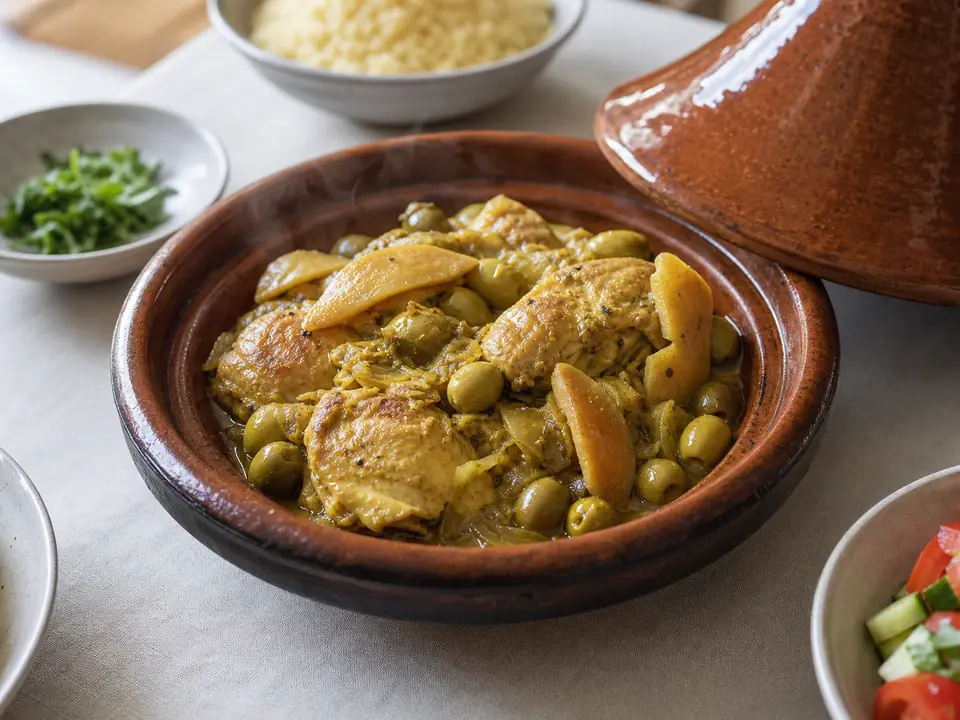
The most beloved daily tagine — chicken made vivid with preserved lemon, green olives, ginger and saffron. Our chicken tagine recipe is the one to start with, and it is the top class dish too.
Kefta (meatball) with egg
Best comfort tagine
Spiced meatballs poached in a garlicky tomato sauce with eggs cracked on top — hearty, quick and a street-counter favourite. Recreate it with our kefta tagine recipe.
Fish with chermoula
Best lighter, coastal-style tagine
Fish marinated in herb-and-cumin chermoula, layered over peppers and tomato — fresher and lighter than the meat versions. See our fish chermoula tagine recipe.
Vegetable tagine
Best for vegetarians and lighter days
Seasonal vegetables slow-cooked with the same spice backbone can rival any meat tagine when seasoned well. Pair it with our best vegetarian food guide.
Taste it, then make it
The surest way to understand a great tagine is to cook one, because you feel exactly where the flavour comes from — the bloomed spices, the slow reduction, the last-minute lift of preserved lemon.
- Learn it hands-on in a tagine cooking class.
- Understand the pot itself in our how a tagine works guide.
- Track down the best versions on a tagine food tour.
- Buy a real cooking tagine with our tagine pot buyer's guide.
Frequently asked questions
Which tagine is the best to try first?
Chicken with preserved lemon and olives is the most beloved everyday tagine and the friendliest introduction — bright, savoury and endlessly satisfying. If you want the showpiece, order lamb with prunes and almonds.
How do I know if a tagine is good?
A great tagine is slow-cooked with a glossy, reduced sauce and layered seasoning — you taste many things at once. A watery, one-note tagine reheated to order is the sign of a tourist kitchen.
What gives a tagine its flavour?
The backbone is bloomed spices (ginger, saffron, cumin, ras el hanout), preserved lemon, good olives and slow cooking. It is the layering and the time, not any single ingredient, that makes it sing.
Where can I eat the best tagine in Marrakech?
At neighbourhood cook-shops that make one or two a day and in cooking-class kitchens, rather than photogenic tourist terraces. A tagine-focused food tour is the fastest way to find the real thing.