Best of · Classes
The Best Moroccan Cooking Class in Marrakech
A hands-on cooking class is the single best food thing to do in Marrakech — but they are not all equal. The best ones put a knife in your hand, cap the group, and send you home able to actually cook a tagine. This is how to tell those apart from the demos, and which format wins for the trip you are on.
- Read
- 9 min
- Topic
- Classes
- Updated
- 20 July 2026
The short answer
The short answer
The best Moroccan cooking class in Marrakech is a small-group, fully hands-on session (ideally with a market visit) where you build a real tagine or couscous from scratch and eat it together. For most travellers a capped small-group souk-to-table class is the sweet spot; couples and food-obsessives should size up to a private class.
At a glance
- Fully hands-on beats a demo — you should be cooking, not watching.
- A capped group size (roughly 4–10) is the biggest quality signal.
- A market visit turns a class into a lesson in ingredients, not just recipes.
- You always eat what you cook — treat it as your main meal that day.
What makes a cooking class the best
Genuinely hands-on
The best classes have you grating onions, pounding spices in a brass mortar, shaping bread and building the tagine yourself. If the listing shows a chef demonstrating to a seated audience, it is a show, not a class — keep looking.
A capped, sensible group
Four to ten people is the range where everyone gets real bench space and the host can actually teach. Above a dozen and you become a spectator; a private or couples class removes the ceiling entirely.
A market visit built in
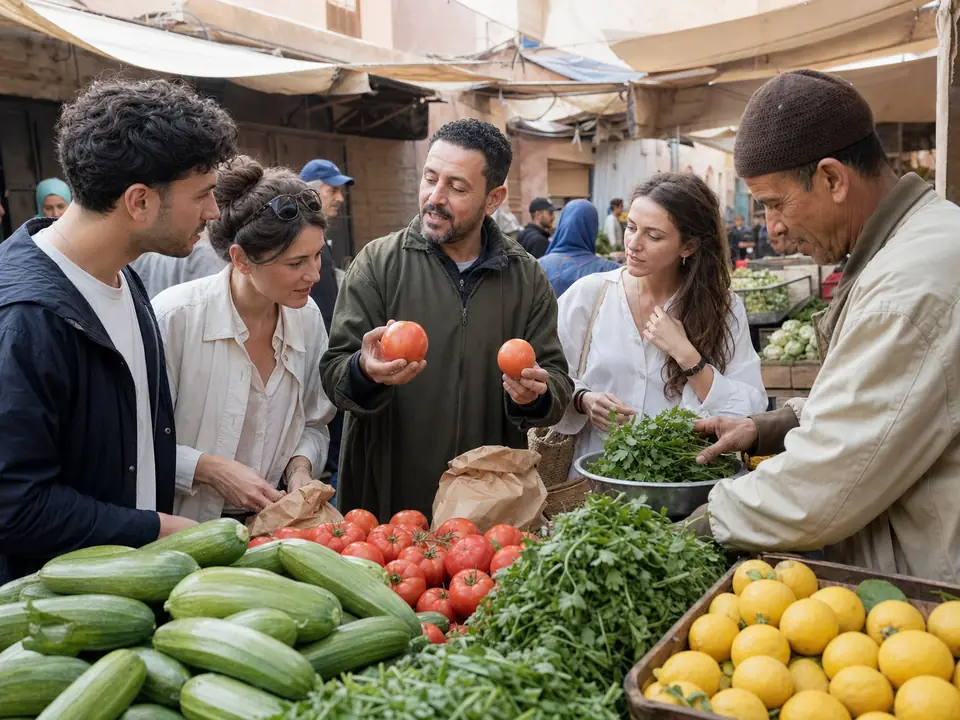
The strongest classes start in the souk, choosing herbs, olives and spices with the chef before you cook. You learn to shop, not just to follow a recipe — the skill that actually travels home with you.
A real dish, eaten together
You should finish with a full meal — a starter of salads, a main tagine or couscous, mint tea and often a pastry — sitting down to eat everything you made. That shared table is the point, and it doubles as lunch or dinner.
The best class, by what you want
There is no single winner — the best class is the one matched to your group, budget and appetite. These are the formats worth choosing between, each linking to the full breakdown.
Small-group souk-to-table class
Best all-round pick for most travellers
You shop the market with the chef, then cook a full Moroccan meal in a shared group of a handful of people. It balances value, atmosphere and real teaching, and it is the format most people should book first. Start with a market-to-table class or a small-group class.
Private or couples class
Best for couples, food-obsessives and special occasions
One host, just your party, and the menu bends to what you want to learn. It costs more but the teaching is undiluted and the pace is yours. See private classes and couples classes.
Dish-focused class (tagine, couscous, pastry)
Best if there is one thing you came to master
Some classes go deep on a single skill — the conical tagine, hand-rolled couscous, or fiddly pastries. Pick these when you want to go home genuinely able to reproduce one iconic dish.
Family or kids class
Best for travelling with children
Gentler pace, safer stations and dishes kids enjoy shaping — bread, msemen, simple tagines. A family and kids class keeps everyone involved without anyone getting bored.
Evening or rooftop class
Best for atmosphere and cooler months
Cooking as the light drops and the call to prayer rolls across the Medina is hard to beat. An evening class turns dinner into the event of your day.
Mistakes that get you a mediocre class
The most common regret is booking on price or thumbnail alone and ending up in a demo with twenty people. The second is choosing a class with a menu you do not actually want — booking a pastry marathon when you came to nail a tagine. Read what you will cook, not just the star rating.
- Not checking the group cap — the single biggest driver of quality.
- Ignoring whether a market visit is included when that is the part you wanted.
- Booking a full-day class when jet-lagged; a half-day is plenty for most.
- Forgetting the class replaces a meal, then double-booking lunch or dinner.
Frequently asked questions
What is the single best cooking class in Marrakech?
There is no one class that wins for everyone — the best is the one matched to your group. For most travellers a capped small-group souk-to-table class is the strongest all-round pick; couples and keen cooks should book a private class for undiluted teaching.
Is a market visit worth it?
Yes — it is what separates a good class from a great one. Choosing herbs, olives and spices in the souk with your chef teaches you to shop and season, which is the skill that actually travels home. See our market-to-table class guide.
How long should the best class be?
A half-day (three to four hours) is the sweet spot and covers a full meal without exhausting you. Full-day classes add a market trip and extra dishes but are a big commitment; short single-dish workshops are great if you only want one skill.
Do I need cooking experience to get the most from it?
No. The best classes are built for complete beginners and guide every step, so you learn more, not less, by starting fresh. Only a few showpiece classes like pastilla reward prior confidence.