Themed classic · Medina & beyond
Best Tagine in Marrakech Tour
Tagine is everywhere in Marrakech and wildly variable in quality — this themed tour is a guided hunt for the good stuff, tasting the great regional and classic versions side by side so you learn what a properly slow-cooked tagine tastes like. Chicken with preserved lemon and olives, lamb with prunes and almonds, kefta with egg, and the vegetable version: you compare, you learn the tells of a real one, and you never settle for a watery tourist tagine again.
- Duration
- 3 hours (spread over lunch or dinner)
- Best time
- Lunch or early dinner
- Pace
- Seated tastings between short walks
- Area
- Medina & beyond
Overview
The tagine — both the conical clay pot and the dish cooked in it — is the emblem of Moroccan cooking, but a plate labelled 'tagine' can be anything from a soulful, hours-long braise to a hastily reheated tourist plate. This tour trains your palate by tasting the great classics together, so you can tell the difference and seek out the real thing anywhere.
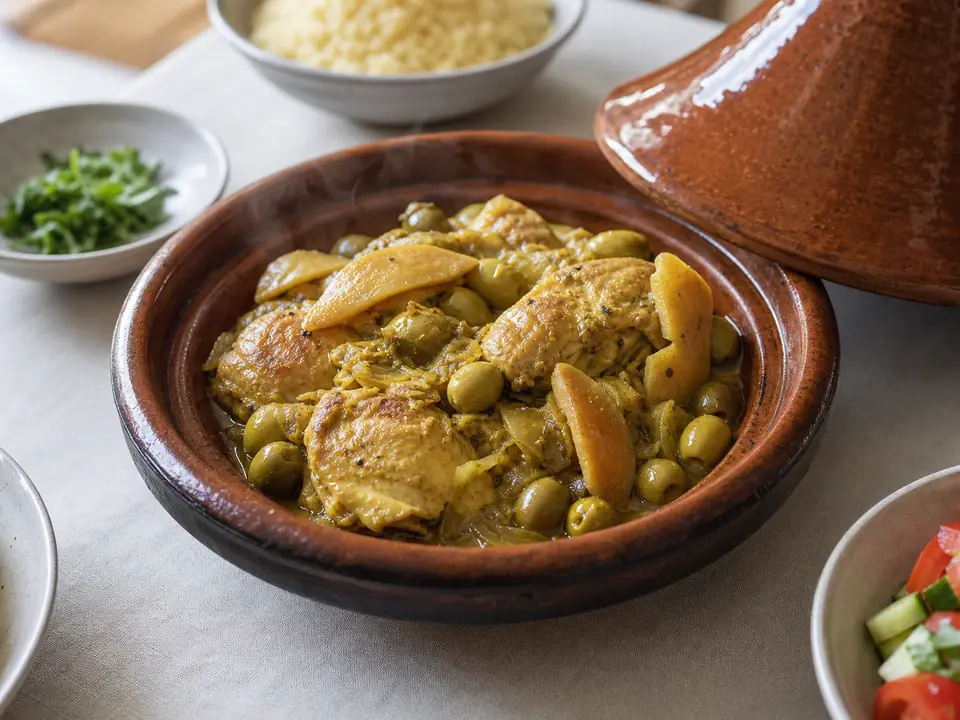
The conical lid is the trick: steam rises, condenses and drips back, so the meat braises slowly in its own recirculated moisture and the sauce reduces to a glossy jus. A proper tagine is unhurried, deeply spiced and falling-apart tender. You will taste the sweet-savoury lamb versions and the tangy chicken ones, and learn what separates them from the watery imposters.
What you'll taste
- Chicken, preserved lemon & olives — The benchmark tagine — chicken braised with ginger, saffron, cracked green olives and salt-cured lemon into a tangy, glossy sauce.
- Lamb with prunes & almonds — The sweet-savoury feast tagine (lham bel barquq) — lamb slow-cooked with prunes, honey, cinnamon and toasted almonds.
- Kefta mkaouara — Spiced meatballs simmered in a garlicky tomato sauce with eggs cracked over the top to poach.
- Vegetable tagine — Seasonal vegetables layered in the cone and steamed tender with saffron and ginger — the meat-free classic.
- Fish / chermoula tagine — In season, fish marinated in chermoula (coriander, cumin, garlic, lemon) and cooked with tomato and pepper.
- Khobz to finish the sauce — Bread is non-negotiable — tearing it to mop the reduced sauce is how a tagine is eaten.
The route
- 1
A slow-cook specialist
Start where tagines are cooked to order over hours, not reheated — the sauce should be reduced and glossy, the meat falling off the bone.
- 2
Chicken vs lamb
Taste the tangy chicken-preserved-lemon against the sweet lamb-and-prunes to feel the two poles of Moroccan tagine.
- 3
Kefta and egg
A kefta mkaouara — meatballs and poached egg in tomato — for the everyday, homely side of the dish.
- 4
Vegetable version
A vegetable tagine to prove the technique, not the meat, is the star.
- 5
Read the pot
Learn the tells of a real tagine versus a tourist one — reduction, tenderness, depth of spice, freshness of herbs.
- 6
Bread and tea
Mop the last of the sauce with khobz and finish with mint tea, the proper way to end.
When to go & what it costs
Tagines are a lunch and dinner dish and take hours to cook, so the best versions are made in quantity for the midday and evening services. Book or arrive when the kitchen is cooking fresh rather than late when pots have sat. Spread the tastings across a long lunch or dinner so you can actually eat several.
Cost & cash: A shared tasting of several tagines costs more than one plate but far less per dish; local spots are cheapest.
Insider tips
- A real tagine has a reduced, glossy sauce and meat that falls off the bone — thin, watery sauce is a bad sign.
- Sweet lamb-with-prunes and tangy chicken-with-lemon are the two classics to compare first.
- Share tagines so you can taste several rather than filling up on one.
- Bread, not couscous, is the traditional partner for mopping the sauce.
- The best tagines are cooked to order over hours — avoid places plating them in minutes.
Etiquette & how to eat like a local
- A tagine is shared from the communal dish — eat from the section in front of you with bread and your right hand.
- Do not dig into the centre or across to others' sides.
- Let the meat be divided by the host or eldest; wait to be served the prized pieces.
- Use bread, not fingers alone, to lift meat and sauce.
- Complimenting the cook on the tenderness and sauce is always welcome.
Frequently asked questions
What is the most famous Moroccan tagine?
Chicken with preserved lemon and olives is the benchmark, prized for its tangy, glossy sauce. The sweet-savoury lamb tagine with prunes, honey and almonds is the great feast version. Between them they represent the two poles of Moroccan tagine — tangy-savoury and sweet-savoury.
How can I tell a good tagine from a bad one?
A proper tagine is slow-cooked for hours: the meat falls off the bone and the sauce is reduced, glossy and deeply spiced. Watery, thin sauce, tough meat or a plate that appears within minutes are signs of a reheated or rushed tourist tagine.
What is the difference between a tagine and a tanjia?
A tagine is cooked in a shallow conical clay pot, braised over gentle heat, and is a nationwide dish. A tanjia is specific to Marrakech — meat sealed in a tall clay urn and slow-cooked for hours in the embers of the hammam furnace, traditionally a men's dish.
Do you eat tagine with couscous or bread?
Traditionally with bread — khobz is torn and used to scoop the meat and mop the reduced sauce. Couscous is its own separate dish, classically eaten on Fridays. Serving tagine over couscous is more a tourist-menu combination than a Moroccan home habit.
Cook what you tasted
Loved something on the walk? Take it home. Learn the dish hands-on with a Marrakech chef, or follow a free step-by-step recipe.