Best of · Dishes & flavours
The Best Mint Tea in Marrakech
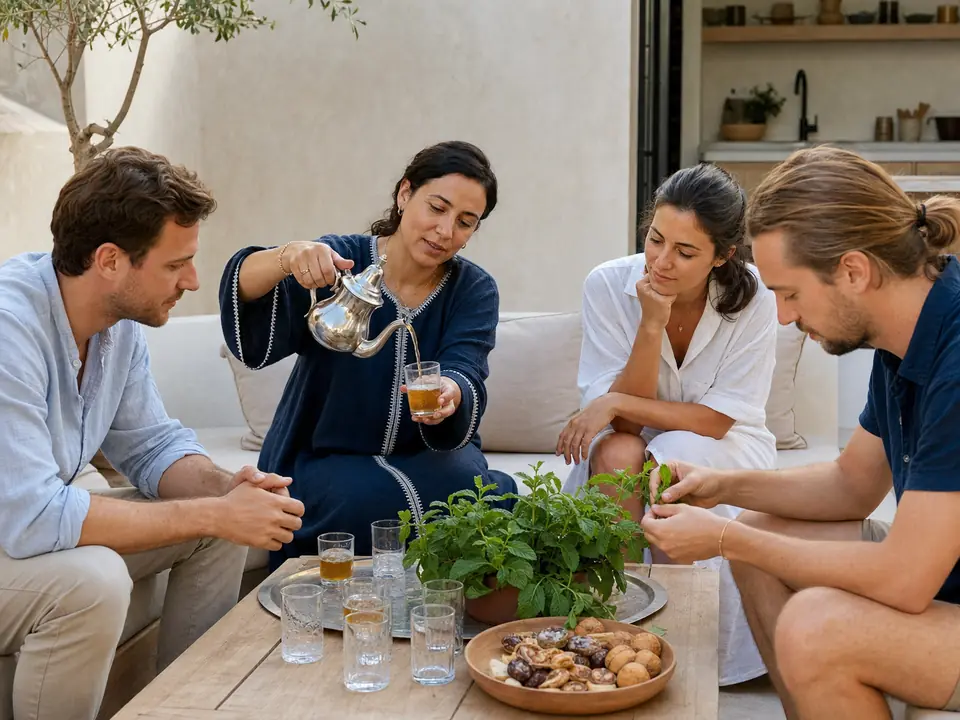
Mint tea is the pulse of Moroccan hospitality — offered everywhere, poured with ceremony, and taken slowly. A great glass is a balance of gunpowder green tea, fresh spearmint and sugar, poured from height to crown it with foam. Here is what makes the best mint tea in Marrakech, and the settings that turn a simple glass into a memory.
- Read
- 8 min
- Topic
- Dishes & flavours
- Updated
- 20 July 2026
The short answer
The short answer
The best mint tea in Marrakech balances bitter gunpowder green tea with generous fresh spearmint and sugar, poured from height for a frothy crown. The drink is inseparable from its setting — a rooftop, a riad courtyard or a souk stall where a trader pours you a glass — so seek the ritual, not just the tea.
At a glance
- Real mint tea is gunpowder green tea plus fresh spearmint (nana).
- The high pour aerates it and crowns each glass with foam.
- Setting is half the experience — rooftop, courtyard or souk.
- It is central to hospitality; being offered tea is a welcome, not a sale.
What makes a great glass of mint tea
The right blend
Authentic atay is gunpowder green tea with a generous bundle of fresh spearmint (nana) and sugar. In winter, wormwood (chiba) or verbena may join the mint. Dried mint or a tea bag is the tourist shortcut.
The high pour
Pouring from a height aerates the tea and builds the signature foam crown (the keshkousha). It is not just theatre — it cools and mixes the tea and marks a pour made with care.
Balance of bitter, mint and sweet
A great glass balances the bitterness of the green tea, the lift of fresh mint and the sugar. Traditionally quite sweet, but the best pours let the tea and mint show through rather than drowning in sugar.
The setting and the welcome
Tea is hospitality made liquid. The best glasses come with a view or a genuine welcome — a rooftop at dusk, a riad courtyard, or a rug seller's generous pour. The setting is part of the flavour.
The best places and ways to drink it
Where and how the ritual is at its best — chosen by mood, not by brand.
A rooftop café at dusk
Best for the view and the moment
A glass on a Medina rooftop as the light turns gold and the muezzins call is quintessential Marrakech. Pair it with our best rooftop food experience guide.
A riad courtyard
Best for calm and hospitality
In a courtyard riad, tea arrives as a welcome — poured beside a fountain, unhurried. It is the most authentic domestic setting for the ritual, and often the most memorable.
A souk stall's welcome glass
Best for the genuine, everyday ritual
A trader pouring you tea in the spice souk is hospitality, not obligation — accept it and enjoy the moment. Learn the etiquette in our etiquette guide.
A mint tea tour or class
Best for learning the ritual properly
A mint tea tour or a mint tea and pastry class teaches the blend and the pour so you can perform it at home.
Make it yourself
Best for taking the ritual home
Master the pour and the balance with our mint tea recipe and the full mint tea ritual guide.
Frequently asked questions
What makes Moroccan mint tea authentic?
Gunpowder green tea brewed with a generous bundle of fresh spearmint and sugar, poured from height for a foamy crown. Fresh mint and the high pour are the tells; dried mint or a tea bag is the tourist shortcut.
Why is the tea poured from so high?
The high pour aerates the tea, mixes it and creates the signature foam on top. It also cools the tea slightly and, done well, shows the pour was made with care — it is ritual and function at once.
Is mint tea always very sweet?
Traditionally yes, though sweetness varies and you can ask for less. The best pours keep the green tea and fresh mint tasting through the sugar rather than drowning them, so balance matters more than sweetness alone.
Should I accept tea offered by a shopkeeper?
Usually yes — offering tea is a genuine gesture of hospitality and accepting is polite. It does not obligate you to buy, though it is courteous to browse with genuine interest. Our etiquette guide explains the customs.