Tea & drinks · Medina & rooftops
Moroccan Mint Tea Tour
Mint tea — atay — is the pulse of Moroccan hospitality, poured for guests, sealed over deals and offered a dozen times a day. This tour goes deep on the ritual: how the gunpowder green tea and fresh nana mint are brewed, why it is poured from a height, the theatre of the three glasses, and the regional twists from wormwood in winter to saffron and verbena. You taste it made properly, learn to pour it yourself, and understand why refusing a glass can feel like refusing friendship.
- Duration
- 1.5 hours
- Best time
- Any time — tea is always right
- Pace
- Mostly seated
- Area
- Medina & rooftops
Overview
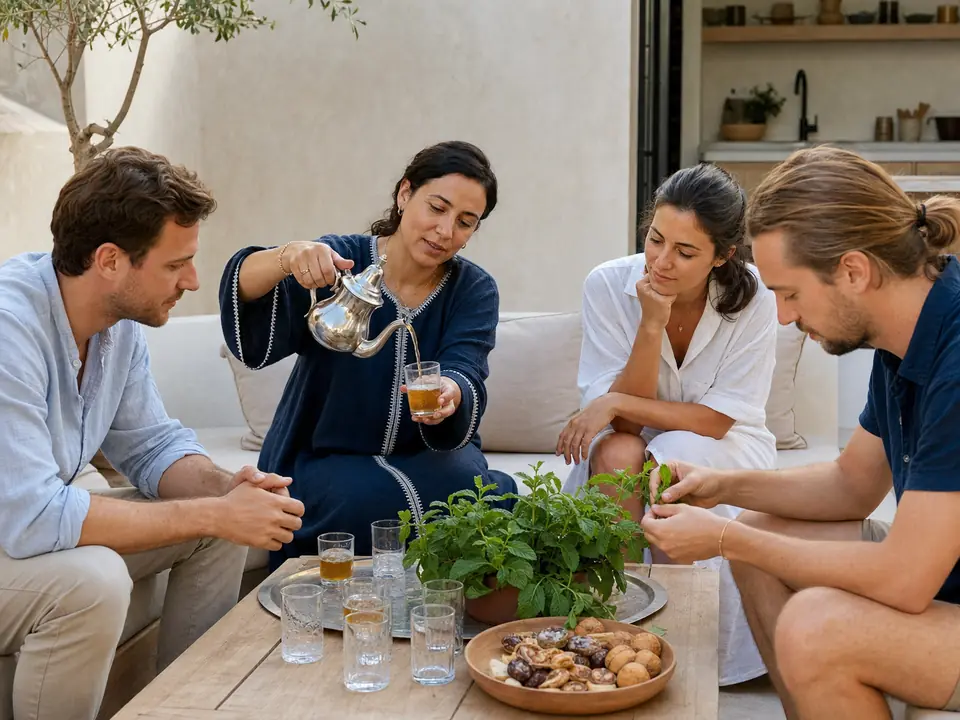
Moroccan mint tea is deceptively simple — gunpowder green tea, fresh spearmint (nana), sugar and boiling water — but the making and serving are a ritual loaded with meaning. It is the universal gesture of welcome; a host who does not offer tea is barely a host, and a guest who refuses it can unintentionally give offence.
The pour is the showpiece: tea is raised high above the glass so it aerates and forms a light foam (the keshkusha), and the first glass is often returned to the pot to blend. There is a famous saying that the three glasses are 'gentle as life, strong as love, bitter as death' as the brew intensifies. This tour unpacks all of it and lets you pour.
What you'll taste
- Classic nana mint tea — Gunpowder green tea with a fistful of fresh spearmint and plenty of sugar — the everyday standard.
- Unsweetened / light-sugar — Try it with less sugar to actually taste the green tea and mint beneath the sweetness.
- Wormwood (chiba) tea — A winter variation with bitter wormwood added for warmth — an acquired, medicinal edge.
- Verbena & herb infusions — Louisa (lemon verbena), sage or wild thyme steeped alone or added to the tea.
- Saffron or orange-blossom tea — Celebratory versions perfumed with saffron threads or orange-blossom water.
- The three-glass progression — Tasting first, second and third pours to feel how the brew strengthens in the pot.
The route
- 1
A traditional tea house
Begin where tea is made the old way — watch the tea rinsed, the mint packed in, the sugar loaded.
- 2
The pour lesson
Learn the high pour that aerates the tea and builds the foam, then try it yourself over the glass.
- 3
Three-glasses tasting
Taste the progression from the pot — gentle, strong, bitter — and understand the saying behind it.
- 4
Regional variations
Sample a wormwood or herb-infused version to see how the brew changes by season and region.
- 5
Buy the kit
A quick stop for gunpowder tea, a metal teapot (berrad) and glasses to recreate it at home.
- 6
Rooftop finish
A final glass on a Medina rooftop over the call to prayer — the classic Marrakech tea moment.
When to go & what it costs
Tea is drunk all day and there is no wrong time — with breakfast, after every meal, mid-afternoon with pastries, and to welcome any guest. For the ritual at its most atmospheric, a rooftop glass at sunset as the muezzins call is hard to beat. Any traditional café will make it properly on request.
Cost & cash: A pot or glass of tea costs little; rooftop cafés charge more for the view than the tea.
Insider tips
- Ask for it with less sugar if you want to taste the tea; the default is very sweet.
- Fresh spearmint (nana) is essential — the aroma should hit you before the glass reaches your lips.
- The high pour is not just show; it aerates the tea and cools it slightly for drinking.
- Buy a berrad (metal teapot) and gunpowder tea to make it at home — the ritual is easy to learn.
- In summer, look for tea with added verbena or a squeeze of fresh mint for a lighter cup.
Etiquette & how to eat like a local
- Accept tea when offered — it is the core gesture of Moroccan hospitality and refusing can seem rude.
- Let the host pour; do not reach for the pot yourself unless invited.
- Hold the hot glass by the rim and base, and take it with your right hand.
- It is polite to accept and finish at least one glass, even if you decline a third.
- Complimenting the tea and the host's pour is always well received.
Frequently asked questions
Why is Moroccan tea poured from so high?
Pouring from a height aerates the tea, releasing its aroma and creating a light foam (keshkusha) on top of each glass, and it cools the tea slightly for drinking. It is also a display of skill and hospitality — a good pour is a point of pride.
What does 'three glasses' of Moroccan tea mean?
It is traditional to serve three glasses from the same pot, and the brew strengthens each time as it steeps. A well-known saying describes them as 'gentle as life, strong as love, bitter as death'. Accepting all three honours your host.
What tea and mint are used in Moroccan mint tea?
Chinese gunpowder green tea and fresh nana (spearmint), with sugar and boiling water. In winter or different regions, wormwood (chiba), verbena, sage or wild thyme may be added. Fresh mint is essential — dried is a poor substitute.
Is it rude to refuse mint tea in Morocco?
It can be, because tea is the central gesture of welcome. If you genuinely cannot drink it, decline warmly and with thanks rather than a flat no. Accepting at least one glass is the graceful move when you are a guest.
Cook what you tasted
Loved something on the walk? Take it home. Learn the dish hands-on with a Marrakech chef, or follow a free step-by-step recipe.