Spices & substitutes
Ginger and Turmeric in Tagines
Ginger and turmeric are two of the quiet workhorses of the tagine spice base — related roots (both rhizomes) that bring warmth, earthiness and colour rather than the top-note fragrance of saffron or the punch of cumin. Understanding what each contributes helps you build a balanced, properly Moroccan tagine.
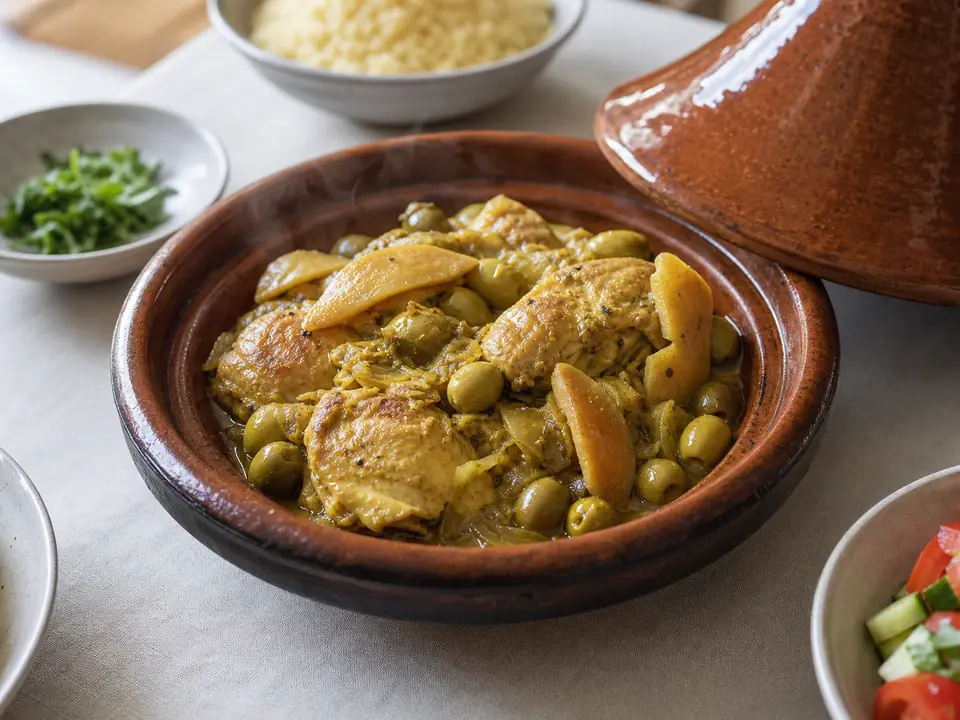
At a glance
- Ground ginger (skinjbir) is the tagine norm — warm and mellow, not sharp like fresh
- Fresh ginger isn't a direct swap: brighter and hotter, so use less
- Turmeric adds golden colour and earthy warmth, best bloomed in oil to lose its dusty edge
- Both join cumin, paprika and pepper as the classic tagine spice base
Guide
Ground ginger (skinjbir) is the more common form in Moroccan tagines, and it behaves differently from fresh ginger — warmer, drier, mellower and less sharply hot. It's part of the standard warm-spice base in countless tagines, adding a gentle heat and aromatic warmth that underpins the dish without dominating. Where a recipe calls for ground ginger, fresh ginger isn't a direct swap: fresh is brighter and more pungent, so if you use it, use less and expect a livelier, zingier result.
Turmeric brings the golden colour and an earthy, slightly bitter, musky warmth. It's often used generously as the affordable colour-and-body base of a tagine, sometimes alongside a pinch of saffron for aroma. Because raw turmeric can taste dusty, it's best bloomed in the oil with the onions at the start so it mellows and its colour blooms through the sauce. Turmeric does background warmth and colour; it isn't there for a distinctive flavour of its own.
Together with cumin, paprika and black pepper, ginger and turmeric form the classic spice quintet that seasons the onion base of a Moroccan tagine before the meat and liquid go in. Bloom them all together in the oil so they open up and meld. It's this warm, layered, earthy base — not fierce heat — that gives a good tagine its depth, and ginger and turmeric are two of its foundational members.
Practical tips
- 1
Use ground ginger for authentic tagine warmth; save fresh ginger for a brighter, zingier take.
- 2
If swapping fresh for ground ginger, use less — fresh is far more pungent.
- 3
Bloom turmeric in oil with the onions so it mellows and colours the sauce evenly.
- 4
Pair turmeric's colour with a pinch of saffron for aroma in a special tagine.
- 5
Add ginger, turmeric, cumin and paprika together to the oil base so they meld.
Frequently asked questions
Do Moroccan tagines use fresh or ground ginger?
Usually ground ginger (skinjbir) — warmer, mellower and drier than fresh. Fresh ginger is brighter and hotter, so it's not a direct swap; use less of it and expect a zingier result.
What does turmeric do in a tagine?
It provides golden colour and an earthy, warm base note rather than a distinctive flavour. It's often used generously and cheaply for colour and body, sometimes with a pinch of saffron for aroma.
Should I bloom ginger and turmeric?
Yes — add them to the oil with the onions at the start so they mellow and their flavour and colour spread through the sauce. Raw turmeric especially can taste dusty if it isn't cooked in fat first.
Try the recipes
Put the tip into practice with these free step-by-step recipes: