Techniques
Flavour Layering in Moroccan Cooking
Moroccan cuisine is not about heat or shock — it is about depth. The rich, complex flavour of a well-made tagine comes not from one ingredient but from careful layering: a slow-built onion base, spices bloomed in oil, a long braise that melds everything, and a bright finish of herbs, citrus or nuts. Understanding this structure lets you cook any Moroccan dish with confidence.
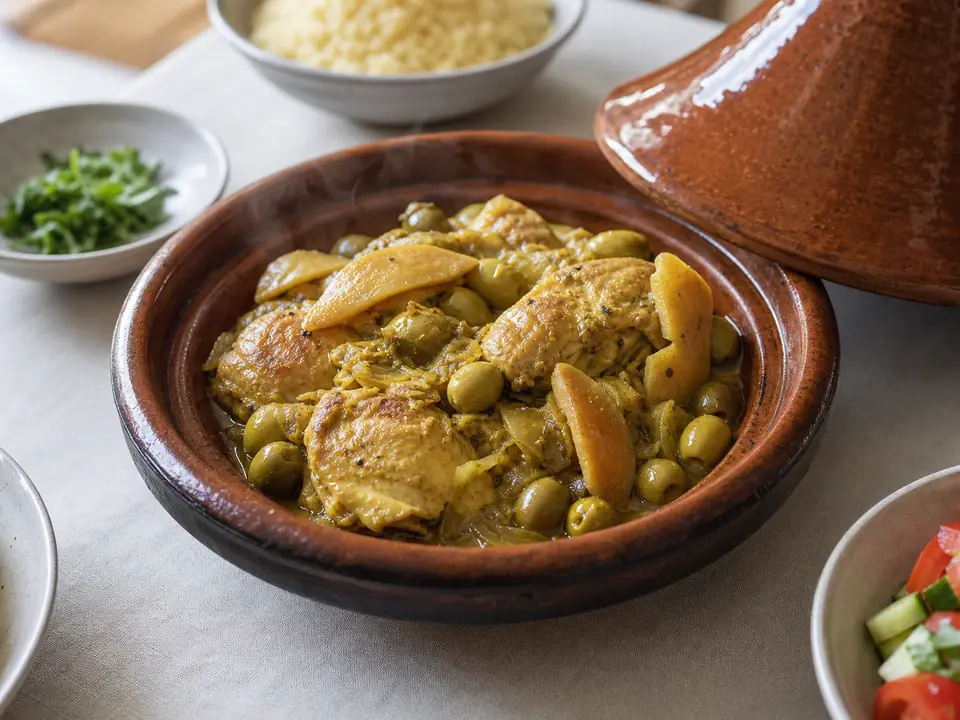
At a glance
- Layer 1: slow-cooked onion base in olive oil until jammy and sweet
- Layer 2: bloom dry spices in the hot oil-and-onion base for 30–60 seconds
- Layer 3: slow braise with meat or vegetables — the flavour-melding stage
- Layer 4: bright finish of herbs, citrus, nuts or dried fruit in the last minutes
Guide
The first layer is the base, and in most Moroccan braises it starts the same way: generous sliced or grated onions cooked in olive oil (or a mix of olive and vegetable oil) until soft and golden. This is not a quick sauté — Moroccan cooks take their time, letting the onions melt down over twenty minutes or more until they are sweet and almost jammy. This soft onion base is the foundation of the sauce and the vehicle for everything that follows. Garlic joins in many recipes, but the onion does the heavy lifting.
The second layer is spice. Once the onion base is soft, dry ground spices go in — typically some combination of cumin, ginger, turmeric, paprika, cinnamon, pepper — and are stirred through the hot onion and oil for thirty seconds to a minute. This is blooming: the fat carries the spice oils and heat develops their flavour compounds. The spice layer is where the dish's character is set — a tagine with cumin and ginger tastes fundamentally different from one with cinnamon and saffron.
The third layer is the slow braise itself. Meat, vegetables or legumes go in, liquid is added (water, stock or tomato), and the pot cooks low and slow. Over an hour or more, the flavours meld, the meat tenderises and the sauce concentrates. This patient merging is the backbone of Moroccan flavour — it cannot be rushed. The fourth layer is the finish: fresh herbs (coriander, parsley), citrus (preserved lemon, fresh lemon juice), toasted nuts (almonds, walnuts) or sweet elements (dried fruit, honey) added in the last minutes. This final contrast — bright against deep, sweet against savoury — is what makes Moroccan food sing.
Practical tips
- 1
Take your time with the onion base — 20 minutes of gentle cooking builds sweetness.
- 2
Add dry spices to the onion base and stir through hot oil for 30–60 seconds to bloom them.
- 3
Don't rush the braise. Low-and-slow is how the layers meld into one complex sauce.
- 4
Add your bright finish (herbs, lemon, nuts) in the last 5–10 minutes to keep them vivid.
- 5
Taste and adjust: the balance of deep, sweet, savoury and bright is what makes it right.
Frequently asked questions
Why is the onion base so important in Moroccan cooking?
The slow-cooked onion base provides the sweet, soft foundation that carries the spice layer and builds the body of the sauce. It is the first and arguably most important layer — the dish's depth depends on it.
What does blooming spices mean?
Blooming is stirring dry ground spices through hot oil for 30–60 seconds. The heat activates the spice oils and the fat carries them through the dish. It develops deeper, more rounded flavour than adding spices to liquid.
Can I speed up a Moroccan braise?
Not well. The long, slow braise is what melds the flavour layers. A pressure cooker can reduce time physically, but the gradual concentration and gelatin release of a slow braise is hard to replicate at speed.
Try the recipes
Put the tip into practice with these free step-by-step recipes: