Techniques
How to Thicken or Reduce a Tagine Sauce
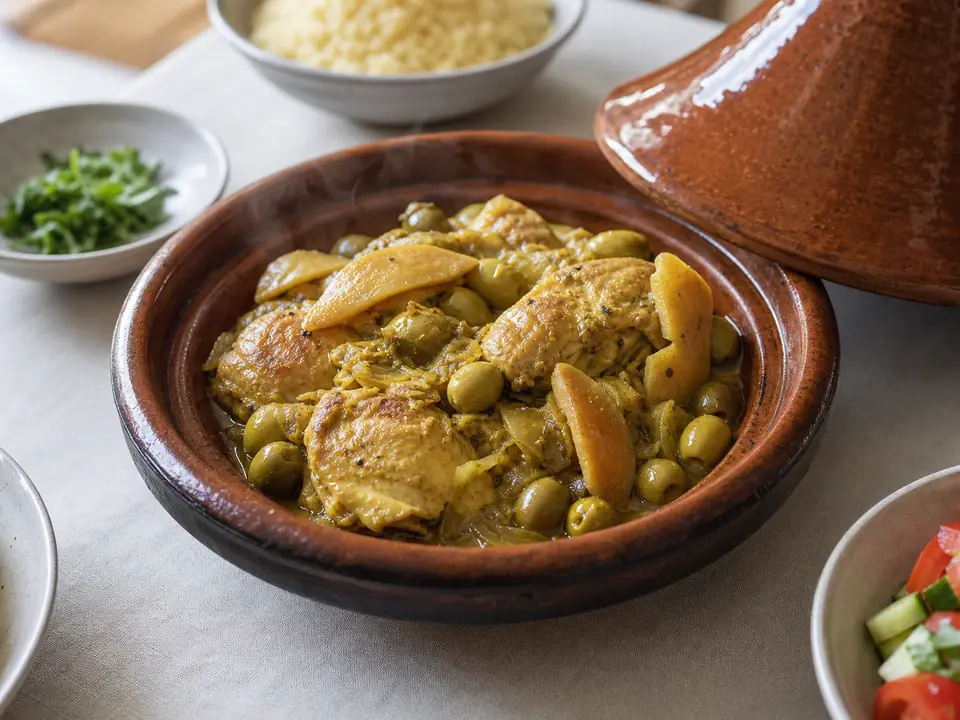
A good tagine ends with a glossy, concentrated sauce that clings to the meat and begs to be mopped with bread — not a thin, watery puddle. The fix is rarely flour or cornflour; it is technique. The right base, the right amount of liquid and a final reduction do almost all the work.
At a glance
- Build a soft onion (and often grated tomato) base — it thickens naturally
- Go easy on added water; meat and vegetables release plenty of their own
- Reduce uncovered at the end, lifting the meat out so it doesn't overcook
- Prefer natural thickeners — puréed onion, crushed chickpeas, ground almonds — over starch
Guide
Prevention starts with the base. Moroccan tagines thicken naturally from grated or finely chopped onion and, in many recipes, grated tomato, which break down into a silky, body-giving sauce. Start with a generous onion base cooked soft in oil, and be sparing with added water — the meat, onions and vegetables all release liquid as they braise under that steam-recirculating lid. Many watery tagines are simply drowned from the start.
If it is still too thin when the meat is tender, lift the lid and turn the heat up a touch to reduce. Spoon the pieces of meat and delicate vegetables out to one side or a warm plate so they don't overcook or break up, then let the sauce bubble and concentrate on its own until it thickens and turns glossy. Baste the meat back through it before serving. This uncovered reduction is the standard restaurant move and needs no starch at all.
For extra body without dulling the flavour, natural thickeners fit the cuisine: a spoonful of the puréed cooked onions and tomato, blitzed and stirred back in; a few crushed chickpeas; or ground almonds in a sweet-savoury tagine. Save flour and cornflour slurries as a last resort, and if you must, use them sparingly and cook them out, because they can leave a pasty texture that a proper reduction never does.
Practical tips
- 1
Grate the onion rather than slicing it if you want it to melt completely into the sauce.
- 2
Remove tender meat and vegetables before the final reduce so they don't fall apart.
- 3
A blitzed ladle of the sauce's own onions and tomato stirred back in thickens without diluting flavour.
- 4
Ground almonds thicken and enrich sweet tagines like lamb with prunes.
- 5
Only reach for cornflour as a last resort, and cook it out fully to lose the raw taste.
Frequently asked questions
Why is my tagine watery?
Usually too much added liquid at the start, or too small an onion base. Meat and vegetables release a lot of water under the lid, so you rarely need much extra — and you can always reduce at the end.
Should I use flour or cornflour to thicken a tagine?
Ideally not. Reducing the sauce uncovered and relying on the onion-and-tomato base gives a glossier, cleaner result. Starch is a last resort and must be cooked out to avoid a pasty texture.
How do I reduce a tagine without overcooking the meat?
Lift the cooked meat and delicate vegetables out to a warm plate, boil the sauce down on its own until glossy, then return everything and baste it through before serving.
Try the recipes
Put the tip into practice with these free step-by-step recipes: