Tagine & slow cooking
How to Cook in a Tagine on a Gas or Electric Stove
The tagine was designed for a brazier of glowing charcoal — a low, even, ambient heat with no hot spots. A modern gas ring or electric plate is the opposite: fierce, concentrated and pointed straight at one patch of clay. Bridge that gap with a diffuser and a genuinely low flame and your kitchen hob will braise as tenderly as any Marrakech kanoun.
- Difficulty
- Moderate
- Active time
- 20 min hands-on, 1½–2½ hr braise
- Yields
- One slow-braised tagine for 3–4
- Best tool
- A heat diffuser
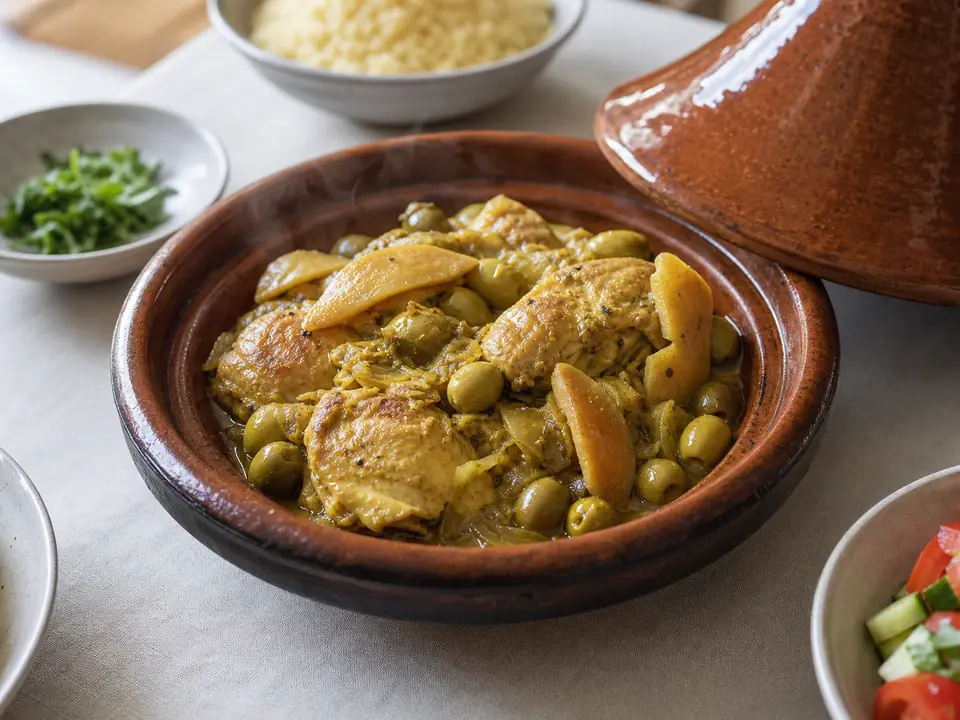
What you need
- A seasoned clay tagine (see the seasoning technique)
- A heat diffuser / flame tamer — metal disc for gas, or a solid plate
- A wooden spoon (metal scratches the glaze)
- A little water or stock for topping up
- Trivet or wooden board to rest the hot pot on
Why it matters
A tagine cooks by convection inside a sealed clay dome. Steam rises from the food, hits the cool cone of the lid, condenses, and runs back down the walls to baste everything again — a closed water cycle that keeps a tough shoulder of lamb moist for hours on barely any liquid. That only works if the heat is low and even. Blast it and the liquid boils away, the base scorches, and the whole self-basting mechanism breaks.
The diffuser is the whole trick on a modern stove. It takes a pointed flame or a glowing coil and turns it into the gentle ambient warmth clay was built for, while protecting the base from the direct-heat shock that cracks pots. Once the diffuser is down and the flame is low, cooking in a tagine is genuinely hands-off.
Step-by-step method
- 1
Set up the diffuser first
Put the heat diffuser on the burner before anything else and let it warm through for a minute or two on low. The tagine base then sits on the diffuser, never in direct contact with flame or coil.
- 2
Build the base layer
Warm a film of oil in the base over low heat, then lay down sliced onions, garlic, grated tomato or a little water — a moist bed. Never heat empty clay hard, and never sear on high in a tagine as you would in a steel pan; the pot cannot take it.
- 3
Arrange, don't stir
Pile the meat in the centre and the vegetables around it in a mound so the cone shape works, tuck in spices, preserved lemon and olives, and add just a small amount of liquid — 100–200ml. A tagine makes its own; you are not making soup.
- 4
Lid on, heat low, walk away
Cover, and keep the flame as low as it will hold a whisper of a simmer. You should hear a faint bubble, not a rolling boil, and see only wisps of steam escaping the lid. Bring it up to that point slowly over 10–15 minutes.
- 5
Resist lifting the lid
Every time you lift the lid you lose the steam that is doing the basting. Leave it sealed and let it braise: 1½ hours for chicken, 2–2½ for lamb or beef. Only check near the end.
- 6
Check liquid, reduce to finish
Towards the end, look once. If it is drying, add a splash of hot water down the side. If it is too wet, take the lid off for the last 15 minutes to reduce the sauce to a glossy, spoonable consistency.
- 7
Rest before serving
Move the whole pot onto a wooden board and let it settle for five minutes. Serve at the table straight from the tagine, with plenty of bread to scoop the sauce.
Common mistakes
- No diffuser. Bare clay on a gas ring or electric coil concentrates heat on one spot and cracks the base. The diffuser is not optional on a modern hob.
- Cooking too hot. A tagine should barely simmer. A hard boil evaporates the sauce, scorches the bottom and toughens the meat instead of relaxing it.
- Drowning it in liquid. The sealed lid recycles moisture, so a tagine needs far less water than a pan stew. Too much and you get thin, washed-out broth instead of a concentrated sauce.
- Lifting the lid to peek. Each peek releases the steam cycle and adds cooking time. Trust it and leave it shut.
- Stirring like a stew. Tagines are layered and left alone so each element keeps its texture. Stirring turns it to mush and can knock chunks off the clay.
- Setting a hot tagine on a cold stone or metal surface. The sudden temperature difference can crack it — always rest it on wood or a trivet.
Tips
- No diffuser to hand? A dry cast-iron skillet or a folded wire cooling rack over the burner works in a pinch.
- If your hob's lowest setting is still too aggressive, cook the tagine in the oven instead: 150–160°C, lid on, for two hours does the same job with zero hot-spot risk.
- A ball of foil or a wet cloth around the join between lid and base traps even more steam for very lean meats.
Recipes and dishes that use this
Keep exploring
Frequently asked questions
Can you cook a tagine on a gas stove?
Yes, and it is the closest common hob to the original charcoal brazier — but you must put a heat diffuser between the flame and the clay, and keep the flame low. Without a diffuser the pointed flame will crack the base.
How much water do you put in a tagine?
Very little — usually 100–200ml for a family tagine. The conical lid condenses rising steam and drips it back onto the food, so the pot recycles its own moisture and needs far less liquid than a normal stew.
How long does a tagine take on the stove?
On a low diffused heat, about 1½ hours for chicken and 2 to 2½ hours for lamb or beef. Vegetable tagines are quicker, around 45–60 minutes. Low and slow is the whole point.
Why does my tagine sauce come out watery?
Usually too much added liquid or too little final reduction. Add less water at the start, and take the lid off for the last 10–15 minutes to let the sauce cook down to a glossy consistency.