Religious & festival
The Ramadan Iftar Guide
Iftar — known in Morocco as ftour — is the meal that breaks the fast at sunset during Ramadan, and it is one of the most anticipated moments of the day. As the maghrib call sounds, a whole country sits down at once to a spread that barely changes from night to night, because it does not need to: the harira, dates and chebakia of the Moroccan ftour are perfect, and beloved, exactly as they are.
- Read
- 8 min
- Season
- Religious & festival
- Updated
- 19 July 2026
At a glance
- The fast is broken at sunset with dates and water, following prophetic tradition.
- Harira soup is the heart of the Moroccan ftour table.
- Chebakia and sellou are the essential Ramadan sweets alongside it.
- The spread is remarkably consistent across the country, night after night.
The moment the fast breaks
The whole day folds toward this instant. As the sun sets and the call to the maghrib prayer sounds, the first thing to touch the lips is traditionally a date and a sip of water or milk, following the practice of the Prophet, giving the body quick natural sugar after the long fast. Then, in most homes, comes a bowl of harira, and the tension of the day dissolves into the pleasure of eating together.
Many break the fast lightly with dates and soup, pray, and return to eat more fully afterwards, so the ftour often unfolds in two stages.
The ftour spread
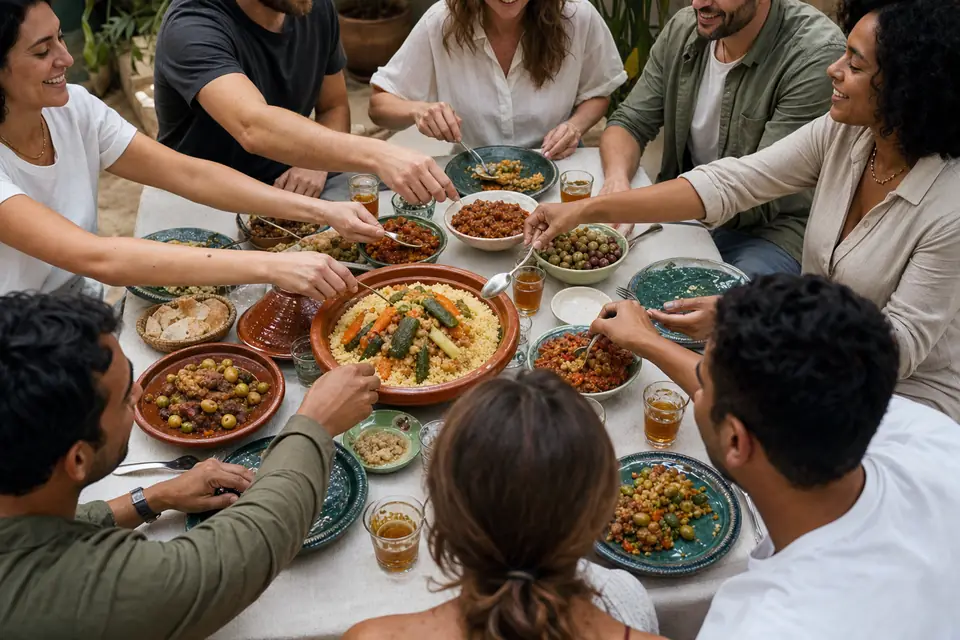
The Moroccan ftour table is one of the most consistent and beloved meals in the country, built around a handful of staples that appear night after night.
- Dates and milk: the traditional first food to break the fast.
- Harira: the fragrant tomato, lentil and chickpea soup at the centre of the table.
- Chebakia: sesame, honey and orange-blossom fried pastry, eaten with the soup.
- Sellou: the rich toasted-flour, almond and sesame energy paste.
- Msemen, harcha, baghrir and eggs: griddle breads with honey and cheese, plus boiled eggs and juices.
The rhythm of the Ramadan evening
Ftour is not the end of the eating but the start of a long, sociable evening. After the initial breaking of the fast and prayers, families often eat a fuller meal later — a tagine, grilled meats or a lighter supper — and the night carries on with visiting, sweets, mint tea and markets that stay lively until the small hours, before the pre-dawn suhoor.
For the pre-dawn side see the Ramadan suhoor guide, and for the sweets in detail, the Ramadan sweets guide.
Frequently asked questions
What is iftar?
Iftar — called ftour in Morocco — is the meal that breaks the daily fast at sunset during Ramadan. It traditionally begins with dates and water following the maghrib call to prayer, then harira soup, and builds into a beloved spread of chebakia, sellou, griddle breads and eggs.
What do Moroccans eat to break the fast?
The fast is broken with dates and a sip of water or milk, then a bowl of harira soup. The wider ftour table includes chebakia (honeyed sesame pastry), sellou, griddle breads like msemen and baghrir with honey and cheese, boiled eggs, dried fruit, juices and mint tea.
Why are dates eaten first at iftar?
Breaking the fast with dates follows the tradition of the Prophet Muhammad, who is said to have broken his fast with dates and water. Practically, dates deliver quick natural sugars and energy to a body that has gone without food all day, gently preparing it for the meal to follow.
Is the ftour meal the same every night?
Largely, yes. The core of the Moroccan ftour — dates, harira, chebakia, sellou, griddle breads and eggs — repeats night after night through the month, and that constancy is part of its comfort. Fuller meals like tagines or grilled meats, eaten later in the evening, bring the variety.