Religious & festival
Wedding Feast Foods in Morocco
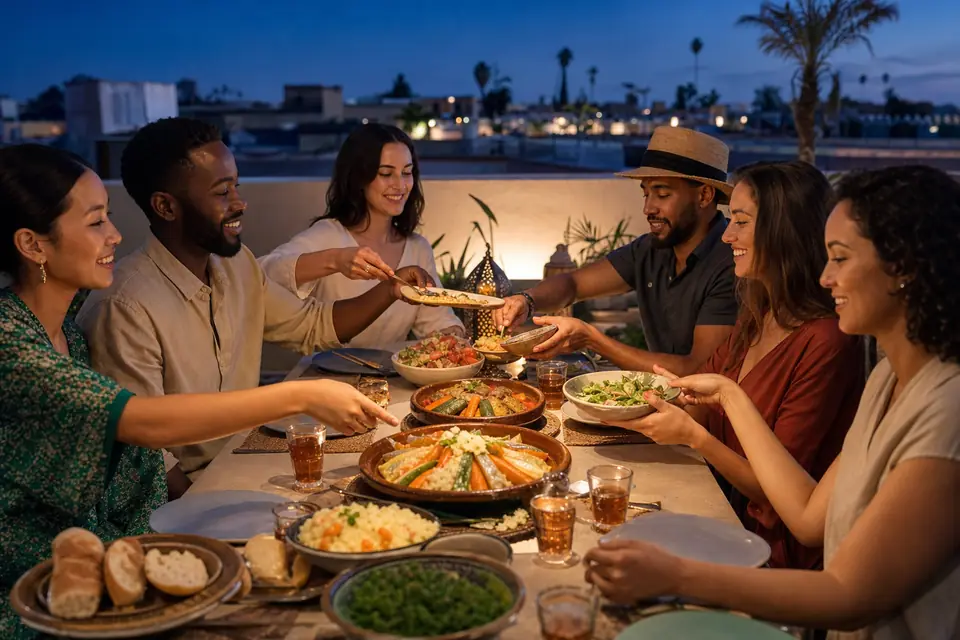
A Moroccan wedding is one of the great occasions of the food year, a multi-day celebration where the kitchen pulls out every ceremonial dish it knows. The meal is a slow procession of showpieces — savoury pastilla, whole roasted lamb, sweet-savoury tagines and mountains of pastries — served late into the night to hundreds of guests. To eat at a Moroccan wedding is to see the cuisine at its most generous.
- Read
- 9 min
- Season
- Religious & festival
- Updated
- 19 July 2026
At a glance
- Weddings feature the grandest dishes of Moroccan cuisine, served in ceremonial sequence.
- Pastilla and whole mechoui lamb are classic centrepieces.
- The meal runs late, across many courses, ending with pastries and mint tea.
- Seffa or sweet couscous often closes the savoury procession.
The ceremonial procession of dishes
A wedding feast is served in a deliberate order, each dish carried out in turn to a table shared by several guests. It typically opens with pastilla — the extraordinary sweet-savoury pie of shredded pigeon or chicken, almonds and eggs wrapped in crisp warqa pastry and dusted with cinnamon and sugar. From there the courses build, unhurried, over hours.
The pacing is part of the ceremony: this is a meal to linger over, punctuated by music, the arrival of the bride and groom, and the constant pouring of tea.
The great dishes
The centrepieces of a wedding are the dishes too grand or laborious for everyday cooking.
- Pastilla: the crisp sweet-savoury pie, the traditional opening showpiece.
- Mechoui: whole lamb slow-roasted until it falls from the bone, torn by hand.
- Sweet-savoury tagines: lamb with prunes and almonds, or chicken with caramelised onions and raisins (mrouzia-style lʼham).
- Seffa medfouna: sweet vermicelli hiding tender chicken or lamb beneath.
- Pastry towers and fruit: kaab el ghzal, briouat and fresh fruit to close.
Sweets, tea and the long night
As the savoury courses wind down, the sweetness takes over. Trays of the finest pastries — almond gazelle horns, honeyed briouat, ghriba — are set out with dates and fresh fruit, and mint tea is poured endlessly. In the countryside a wedding may run over several days, with distinct meals for the henna night, the wedding day itself and the days after, each with its own dishes.
The showpiece dishes here overlap with the great feasts of the religious calendar; see the Eid lamb and mechoui guide and, for the closing sweets, festive Moroccan desserts by season.
Frequently asked questions
What food is served at a Moroccan wedding?
A wedding feast is a procession of ceremonial dishes: it often opens with sweet-savoury pastilla, then whole roasted mechoui lamb, sweet-savoury tagines of lamb with prunes or chicken with onions and raisins, and seffa sweet vermicelli, before closing with pastry towers, fresh fruit and endless mint tea.
What is pastilla?
Pastilla (bastilla) is a celebratory pie of shredded pigeon or chicken, almonds and spiced eggs layered in crisp, paper-thin warqa pastry, dusted with cinnamon and icing sugar. Its sweet-savoury contrast makes it a showpiece, and it is a traditional opening course at weddings and grand feasts.
How long does a Moroccan wedding feast last?
The meal itself runs for hours, served late into the night in many courses. In the countryside, weddings can span several days, with separate meals for the henna night, the wedding day and the days that follow, each with its own traditional dishes and sweets.
What is seffa medfouna?
Seffa medfouna is a wedding and celebration dish where sweet, cinnamon-dusted steamed vermicelli or couscous is mounded over a hidden layer of tender braised chicken or lamb — medfouna meaning buried. The sweet-savoury surprise beneath the fragrant sweet grains makes it a festive centrepiece.