Seasonal cooking
What to Cook in Ramadan at Home
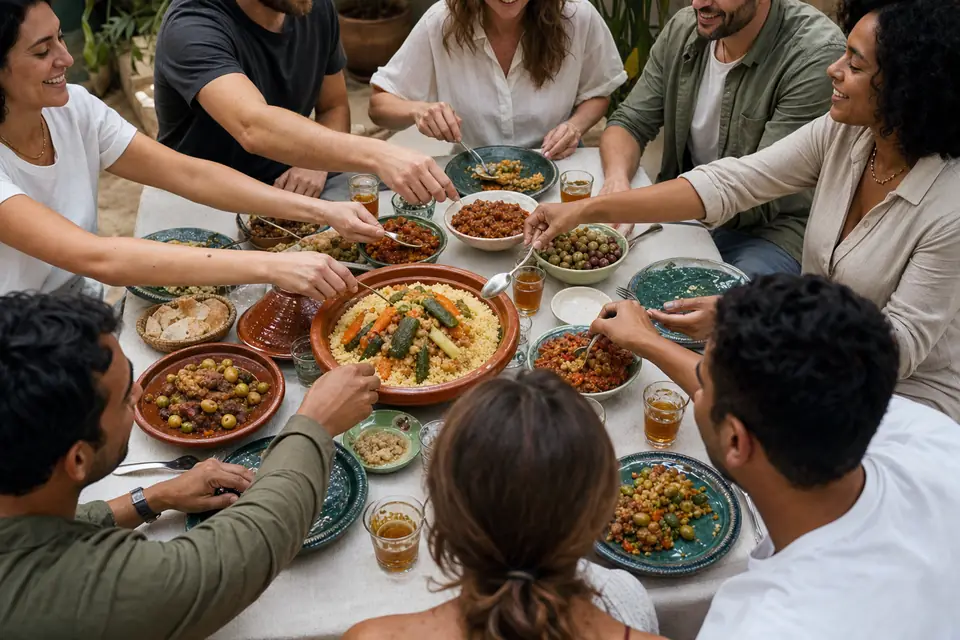
Cooking through Ramadan is a particular rhythm. Instead of the usual three meals, the day pivots around two — the sunset ftour and the pre-dawn suhoor — with a table that must appear reliably every evening for a month, often for extended family and guests. Moroccan home cooks meet this with planning, batch-making and a repertoire of dishes built to be prepared ahead, so that the month is joyful rather than exhausting.
- Read
- 9 min
- Season
- Seasonal cooking
- Updated
- 19 July 2026
At a glance
- Plan around two meals: the sunset ftour and the pre-dawn suhoor.
- Batch-make the keeping sweets — chebakia and sellou — before the month begins.
- Harira and griddle breads are the daily backbone of the ftour table.
- Make-ahead and freezer-friendly dishes save the fasting cook.
Getting ahead before the month
Experienced cooks do much of the work before Ramadan even starts. Chebakia, which keeps for weeks in an airtight tin, is made in big batches in the days beforehand, often as a family effort of shaping and frying hundreds. Sellou, equally long-keeping, is prepared and stored. Warqa or spring-roll pastry for briouat is folded and frozen. Getting these done in advance means the daily cooking during the fast is far lighter.
A well-stocked Ramadan pantry — lentils, chickpeas, tinned and fresh tomatoes, vermicelli, flour, spices, honey, dates and eggs — is the other half of the preparation.
The daily cooking
Each day, the fasting cook focuses on a manageable core, with harira at its centre.
- Harira: the daily soup, easily made in a big pot and reheated, even better the next day.
- Griddle breads: msemen, harcha and baghrir, some doughs made ahead and cooked fresh.
- Boiled eggs and simple sides: quick, sustaining additions to the table.
- A main to follow: a tagine, roast chicken or grilled meats eaten later in the evening.
- Suhoor prep: gentle, hydrating foods set out for the pre-dawn meal.
Cooking while fasting
There is a particular art to cooking a feast you cannot taste. Moroccan cooks rely on well-known recipes and muscle memory, seasoning by measure and experience rather than tasting, and timing the work so the heaviest effort is done earlier in the day, before energy flags in the last hours before sunset. Preparing components in the calmer morning, then assembling near ftour, keeps the final rush manageable. Above all, leaning on make-ahead and batch dishes turns a potentially gruelling month into the warm, shared occasion it is meant to be.
For the two meals in detail see the iftar guide and the suhoor guide, and for the sweets, the Ramadan sweets guide.
Frequently asked questions
How do you plan cooking for Ramadan?
Plan around the two meals — the sunset ftour and pre-dawn suhoor — and get ahead before the month starts by batch-making keeping sweets like chebakia and sellou and stocking the pantry. Day to day, lean on a big pot of harira, fresh griddle breads and make-ahead mains to keep the fasting cook's workload light.
What can you make ahead for Ramadan?
Chebakia and sellou keep for weeks and are made in bulk before Ramadan. Warqa pastry and filled briouat can be folded and frozen, harira freezes and reheats well, and griddle-bread doughs can be prepared ahead and cooked fresh. Batch and freezer cooking is the key to a manageable month.
How do cooks season food while fasting?
They rely on familiar recipes, measuring and experience rather than tasting, since tasting would break the fast. Long practice with the same dishes means seasoning by muscle memory, and timing the heaviest cooking earlier in the day, before energy dips in the final hours before sunset, keeps the results reliable.
What is the daily backbone of Ramadan cooking?
Harira soup is the daily centrepiece, made in a big pot and often better reheated the next day, alongside fresh griddle breads like msemen and baghrir, boiled eggs and simple sides. A fuller main such as a tagine or roast chicken is usually eaten later in the evening, after the initial breaking of the fast.