Seasonal cooking
Couscous for Every Season in Morocco
Friday couscous is the fixed star of the Moroccan week — the communal family meal eaten after the noon prayer, as reliable as the call itself. But while the ritual is constant, the couscous on the plate shifts with the season, following whatever the markets and gardens are offering. Understanding those shifts is understanding how Morocco eats with the calendar.
- Read
- 8 min
- Season
- Seasonal cooking
- Updated
- 20 July 2026
At a glance
- Friday couscous is a near-universal Moroccan tradition, eaten communally after the noon prayer.
- The vegetables change with the season — the grain stays, the garnish moves.
- The classic seven-vegetable couscous uses whatever the season offers.
- Sweet couscous (seffa, mesfouf) appears at celebrations throughout the year.
The Friday ritual
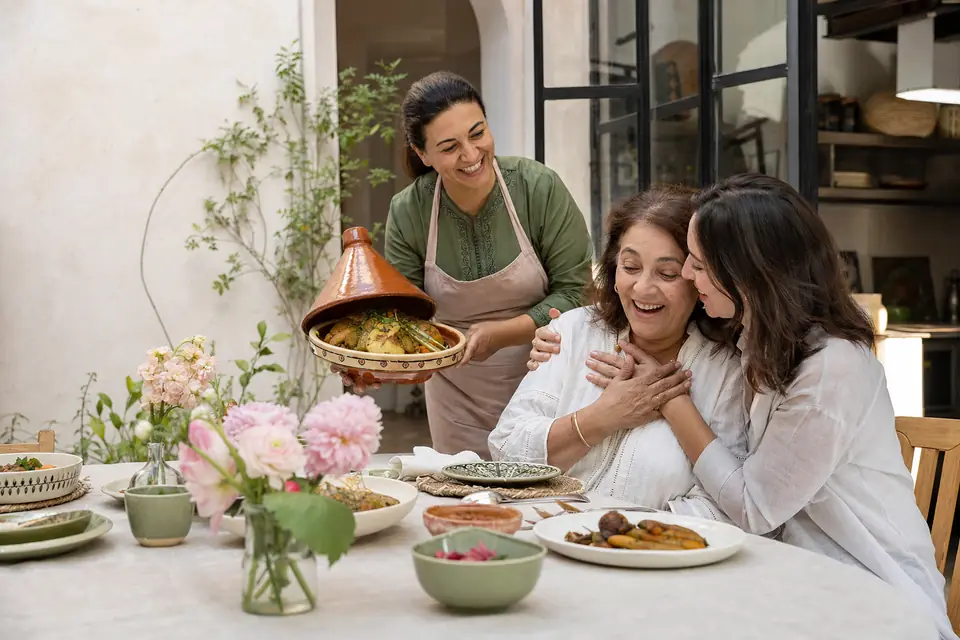
In almost every Moroccan household, Friday means couscous. The grain is steamed in stages over a broth of meat and vegetables, and the whole family gathers around a single large plate, eating from the edges inward with the right hand or a spoon. It is the most communal and most constant meal of the week, and the one that mothers and grandmothers are judged on.
The grain itself — hand-rolled semolina, steamed and fluffed — is the canvas. What goes on top is where the seasons write themselves.
Season by season
The vegetables that crown the couscous follow the market and the weather.
- Spring: tender peas, young broad beans, artichoke hearts and fresh herbs — the lightest couscous of the year.
- Summer: courgettes, tomatoes, peppers and aubergines, sometimes with grilled meat on the side.
- Autumn: quince, pumpkin, turnips and the last of the summer squash, with new-season olive oil drizzled over.
- Winter: carrots, turnips, cabbage, chickpeas and root vegetables in a rich, warming broth — the seven-vegetable classic at its heartiest.
Sweet couscous and celebrations
Alongside the savoury Friday dish, couscous has a sweet life. Seffa — steamed vermicelli or fine couscous dusted with cinnamon, sugar and almonds — appears at weddings, religious festivals and the sbouaa. Mesfouf, a lighter sweet couscous with raisins and orange-blossom water, is served at Mouloud and other blessed occasions. Tfaya, a sweet onion and raisin garnish, bridges the savoury and sweet on celebratory plates.
For the celebration dishes in detail, see wedding feast foods, and for the grain itself, wheat harvest and bread season.
Frequently asked questions
Why is couscous eaten on Friday in Morocco?
Friday is the Islamic day of congregational prayer, and eating couscous after the noon prayer is a deeply rooted Moroccan tradition — communal, generous and weekly. It is the main family meal of the week, eaten from a shared plate, and its preparation is a point of pride.
What vegetables go in Moroccan couscous?
Whatever the season offers. Spring brings peas, broad beans and artichokes. Summer adds courgettes, tomatoes and peppers. Autumn brings quince, pumpkin and turnips. Winter uses carrots, turnips, cabbage and chickpeas. The classic seven-vegetable couscous uses seven of whatever is in the market.
What is the difference between savoury and sweet couscous?
Savoury couscous is steamed over a meat and vegetable broth and served as a main meal. Sweet couscous — seffa or mesfouf — is steamed plain, then dusted with cinnamon, sugar and almonds or mixed with raisins and orange-blossom water. Sweet versions appear at celebrations and religious occasions.